


Intro
Bowman Draft year over year is the deepest release of all the Bowman releases. It almost always ends up as the best release as well. Players, on the whole, are further down the development track than other releases. There are never any 16 year-olds in the product. No one here stands a chance of having to repeat the DSL. At least three-quarters of these players will play the entire season at Low-A or higher very soon. We should really have an idea of who most of these players truly are as professional ballplayers by the end of 2026. For now, though, we just have small samples along with their history in high school or collegiate baseball. But they've all come into the professional ranks through the most prestigious of ways – as a high draft pick.
Check out the 2025 Bowman Draft TLDR article for your quick reference needs.
Tier Ranks
Tier 1 - Cream of the crop. Combination of high-end Hit and Power tools that won’t end up as full-time designated hitters. Power/Speed combo players. Elite SP 1 pitchers (very rare). Potential for being perennial All-Stars and award winners.
Tier 2 - Bats that may lack in a certain area such as top-end power, three true outcomes players with huge power, great real life/fantasy players, but not hobby-elite, or tantalizing raw talents. High-end SP 2 pitchers with additional positive factors such as team, arsenal, pedigree, etc.
Tier 3 - May have some hobby interest due to a single factor such as prospect pedigree, team interest, general hobby hype, an interesting carrying tool, etc.
Tier None - The likelihood of widespread short-term hobby interest, and most likely long-term as well, is close to none. Plenty of pitchers, catchers, role players, hit-tool-only bats, Quad-A power bats, defense-first players, etc. to be found here. Hobby lottery tickets where the odds are stacked against you.
*Catchers and Pitchers are often knocked down a tier just due to their position.
Player Visualization
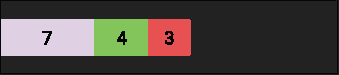
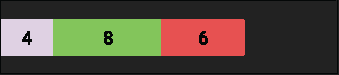
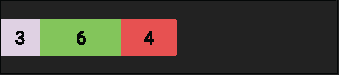
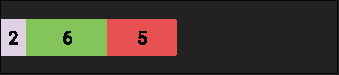
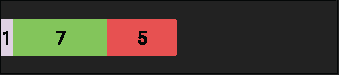
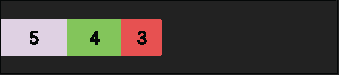
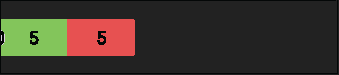
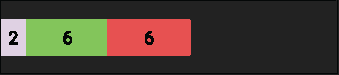
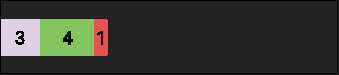
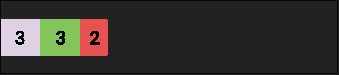
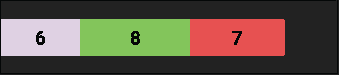
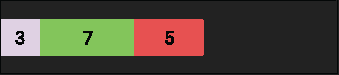
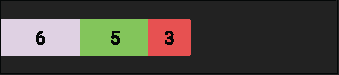
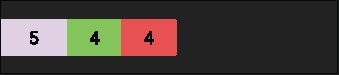
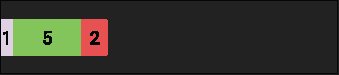
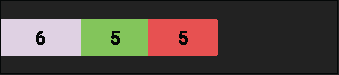
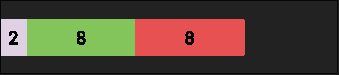
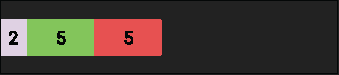
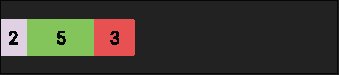
We've assigned Safety, Ceiling, and "It" Factor to each player to provide a quick glimpse into each player, which is illustrated by way of a bar graph for every player. You want to see a picture of a perfect prospect? That doesn't exist. But here's what "as good as it gets" looks like, considering Ceiling is what we care least about of the three factors:
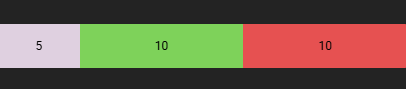
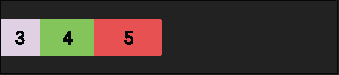
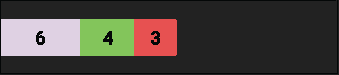
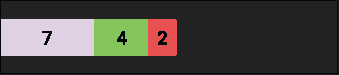
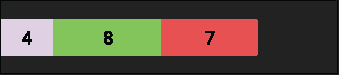
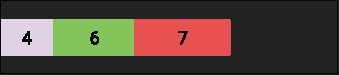
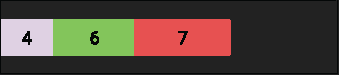
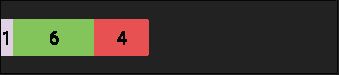
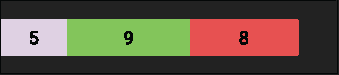
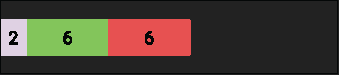
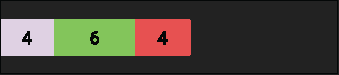
Safety, shown in lavender, is merely the direct inverse of what we've use previously, Risk. We've made it a neutral color, as it just provides a baseline, rather than something that's a strong factor in considering whether to collect a player. It's is a general measure of how far a player has advanced toward making an impact in the majors. So anyone at the Complex level, by rule, is almost always a 0-2 safety. On the flip side, a player at the AAA level is most likely a 7-10 level of safety. This has to be approximated for Draft, since no one has a lot of professional experience.
Ceiling, shown in green, is just how significant the player has the potential of being for the hobby. I’ll provide the definition of a 5, and you, the reader, can interpret everything from that: a maximum realistic projection of an MLB regular with 10-15 HR power, .260 average, and one other element of interest (team context, excellent speed, etc).
"It" Factor, shown in red, covers everything else. It's aspects of a player that we've previously been massaging into risk and ceiling, such as team context, pedigree, a loud tool we love and believe in, or just being exciting to watch. So for instance, Rockies pitchers get bumped down here, and all Yankees prospects get bumped up.
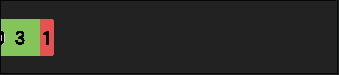
Altogether, this forms the hobby context of what we think of a player. The bigger the bar, the better the player through the hobby lens.
(As a transitional measure we've also left what we have been doing, Risk and Ceiling, at the bottom of each writeup.)
Arizona Diamondbacks

Tier 3
Patrick Forbes (RHP, 21)
Forbes was taken at the end of the 1st Round, 29th overall, and signed for right around slot money. But that’s where the boring stuff ends. 2025 marked a massive rise for him, a year that saw him find a prominent starting role with Louisville. Coming at you with a solid 6’3” frame and a low arm slot, his mid-90’s fastball already played up as a swing-and-miss option, but he found more shape to it this year, adding significant armside run to the ride it already had. When he doesn’t quite execute the pitch and he leaves it down with less of that run, it does get very hittable – but that was less frequent. On top of that, he also has a slider that has so much late movement that I saw it fool his catcher. Even halfway to the plate, it looks like the heater. He also has a change that’s pretty firm, but it serves as a change of pace from the fastball without the violent movement of the slider, and it does occasionally have armside fade. All told it was a K% near 37, an astounding number for a pitcher who amassed over 70 innings. This was the first time he had gotten close to that innings number though, so there’s some proving of his durability remaining. With so much movement on all of his pitches, he’s also still figuring out how to harness it all. I wouldn’t say he necessarily will have bad command forever, but how far it develops will key how far up the ladder of ceilings he climbs. This is great stuff – like, he could be a #1 SP. But that’s not a “probable” outcome. It’s likelier that he ends up as a high-K mid-rotation starter, or a closer if those command gains don’t come. Either way, he has low risk to reach the majors. Even the best of hitters will chase his stuff out of the zone. So for the hobby, I think that puts him in a bit of a weird place, but I think he’s absolutely worth a shot. Be on the lookout for command gains early. If they show, he could be a guy who contribute the the DBacks rotation by early 2027. - Max Arterburn
Risk: 5, Ceiling: 8 (Both)
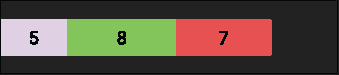
Kayson Cunningham (SS, 19)
Cunningham is the Diamondbacks prized pick, taken in the 1st Round with the 18th overall selection. He signed with a slot $4.58 MM bonus. A Texas prep, he is shorter in stature at 5’10”, but he plays bigger than that on defense. He shows extremely smooth actions out there, and has enough arm to stick long-term. Of course there’s the raw biometric concerns, but at worst he’d end up as a high-ceiling defensive 2B. Being so good in the field is a significant part of what got him drafted so high, as is his speed. It’s at least an above average tool, especially after he gets going. He’s already physically mature, but there is more projection in the tank that should help him become a real threat on the bases. HIs third tool that made him a first rounder is the hit tool. I’m now using the word “mature” for a second time in this writeup, which is simply the best way to describe it. There is very, very little wasted energy in his swing mechanics. He rarely chases, is more than willing to take pitches he can’t do damage on, and works walks with regularity. He’s also an elite contact hitter. In high school, and in most showcase environments, he ran contact rates north of 90%. That lead to the DBacks deploying him to Low-A for an 11 game pro debut, where he ran a squarely above average 80% contact rate. If he can do that at the drop of a hat with little adjustment period, I can’t wait to see what he does in a full season. In that Low-A debut, first and foremost I would not read into the high K% or low BB%. That smells of a small sample anomaly, and definitely not indicative of who he is. What I am concerned about based on the debut is his power. It was never a huge part of his game in high school, but he showed some pull side pop at his best, with a few HR. He was finding gaps with powerful slashes to all fields and hitting doubles with ease. I didn’t see any of that in his debut. The all-fields swing was there, absolutely. But with so little effort in his swing I didn’t see any well-hit balls hit more than, say 200 feet. I mentioned very little wasted energy in his swing. Perhaps he needs to start with more potential energy – wrap his bat a little more, get a little deeper in his crouch – in order to get to the same power he showed in high school? I don’t know. It could also just be a small sample, but I’m not so sure. There is also some projectability with his power, but with what I saw, it’s only to something like 10 HR. Hobby-wise, that’s a player we generally don’t care about, no matter how strong his hit tool. I think the Diamondbacks made a good pick here. He has a higher floor than almost all other preps, and as a middle infielder to boot. If things go moderately well, he will definitely reach the majors at a young age. But will he ever be a super star through our lens? I would posit that the answer to that is absolutely not. He’s the definition of better for real life baseball than for the hobby. - Max Arterburn
Risk: 6, Ceiling: 6 (Both)
Tier None
Dean Livingston (RHP, 19)
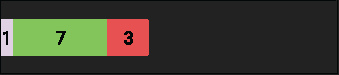
The Diamondbacks aren’t generally creative with their picks or locked into any draft strategy. But when Livingston, a fast rising Georgia prep who was right around 100 on many pundits’ lists, fell to them at 123, they snagged him and paid him his $1 MM bonus. That’s overslot by about one round, and kept him from campus in Athens. Livingston certainly has a starters’ frame at 6’4”, with a clean, repeatable high three quarters delivery. His command isn’t exactly great right now, but that aspect of his game, to me, looks very projectable. With a little more strength in his lower half, I think he’ll already be in the average command bucket, which is really saying something for a 19 year old. His mix features a sinker-ish fastball, which is pretty unique coming from such a high arm slot, which has been as high as 95 (with definitely more coming as he matures) and features plenty of armside run at its best. He saws off righthand bats with regularity, and has shown an ability to paint the outside corners with it as well. Whatever will become his second best pitch is a work in progress. His new-ish change-up looks to have solid potential in the mid-80’s, and it got solid swing-and miss in my look. It’s showed more tumble than fade in my look, which made it fairly similar in shape and velocity to his slider (again, remember, high three quarters equates to more vert break than horizontal). It’s possible that the slider becomes a true weapon with a little more sweep, because it does feature late movement. He also has a curve, which has great depth, but is definitely commanded poorly. By my eyes he gave up the hardest contact with that pitch, which is odd. Livingston is clearly a projectability pick, and I’m into him. He’s atypical for a prep arm with some present command – it’s the refinement of his secondary pitches that needs the most work. But with the feel for spin that he has there’s not much limit to his ceiling. He’s high-risk, but has ceiling to match it. If you’re looking to throw a dart throw at a high school pitcher who should definitely be very cheap, Livingston is your guy. He’s near the top of Tier None for me. - Max Arterburn
Risk: 9, Ceiling: 7 (Both)
Brian Curley (RHP, 22)
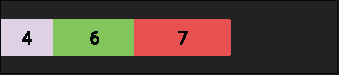
A draft eligible Sophomore that was taken in the 16th Round out of VCU last year, Curley opted to return to college so he could work as a starter. He transferred to Georgia to get tutelage under pitching whisperer Wes Johnson, and he pitched his way into the rotation by April. The sum total of his efforts were a definite positive – he proved his mettle as a starter to the point that he’ll definitely be deployed there to begin his pro career now, and earned his status as a 3rd Round pick, signed with an underslot $700k bonus. He is very much on the short side to be considered a starter at 5’10”, though he’s very solid in his lower half, and uses that strength very well to get his fastball into the high 90’s. There is considerable effort to get there though, so he usually works from 94-97. There are some shape issues with his fastball at present – when he’s pitching down in the zone there’s not much carry to it at all, and the run doesn’t do enough by itself to miss enough bats. For this reason, there’s a lot of relief risk. If he can chuck that fastball with better velocity and work 98-100 in short spurts, the command issues that come with it would be much more palatable. He even already has a secondary pitch that has MLB quality projection – a high-80’s bullet slider that looks really wicked when he’s locating it well, and still difficult to barrel when he’s not. He also throws a loopy low-80’s curve and a cutter. Those will need to tick up significantly to be effective in the minors, but he likely needs them to stick as a starter. Curley does have a pretty solid floor – but it’s as a reliever. Not good at all for the hobby. His ceiling, from what I can see, would be a high-K backend SP. To improve on that there needs to be better fastball shape and significant command improvements – not likely both of those viably happen. There’s also a chance he could be a closer. We don’t love that in the hobby, but if any relievers are collectible, it’s closers. That leaves with him having a 50th percentile outcome of having modest hobby interest. Not all that fun. - Max Arterburn
Risk: 3, Ceiling: 4 (Base Only)
Athletics

Tier 2
Jamie Arnold (LHP, 21)
Coming into the 2025 collegiate season, Jamie Arnold was typically considered the top college pitcher in the upcoming draft class. His sophomore season was so good, that even a junior season in Tallahassee that was almost as good led to him sliding down just a bit in the college pitcher ranks. Part of that was a slight increase in walks, and part of that was Kade Anderson and Liam Doyle having sublime seasons and traits. Of the first four college pitchers selected (Anderson, Doyle, Bremner), Arnold has the highest floor of the group in my opinion. He’s easily a mid-rotation starting pitcher, with an easy upside of an SP2. Ace territory is probably not in the cards, as I don’t think that’s a better than 5% odds scenario for any of the college pitchers in this draft. Arnold’s arsenal is built around a plus slider in the 85-87 mph range and an above average to potentially plus sinker in the 92-95 mph range. His third pitch is a mid-80’s change-up which he worked on in the 2024-2025 off-season and began throwing more in 2025 to great effect. Arnold gets down the mound about as fast as any pitcher and slings the ball from a super low release height. Those characteristics allow his fastball to play into that plus range even with low to mid 90’s velocity. The fastball did get beat up a bit when he put it in meatball territory, and that is one of the items he’ll need to fine tune as a professional. The still developing change-up becoming a larger percentage of his arsenal rather than just under 10% like it was in 2025 is another step towards that SP2 ceiling. A couple of other small concerns - Arnold is just a bit slighter than the typical burly, innings eater starting pitcher at 6’1” and under 190 pounds. The second one has nothing to do with Arnold and everything to do with team context. Sacramento is simply not a good place for pitchers - in 2025 there was only one MLB park more favorable to hitters, and that one is about one mile higher in elevation. We have no idea what the new Las Vegas park will play like in 2028 or 2029 or whenever, but that’s far enough out we can ignore it for Hobby purposes. There are positive outlier characteristics with his delivery, he has two potential whiff monsters with his slider and change-up, and he’s a known entity that provided two years of strong production at a big college program. He’s a no-doubt Tier 2 pitcher but the biggest challenge to his card values will be the future home ballpark, so there is a bit of a buyer beware situation here. - Joe Lowry
Risk: 2, Ceiling: 8 (Both)

Devin Taylor (OF, 22)
After his sophomore season, Taylor was in the conversation as a potential top 10 pick in 2025. As often happens during the draft cycle as these guys continue to perform or not, get injured, etc, players go up, other players go down, and then you wrap all of the bonus pool shenanigans into the equation, and a player gets drafted at a spot not necessarily where his value lies. Taylor ended up falling to 48th overall in the second round, where he fell into the A’s lap - the second of two prospects who fell into the A’s lap after they drafted Jamie Arnold at the 11th pick in the first round. First the positive - Taylor has the potential for plus hit and power tools at peak. Speaking of the power - Taylor hit 54 home runs at the University of Indiana, making him the owner of the career mark at the school. He hit 6 home runs post-draft, the most of any of the 2025 draft picks. The flip side, negative context is that Taylor doesn’t have much of a floor to fall back on defensively. The A’s have mostly played him in the corner outfield spots - 18 of his 28 games were split almost evenly between right field and left field. The remaining 10 games were spent as a designated hitter. The fear is that he ends up as a designated hitter full time due to his defensive limitations. In just 18 pro games in the outfield, it’s almost impossible to get enough looks to have an opinion, so I’ll just raise that as a point of caution and something to monitor moving forward. Back to the positives - I loved what I saw from Taylor in the batter’s box. He had great knowledge of the strike zone and never seemed to lose control of an at bat. He often took what the pitcher gave him, having no issues going the other way with a pitch on the outside edge. His patient approach also pumped up those walk numbers, leading to a great 16% walk rate in those first 28 games. The flip side to that patience is that Taylor too often ended up in situations more favorable to the pitcher than the hitter. And that inevitably led to a high K rate and whiffs on pitcher’s pitches (change-ups dropping out of the zone, etc.). The glass half empty argument is that Taylor is a three true outcomes strong side designated hitter that could be forced to a strong side platoon - a Tier 3 player at best. The glass half full argument is that Taylor is a tweak or two away (swing at a first pitch strike every now and then, Devin!) from being a plus hit and plus power middle of the lineup crusher and it doesn’t matter if he plays defense or not. The Yordan Alvarez archetype - not saying he’s Yordan, but hey, even if he gets to 65% of Yordan, that’s a great outcome. And that’s where I’m at - a glass half full perspective that slips Taylor into the bottom of Tier 2. If you can get his cards on the cheap, I’d definitely recommend taking some shots. - Joe Lowry
Risk: 6, Ceiling: 8 (Both)
Tier 3
Gavin Turley (OF, 22)
The career home run leader for the prolific Oregon State baseball team surpassing recent top overall pick and former beaver Travis Bazzana, Turley is a big power bat with a big arm and a questionable hit tool. Turley’s swing is grooved towards lifting the ball to the pull side - there’s very little facade about trying to be a contact hitter. His 27 games as a pro after the draft was a mixed bag - four home runs were good to see, showing off the expected power. A double digit walk rate was a positive, showing what we had seen from Turley in college. The 27% K rate was unfortunately a point on the negative side. That was driven by a below average zone contact rate (78%), a lot of swings outside the zone (34%), and a less than ideal whiff rate (28%). Turley looked really uncomfortable and lacking a plan at the plate. It was swing, and swing often. And then there were times where he was simply frozen, or just purposely over-correcting and keeping the bat on his shoulder. It can be difficult when these draftees go from playing zero baseball in 6 to 8 weeks, or even longer, to jumping into action with guys who’ve been grinding since the spring. It’s not an excuse for Turley’s middling performance, but I’m not ready to push him all the way into platoon outfielder, Tier None territory yet. This is a player we need to revisit after a few months of games in 2026. The power is there, and it will play in game. Defensively he can play anywhere in the outfield, which increases his chances of being an everyday player. The hit tool will dictate if he turns into a three true outcomes 4th outfielder or an everyday starter that can keep the K rate palatable while hitting 25+ home runs. With only base cards in the product, he’s an easy one to de-prioritize, even with the potential for above average to plus power. - Joe Lowry
Risk: 7, Ceiling: 6 (Base Only)
Tier None
Grant Richardson (LHP, 22)
Richardson transitioned from the pen as a freshman in 2023 to the rotation in 2024 at Grand Canyon University. Unfortunately Richardson had to go under the knife for TJ in 2025, so there is quite a bit of unknown in his profile. The A’s took him in the 6th round and gave him just a touch of overslot cash for an even $400K signing bonus to take him away from a 2026 transfer commitment to Ole Miss. There’s a fastball heavy two pitch mix as of the last time we saw him with the second pitch being a slider with high whiff and chase rates. Coming from the left hand side, there’s almost always a viable floor of a relief arm. If Richardson doesn’t adjust his pitch mix, let alone simply come back healthy and whole from TJ, it’s going to be a challenge to stick in the rotation. This is an incomplete grade until we see Richardson pitch any professional innings. Add in the fact that Richardson only has base cards and this is one of the easier avoids in the product, at least for now. - Joe Lowry
Risk: 10, Ceiling: 3 (Base Only)
Atlanta Braves

Tier 3
Tate Southisene (SS, 19)
Southisene, whose older brother Ty went to the Cubs in the 4th round in 2024, was nabbed by the Braves with the 22nd pick in the 2025 Draft. Southisene, who turned 19 this past October, was a fast riser heading into draft season- not quite to the level of Jays first rounder JoJo Parker, but a helium guy nonetheless. Southisene, who plays 3B and the outfield, is pretty small, checking in at 5’11” 170 pounds. It isn’t death sentence size- plenty of productive bats in the Majors belong to guys below 6 feet tall- but those guys are almost always middle infielders. The Braves gave him an aggressive assignment and had him play in 15 games for A level Augusta in August, and Southisene split his time up the middle, with 77 innings at Shortstop and 37 at Second Base. I do wonder if they try to work him in as a middle infielder- he’s a well regarded athlete with a cannon of an arm that could work at third or in right field, so I think Second Base would be a bit of a waste long term. Our Draft Board had him at 55th, where our scouts noted “When he connects, the ball jumps off the barrel, with consistent loud contact in-game. He pairs that offensive toolset with a mature approach, rarely expanding the zone and showing a feel for sequencing and situational hitting beyond his years”. Southisene is the beneficiary of all the data available in this day and age- he’s an EV darling, and his ability to control the zone and get the barrel on the ball boosts his stock at the plate. He did struggle in a small sample in A-Ball in 2025, posting a .539 OPS across 66 PAs with a 27:1 K:BB ratio. It isn’t fair to knock Southisene too heavily for this, but it probably knocks him from a Tier Two to a Tier Three type guy for me. This profile is pretty common in Bowman Draft- guys who go between 20-50th overall- and you have to pick your “winners”. People who bought in on Caleb Bonemer and Tyson Lewis last year are feeling pretty good, while those who went for Kellon Lindsey or Carter Johnson aren’t super thrilled with the results. I think Southisene is a fine prospect, but he won’t be in the grouping of guys I chase from this range. He doesn’t really have the prototypical size of a 3B, and flipping to Second would ding his value. Just not really sure any part of the game “wows” me, so I’m going to slot him in as a Tier Three option- he is probably going to be one of the best guys in that tier. Just not my cup of tea. - Will Jarvis
Risk: 8, Ceiling: 6 (Both)
Briggs McKenzie (LHP, 19)
When the Braves went underslot with each of their first three picks, it was clear that the plan was to go significantly overslot in the coming rounds. But after they took McKenzie in the 4th, and again after news broke that they gave him $3 MM – more than any of their other draftees – there was significant consternation among the Braves fans I saw. But I don’t think getting a super-high ceiling prep in a system that has a history of good pitching development is a bad thing. For him, I think it’s a very good thing, and that was likely a contributing factor in forgoing his LSU commitment. (Being in the 4th Round with that number to meet, it was likely weighing heavily on him.) The biggest issue with McKenzie is, how is he going to get to fastball gains, and how is he going to maintain velocity in starts? He was already throwing 90 two years ago, and since then he’s only come to working at around 91-92. Coming from the left side, he has a very smooth delivery that’s repeated easily. He hides the ball exceptionally well while also getting good extension, which makes everything play up a considerable amount. The traits are truly elite in this aspect, and that’s what cements his high ceiling. His sweeping slider is his second best pitch at present, and at at least above average potential. He also offers a change with some promise, which is a bit further behind in development. You can see why there was some fan disappointment with this pick. He’s not going to be a quick riser, and has a lot of maturation and durability concerns to answer. But the Braves saying “let us take the reins with this one” is something we can trust. But in the hobby, we’re fickle. We don’t have patience. In time, he could really be as high as an ace, with a high cliff to fall down to being irrelevant for the hobby. I’m going to toe the line with his “expected” ceiling here, but it could definitely be higher. I will kowtow to Braves fans and slide him into the top of Tier None. Either your welcome for doing that, or your welcome for hopefully driving down his price, with whatever impact we have, right? - Max Arterburn
Risk: 9, Ceiling: 7 (Both)
Tier None
Cody Miller (SS, 21)
It’s neither here nor there for the sake of our player breakdown, but Topps’ X account posted an awesome tidbit on Miller. His father is a lifelong collector and Braves fan (as is Miller), and took the photo that appears on his cards – so if you get ahold of a unique one, let’s make sure it gets into the right hands, OK? A surprise 3rd Round selection, he signed for a well underslot for $300k, which helped the Braves sign Briggs McKenzie in the next round. Without analyzing anything else, that says that the Braves targeted Miller as a floor play. And you know what? It’s absolutely true, and he went out and proved his game would work in pro ball immediately, putting up solid surface numbers all the way into High-A. At East Tennessee State, Miller showed he has pretty good power as well, which figures to perhaps be an average asset. He has enough speed to be a moderate threat at the pro level, but it plays very well into his defensive capabilities at SS or elsewhere in the infield. There are some quibbles I have with his hit tool, and that’s what keeps me from stating that he has projection as a MLB starting infielder at this juncture. He’s quite aggressive at the plate – both at ETSU and in the minors. It hasn't really affected his quality of contact yet, but at High-A (in a small sample) it did cause his K% to jump up to a level that’s not great for a player without loud tools. His contact rate is also just squarely average, leading me thinking his hit tool in total is merely fringy. So, altogether we have a player without a plus tool but a solid ability to play the infield and a little bit of pop. Kinda boring hobby-wise, but the Braves are a fantastic hobby market. If he cleans up some of the aggressiveness there is a path to his being an everyday utility player. If Nacho Alvarez can glean relevance in following that path, then so can Miller. - Max Arterburn
Risk: 5, Ceiling: 4 (Both)
Conor Essenburg (OF, 19)
Raw athletic ability. That really all there is now with Essenburg, an Illinois prep whom the Braves selected in the 5th Round at 157 overall. The Braves gave him a significantly overslot $1.2 MM to keep him from his Kentucky commitment, where he would have likely been given the opportunity to be developed as a two-way player. That’s one way to say “we like your bat”, I suppose. So, that athletic ability? It’s mostly his arm right now, but he has a very solid 6’2” 200 lbs frame to grow into. His speed figures to tick down to a level where he’s no threat at all on the bases, considering it’s already just average and he’s less than fluid as a runner. His power, though, is quite interesting. He’s produced exit velocity in the low triple digits already, but he doesn’t wrap his bat at all, pointing his knob straight down at its greatest extent. There’s a lot of easy bat speed left in the tank since he does that, but I do wonder if there has been a past issue that’s led to it. It should be interesting to see if the Braves’ coaching can take his self-imposed reins off and really have him tap into even more power. He’s also an aggressive hitter, always trying to do the most damage possible without much of an approach otherwise. That should also be cleaned up by the Braves coaching staff to an extent, but there’s a potential “changing of a zebra’s stripes” aspect to that as well. Anyhow, he’s an interesting ball of clay for the Braves to have in their system, but likely a limited profile overall. The limitation being the hobby’s favorite tool offers a sweetener that leaves him relevant though. - Max Arterburn
Risk: 10, Ceiling: 5 (Both)
Baltimore Orioles

Tier 3
Ike Irish (C, 22)
If debating how the Orioles should manage Samuel Basallo and Adley Rutschmann wasn’t enough fun for you, the O’s did everyone a favor and spent the 19th overall pick on Ike Irish, a Catcher out of Auburn University. I know that the best practice in any pro sports draft is taking the best player available and worrying about any positional log jams when the time comes, but it’s pretty funny to see them throw a third potential high level young catcher into the fold at Camden Yards. He’s only OK behind the dish, receiving pretty lukewarm general reviews, and our team at Prospects Live framed his game-calling, framing, and blocking as pretty suspect back there. So, he likely profiles as a corner outfielder long term- RF being the natural landing spot so as not to waste the arm of a Catcher. He’s a bat first prospect, and that is why he went so high and why you are reading this. We had him at 16th on our pre draft Big Board, and our scouts note that “he fits the mold of a bat-first catcher, bringing a compact yet powerful swing to the plate despite his long arms. His left-handed stroke is clean, direct to the baseball, and generates quick hands with loud bat speed. Irish has a good feel for the strike zone, pairing an average hit tool with an excellent approach”. Irish backed these words up at Auburn as a Junior, whacking 19 homers in 55 games to post a 1.179 OPS in the SEC. The bat is the carrying tool, and the numbers are strong. He also only struck out 37 times in 258 at bats in his Junior season, showcasing impressive bat to ball skills. He struggled to a .594 OPS in a 20 game sample in A-Ball post draft for the O’s, where he popped just 1 homer. It’s worth noting that despite the uninspiring results, Irish struck out 19 times in 81 PA’s- nothing to write home about, but I do think it’s notable that despite his struggles, the K rate wasn’t something that stood out as an issue. Unfortunately, this is where my positive thoughts about Irish meet their end. Irish has the ground ball bug. He pounds the ball into the ground and has at pretty much every level. Cape League 2024? Over 50% ground balls. In Single-A? 1.38 GO/AO. I hate to say it, but that habit is about the quickest way I personally can get turned off a prospects Hobby outlook. With this in mind, the stat line looks a bit different. You notice only 2 doubles in his 81 pro at bats. Of his 34 XBH at Auburn, 19 were homers. If he’s lifting it, it’s probably leaving the yard, but he struggles to make meaningful impact in the air, minimizing extra base hits that aren’t homers. If he can straighten things out and boost his launch angle, he becomes a top college bat in the product. My fear is that that could require a swing overhaul, which is quite the undertaking. You’ll remember Konnor Griffin made major changes to his swing before the 2025 season, but his issues were more about swing and miss than launch angle. If there aren’t changes pretty quickly in 2026, I’ll have no real interest in Irish. He’s pretty much a bat only prospect, and if he continues to beat the ball into the ground save for some mammoth homers, I think smart Bowman investors will avoid him entirely, and people who don’t pay attention to underlying stuff like this could naively hope for the best and get crushed on Irish cards. I really hope he can figure it out because the hit tool is very good and he can crush the ball when he gets it in the air, but the ground ball monster risk scares me off Irish, and he’s a Tier Three guy because of it. - Will Jarvis
Risk: 8, Ceiling: 6 (Both)
Caden Bodine (C, 22)
After throwing away half of my Orioles-based write-up since Bodine was traded to the Rays as part of the package to acquire Shane Baz, I am a bit more positive on Bodine. He was the safest of the Orioles first four picks (all in the top 40 overall) and is the classic high floor low ceiling guy. The better for real baseball than for the Hobby player. Bodine is a hit over power backstop with good defensive chops but an arm that leaves much to be desired, giving up 15 stolen bases in just 9 games he was behind the plate in the minors post-draft. Those weren’t all his fault - Single-A pitchers aren’t great at holding runners, but Bodine wasn’t exactly lightning quick out of the crouch or firing rockets. The margin for error with catchers successfully throwing out runners is relatively thin, especially with the rule changes favoring base-stealers in the recent past, so I can’t downgrade him too much. Bodine should be able to make it to the bigs on the strength of his bat to ball instinct and catching skills (even with subpar arm). In some scenarios, you want to see catchers move out from behind the dish - with Bodine, I don’t think there’s enough impact skills to find a full time role if he ends up pushed off the position. In Tampa, there’s a lot of opportunity to take over as the primary backstop, so it’s easy to be a bit more bullish with the Rays as opposed to the Orioles. A first round pedigree, “best college catcher” in his draft class plaudits, and some positive skills with the bat and glove all give enough short term juice to push Bodine into Tier 3. Lacking any sort of appreciable in-game power limits that ceiling and coupling that with not being able to strike any hint of fear into the opposition’s running game effectively keeps him out of any sort of Tier 2 consideration. I’d spend my Hobby dollars elsewhere. - Joe Lowry
Risk: 7, Ceiling: 4 (Both)
Tier None
Colin Yeaman (SS, 21)
Yeaman transferred from JuCo to UC-Irvine for his Junior year and quickly vaulted himself into mid-round discussions with loud performance at the Anteaters’ best overall hitter. He ended up being drafted in the 4th Round, signing for slot money as the 124th overall pick. He offers little in the way of speed on the bases, which translates to fringy range as a SS as well. But, he is a solid infield defender, so he falls into the infield utility bucket with ease. Whether he becomes a super-utility type, or falls further down the spectrum depends on how his development goes, but there’s a decent floor – pretty nice for a guy who had to go the JuCo route to begin his collegiate career. He has a strong, thick build at 6’2”. He’s great at slashing to all fields, and there is some power, but he’s not pure in that regard. It’s largely when he sees an opportunity to damage to the pull side where his HR pop lies. And that’s sort of wherein his biggest flaw lies. His eyes sometimes get a little big when he sees that opportunity, only to find himself guessing wrong and flailing at a curve or weakly pulling a slider to the SS. But it’s not like he has bad discipline. With a bit more maturity as a hitter, it’s easy to see improvements to the level of even an above average hit tool. Hobby-wise, without any tools that are loud, he seems a bit boring. However, there is a world where improved discipline unlocks above average power as well, which would put him squarely as a big-league regular. That’s the dream here. But with a middling team context, there’s no reason to buy into it right away. - Max Arterburn
Risk: 4, Ceiling: 4 (Both)
Joseph Dzierwa (LHP, 21)
Dzierwa (jur-wuh) is a lanky lefty from Michigan State that was drafted in the 2nd Round and signed for basically slot money – $1.5 MM. At 6’8” with a low arm slow, one imagines great velocity a la Randy Johnson...but that’s not the case here. Instead, Dzierwa is a finesse arm whose best asset is his command. It’s an easy, repeatable and whippy delivery that comes at hitters from so far in the left-hand batters box that it’s hard to attack. He gets an A+ in deception from me, and collegiate hitters can attest to this, as his performance had him as a Golden Spikes semi-finalist. He works in the low 90’s (T95) with his fastball, and really knows how to use it to induce weak contact. His primary change of pace is a change-up that’s really tough to differentiate from his fastball out of his hand. Both of these pitches have improved in the last year with some added strength. It’s possible that he adds even more to escape the finesse arm bucket as well! He did also have a big uptick in the use of his slider in his Junior season, coinciding with an increase in K and overall effectiveness, but it’s a pitch that needs much more refinement to be useful to him as a pro. There is a full three-year track record of his being a starter, and he increased his innings in each. Still, because he lacks a putaway pitch and velocity, there will be some relief risk questions. And if he goes that route, there will be the added benefit of “and now for something completely different” coming out of the bullpen, which is a valuable real-life thing for teams. All of this combined is a player with a very high floor – perhaps higher than any player outside the 1st Round. Unless he makes good on most-to-all of the projection in his body though, I don’t see a ceiling better than the statlines Andrew Abbott has put up for a few years. Is anyone all that interested in Andrew Abbott in the hobby? Didn’t think so. - Max Arterburn
Risk: 3, Ceiling: 4 (Both)
JT Quinn (RHP, 22)
Quinn’s work at Georgia this year had him boosted all the way to 69th overall in the 2nd Round, a nice improvement on where he was expected to be drafted pre-season. There’s so many factors here that I don’t really know where to start with Quinn – I guess it’s that he’ll need to hit every benchmark in his development to have some relevance for the hobby. His body is great – he’s 6’6” and looks quite imposing on the mound. He has great fastball velocity, and typically works in the upper 90’s. He comes at you from an arm slot that’s more over-the-top than many players of his height, and has a longer arm action. The downside to this is that it’s hard from him to get much lateral movement on his pitches. Anecdotally, that leaves his poorly placed pitches as either meatballs or easy to lay off of. His best weapon is a slider with some sharp break that he works with in the mid 80’s. Together, those two pitches earned him a lot of K, and that should continue. His fastball and slider are the only pitches sure to remain in his repertoire, as his slow curve doesn’t have enough separation from the slider, and his change (in its current form) has never been a pitch he’s thrown with confidence. We also have his command to worry about. There were some massive improvements from his time at Ole Miss to Georgia, but his BB% still stood at well over 10% in his Junior year. We can hope the improvements continue, but if they don’t he would quickly fall into the relief pitcher bucket. He doesn’t figure to be a quick riser if he’s to be tried as a SP. His transfer to Georgia definitely served its purpose – the coaches there were a massive help to his prospects to make it to the majors one day. But they also didn’t have the luxury of being able to deploy him into a starter’s workload. He got a little work in at the Cape, which brought his innings count for the year to 50, but there’s still quite a bit of build-up in his stamina that needs to occur. So, we’re looking at a prospect here that has a long road ahead, with the most likely positive outcome being a back-end SP or long reliever. I think that leaves him well outside the minds of the hobby. - Max Arterburn
Risk: 7, Ceiling: 4 (Both)
Boston Red Sox

Tier 2
Kyson Witherspoon (RHP, 21)
Kyson Witherspoon was born just 14 minutes before his twin brother Malachi in 2004 and retained bragging rights between the two when he was taken 15th overall by the Red Sox out of The University of Oklahoma in the 2025 Draft (Malachi is no slouch however- I cover him later, and he went 62nd overall to the Detroit Tigers). Standing at a well built 6’2” 206 pounds, Kyson has the build and profile of a future front line starter for the Red Sox. He’s also an August 2004 birthday- he’ll spend the bulk of his debut season as a 21 year old, which is a bit of a bonus as he’s on the younger side here (for reference, 2024 2nd rounder Payton Tolle is a November 2002 birthday who was 22 for the entirety of his first pro year). A high end college arm who fell into the Sox lap at 15th overall, the former Sooner ace joins an organization with an excellent recent track record when it comes to developing college arms (Peyton Tolle in the 2nd in 2024, Connelly Early in the 5th in 2023). Witherspoon comes in with the highest pedigree and draft capital of the trio (with the necessary note that the other 2 have already debuted while Witherspoon hasn’t thrown a pro pitch), and per our scouts at Prospects Live, he already boasts 3 plus offerings including a premium fastball that lives in the 96-98 MPH range- the sole knock is that he comes in with a 45 present grade for command, but if the biggest issue in the profile is slightly sub-par command, you have a serious arm on your hands. The slider sits in the high 80’s, and he can morph it into a more cutter-y version that gets into the low 90s when he needs it. The curve is also billed as a plus offering at present- if he’s able to either develop his existing change up or switch the offering to a more splitter-ish type pitch, you’re really looking at a full arsenal of weapons to get through the lineup a few times. While Witherspoon was the 6th pitcher off the board in the draft (5th college arm), I would happily go to war saying that his ceiling can compete with any of the guys before him, albeit with a slightly lower perceived floor. Between the big-time Boston market, electric arm, and mound presence, I love Witherspoon in this new era where pitchers have taken on a bit more hobby value. Peyton Tolle saw his base cards going for over $100 around/after a stellar debut, and even after some struggles is sitting around $70 now. While Witherspoon will start higher than Tolle did (could buy his base cards for $10 bucks around release last year) given the pedigree and draft capital, I think he’s a really good buy for the Hobby (if you’re a fan of pitchers- some aren’t!). - Will Jarvis
Risk: 6, Ceiling: 8 (Both)
Tier 3
Anthony Eyanson (P, 21)
One of the youngest collegiate Juniors in the class, Eyanson will play all year as a 21 year old in 2026. Considering he used his three years to develop to great effect at UC-San Diego then LSU, that youth is something teams love. In fact, it’s that youth that left him with solid leverage to return to LSU, and earned him a $1.75 MM bonus despite slipping to the third Round. His stuff as it is, is an electric factory. His slider is straight-up unhittable. He comes so far over the top with his delivery, and he’s so good at supinating, that he can run it up into the high-80’s with exceptional depth. What’s more, he can manipulate the run on it so that it goes almost straight down. That makes his slower high-70’s curveball tunnel off of it perfectly. Good luck squaring up either to begin with, but when he’s locating properly, it’s impossible. His fastball is the reason he wasn’t in 1st Round conversations. It’s a pitch with mid-90’s velocity, but that approach angle curses his ability to get much swing and miss with it. There will need to be shape improvements to it, and getting consistency with the pitch will key his ceiling, which could very well be higher than I’m calling out below. He’s quite athletic on the mound, has good size at 6’2”, and threw solid workloads each of his final two collegiate years. There is very little doubt he can stick as a starter, but oh man would that stuff ever play up out of the bullpen. Even with his fastball issues, that gives him a floor. You know I like a player when I don’t have to call out any of his performance stats in his writeup. I’ll hold to that because those rabid Red Sox collectors are sure to see what I saw. I cannot imagine him being a cheaper option – he’s more likely to fetch prices closer to that of a 1st Rounder. And I think he’s worth that speculation. - Max Arterburn
Risk: 6, Ceiling: 7 (Both)
Marcus Phillips (RHP, 21)
Slightly underslot for $2.5 MM as the 33rd overall pick, Phillips’ late July birthday led to him being one of the youngest players with three years of collegiate experience in the entire Draft. He started at JuCo, but then transferred to Tennessee after a year. There, he had a developmental Sophomore year in the bullpen then really saw his value explode in the rotation this year, racking up 83 innings. When you look at him standing on the mound with his very well-built 6’4” 250 lbs frame, you can’t help but think that he looks the part of a big-league starter already. But surprisingly, that’s not a certainty. His delivery is very repeatable and he has good command (despite the higher BB%), but he doesn’t hide the ball well. So while his fastball goes in hard – it’s topped triple digits and he regularly gets into the upper 90’s – it also goes out hard when he misses locations. There are also some shape issues with it – it’s fair to think that something’s gotta give before he reaches the high minors with these primary aspects of his game. I’m sure the Red Sox are eager to get to work on how to attack those issues. His main secondary is a slider that has pretty great depth, an offering that’s tough to square up. Again – it’s commanded well but it’s easy to see coming out of his hand, so whiffs are less frequent. His change up also shows promise, and that’s one that does get a lot of swing-and-miss against lefties already. Altogether at Tennessee, his K totals were just moderate. It’s so easy to see that aspect increasing dramatically with just some small tweaks to his delivery. But that’s easier said than done, and it could cost him some command. As it is there’s not much bullpen risk here. His risk is not being able to tweak his delivery in an effective manner, which would have him not making it out of the high minors. Hobby-wise, Red Sox fans are going to have to take the shot here that coaching is going to fix his issues – something they’ve never been shy about. But will they be able to connect that correcting his issues should lead to an automatically higher K rate? Because I think that will be the case, and perhaps he’ll end up being a little slept on. - Max Arterburn
Risk: 6, Ceiling: 6 (Both)
Tier None
Christian Foutch (RHP, 22)
The Red Sox took Foutch in the 5th round of the 2025 Draft, and his hobby relevance is pretty well in line with that capital. A base only subject, Foutch was a reliever in college who projects to be a pure reliever as a pro- that almost entirely wipes out hobby relevance from the jump. He only threw 56.2 Innings in his collegiate career at Arkansas, and the Razorback alum posted a 4.09 ERA with a 4.61 FIP over 22 IP in 2025. He struck out a good, but not insane rate of guys at 12.68 K/9, and the control is a bit shaky. He’s a fine lottery ticket for the back end of the future pen, but as far as hobby value goes, he holds very little appeal today. - Will Jarvis
Risk: 7, Ceiling: 3 (Base Only)
Chicago Cubs

Tier 2
Ethan Conrad (OF, 21)
Conrad attended Marist in his first two years of collegiate ball – for those unsure, yes, that is a D1 program in the Metro Atlantic conference. There, he showed burgeoning power, speed, on-base skills, and defense – really all you want to see in an outfield prospect. To boot, his highly projectable 6’3” frame is something scouts were absolutely drooling over, and to prove his performance was no fluke he transferred to powerhouse Wake Forest. He quickly did just that by hitting .372 with a .495 OBP and 15 XBH (7 HR) in 21 games. Now, that was all non-conference play, but he was great against the small sample of better competition as well (Coastal Carolina, Miami, Notre Dame). So why did I snip an early season sample? Well, he tore the labrum in his throwing shoulder diving for a ball in mid-March, eventually having surgery and missing the rest of the year. But, he had done enough to become an underslot target for the Cubs at pick 18 in the 1st Round, where he still signed for a hefty $3.56 MM bonus. Obviously, the injury is concerning for his near-term future, considering he’s a lefty hitter as well and this is his drive shoulder. It’s not uncommon for players to take two years to get back to completely full strength (assuming the surgery was reconstructive in nature – it was not conclusively reported from what I could find). That is to say, I can’t see him getting past AA in 2026. Not a big deal, and really it might afford a buying opportunity, should some aspect of his game (contact-ability, power, throwing arm) seem to be lagging. We just need to make sure that he’s at least, okay, in these aspects. At the plate he is very well balanced with solidly above average bat speed and produced good exit velocity. He has a mature approach at the plate, modifying his swing depending on the count. He’ll unleash a more powerful stroke in favorable counts, but really shortens up and gets slappy with two strikes. Because of his strong foundation, both really use all fields to great effect. He does occasionally struggle against same-handed breaking pitches away, but if that’s really his only flaw (as it may be), guess what he’ll be working on? The other question he needs to answer is all track record related, as against really high level competition he’s been quite limited. But from everything we’ve seen, it shouldn’t be too much of a problem. I cannot imagine his realistic ceiling being anything less than above average big-league outfielder. In the Cubs robust hobby market, that leaves him well into Tier 2 – closer to the top than the bottom. - Max Arterburn
Risk: 4, Ceiling: 8 (Both)
Tier 3
Josiah Hartshorn (OF, 18)
Orange Lutheran in Orange, CA has produced a whopping eight players born from 2000-present who have made their way to the pro ranks, plus Garrett Mitchell, plus Gerrit Cole. Hartshorn becoming the ninth is certainly no guarantee of success, but it’s just about as solid of a baseline that one can have. Hartshorn is a big, strong kid whose 6’2” 220 lbs frame carries some bad weight, but that didn’t stop the Cubs from giving him $2 MM, 2nd Round money after taking him in the 6th. At the plate Hartshorn is a switch hitter. I only saw him from the left side, and there’s clearly a lot of raw power. When he catches a barrel it’s a thing of beauty. But he also has a setup that isn’t generally well balanced. He leaves too much weight on his backside as he begins his swing – his toe is in the water for too long. However, his hands are very strong and quiet, and the rest of the swing is sound. He makes contact at an exceptional rate for a player of his size, with easy all fields power without much effort. It’s easy to dream that it’ll become regular over-the-fence pop with maturity. Defensively, he has a good arm and takes good routes. But his speed is poor enough that it’s easier to picture him as a 1B. Altogether, the hobby picture is one that I see as quite rosy, but with obvious limitations. His power and hit tools are his strongest tools. What more could we ask for!? There’s a dream of an everyday 1B with 30 HR potential here. There isn’t much to not like if that’s all you care about, which is the case for many in the hobby. - Max Arterburn
Risk: 7, Ceiling: 7 (Both)
Tier None
Kane Kepley (OF, 21)
Taken 56th overall in the 2nd Round and signed for just under slot money, Kepley is a fairly safe collegiate outfielder. After spending two years at Liberty he followed a coach to North Carolina for his Junior season where he served mostly as their leadoff hitter. It's a role that suits him well, as getting on base to use his speed is the cornerstone of his offensive game. The 5’8” lefty hitter has a very passive approach at the plate, leading to lots of walks, but he can also get away with it because he’s excellent at making contact – it was a near-elite 85% in his pro debut (granted, he was a collegiate bat at Low-A). Tough counts are no issue for him at all, as he’s excellent at picking up spin and spoiling tough pitches. Kelly uses his lower half very well which leads to good bat speed, but he does have a flat swing plane, which leads to some negative batted ball results (pop ups when he doesn’t square up, sometimes too many grounders when he does). But he’s physically strong enough to beat enough of it. Still, he’s largely a singles hitter even with all the ferocity with which he swings – in that Low-A debut he posted an XBH% under 25%. It’s still fine from a pure baseball value standpoint because he’s an excellent baserunner with plus speed – he was successful on over 90% of his SB attempts at North Carolina, then stole 16 more bases in 28 games at Myrtle Beach. With being a potential quick riser through the Cubs’ system, there might really not be any time to get an evaluation of if he has much of a hobby ceiling, because this market will hold up his floor. My personal opinion is that he’s not a player that will ever approach 15 HR in the majors, even if he gets close to his ceiling of showing off plus hit, speed, and defense in the majors. He’s just not the type of player the hobby at large goes for. But team collectors? They’ll love him as a pesky out and a nightmare on the bases, even if he ends up as a 4th OF (which is the likeliest of outcomes). His interest should be as strong as the Chicago market will bear. - Max Arterburn
Risk: 4, Ceiling: 5 (Both)
Dominick Reid (RHP, 22)
Although he was at Albilene Christian for his Junior season, Reid is no stranger to major conference collegiate baseball after spending his first two years at Oklahoma State. His transfer came with an opportunity to prove his mettle as a starting pitcher. It worked, as the Cubs took a shot on him in the 3rd Round with an underslot $650k bonus. He only got better as his season wore on, and in total he threw 88 innings, a nice building block as he heads to the pro ranks. He has a good frame at 6’3” 201 lbs, and attacks from a lower arm slot. Command is a forte of Reid’s at present, though it’s impossible to tell if it’s an aspect that will continue to get better or not based on his limited track record. He doesn’t have exceptional velocity (92-94 mph), but he keeps hitters off balance very well by throwing two fastballs with similar velocity and significantly different shape. The hero of his pitch mix is his change-up, an offering with excellent tumble and armside run. It’s easy to see that it has plus potential. He also has a slider that he’ll likely need as a pro, but it needs a lot of work. I don’t have much negative to say about Reid’s projectability, but he is just that right now – mostly projectability. For him to be a mid-rotation, high-K arm he’ll need to prove himself to be a real control freak, improve that slider, and continue to increase his workload. There’s a clear path to his getting there, but the downside is that his stuff doesn’t play as well as we think it might, which would leave him as a middling reliever. In terms of hobby-relevance, I see him as an SP or bust, with a likelihood that he eventually gets there. But it’ll be an age-24 debut at the earliest, so temper your expectations of a huge ceiling. - Max Arterburn
Risk: 5, Ceiling: 4 (Base Only)
Kaleb Wing (RHP, 19)
Wing is a prep righty from California, the son a former farmhand who made it AAA with the Athletics. The Cubs nabbed with their 4th Round pick, but signed for 2nd Round money – $1.5 MM. There’s a nice athletic 6’2” frame to grow into here, with a high three-quarters delivery. But it’s really his stuff that’s the most intriguing. He has a fastball that has already been up to 97, and usually features armside run. HIs changeup is more consistent in its shape, and is already a true swing-and-miss weapon with considerable fade and tumble. His slider also shows great promise. The break on it is quite nice but could stand to get sharper with more consistency. Like most preps, his command isn’t great. I saw plenty of non-competitive pitches in my look, and not just with his offspeed. And while his delivery looks easy, he also hasn’t found a release point that’s consistent for each of his pitches, which makes it all slightly easier for hitters to identify. Hobby-wise, there is some nice potential here, by all means. And this is a good market to get drafted into. If he has autographs, I think there would be much more interest, at least for team collectors. But, being so far away and clearly a developmental project, he’s a pass for me except for his lower numbered parallels. And those, friends, will surely be gobbled up by those Cubs team collectors. There’s likely to be a longer window to acquire his more common cards, and it’s possible they eventually cost almost nothing to acquire. But don’t sleep on him too hard – the potential is there. - Max Arterburn
Risk: 9, Ceiling: 6 (Base Only)
Chicago White Sox

Tier 2
Billy Carlson (SS, 19)
Eli Willits is the safest of the first round prep shortstops from this draft class, but Billy Carlson has the highest floor. I can’t recall a prep shortstop over the last five years that was a better defensive player. The fluidity, the instinct, the range, the natural feel for the position was a joy to watch. A high chopper up the middle to the second base side of the bag - a running grab and easy throw to first base. A hard ground ball right up the middle with runners on - easy peasy pick up deep behind the bag and a backhanded toss to the second baseman. Routine plays looked routine. The arm was great. The all star circuit highlights of his defense showed him flitting all over the diamond, making throws from any angle. I simply did not see one flaw in his defensive game. Thank you for allowing me to gush. The questions with Carlson come with the offensive side of his game. Reports call out a variety of concerns with his swing and the tinkering he’s done with it over the years. It all seems like small adjustments over time as the brief bridge league video doesn’t show me much different from what I saw in Corona games or his circuit batting practice videos - there is still a big stride and twist action that needs some refinement. Carlson showed good knowledge of the zone and rarely was swinging outside of the zone. He was more than happy to regularly take the free pass. Contact was fairly present, and there was pop on occasion. As a more wiry build, power is going to have to be earned in the future, especially with the wood bat. However, there was plenty of it with the metal bat, so there is a good possibility it will be above average or better at maturity. His athleticism and build speak to above average speed - I did not see him stealing any bases in the Corona games, but reports have him in the average to above average range. You could tell his teammates loved him, and he generally looked to be enjoying the games I watched. His baseball IQ has been spoken of highly across the sources I dove into. I came into this write-up a bit skeptical as I’d heard all the concerns during the draft process. I am much more positive after the deep dive, even if it’s not quite enough good vibes for me to get him all the way into Tier 1. I’ve dropped a really lofty Ceiling rank on him and wanted to call it out as I don’t think he gets there (hence the Tier 2 rank). That Ceiling can only be reached if the power and hit tools both coalesce into plus territory, and that is going to be a very high bar to reach for Carlson. The draft pedigree along with the elite defense are going to be his carrying cards in the short term, giving him that great floor. The raw offensive tools that need refinement are going to be the things to watch. - Joe Lowry
Risk: 5, Ceiling: 9 (Both)
Tier 3
Gabe Davis (RHP, 22)
The inconsistent speedy NFL wideout has traded in his receiver gloves for batting gloves! Just kidding. The Oklahoma State right handed pitcher went 137th overall to the White Sox, 6 spots after his rotation mate Sean Youngerman was nabbed by the Phillies. Davis is a giant, standing at a lanky 6’9” 225 lbs. He features a ridiculous extension on his fastball that reaches up to 99 MPH, so good luck to hitters on that. He features a cutter-ish slider as well as a changeup that developed as his 2025 season went on- our scouts noted its effectiveness against lefties. We had him at 146th on our final Draft Big Board, where our team noted “though still primarily a two-pitch pitcher with command inconsistencies, Davis’ size, stuff and projection make him an intriguing upside play.” Now, the downside. While the profile is tantalizing, the results have been pretty empty thus far. Davis pitched to a 5.92 ERA across 24.1 IP (15 appearances) in his Junior season, where he racked up 29 K’s and walked 16. The walks are an issue and he gave up over a hit per inning for the Cowboys, but it wasn’t a gigantic sample of getting smacked around. Davis threw 94.2 innings across 3 collegiate seasons, primarily out of the pen, but I assume the White Sox will at least have him start to begin his pro career. I wouldn’t be surprised if he quickly moves to the pen, where he can get away with a two pitch mix with his fastball/slider combo with a few changeups mixed in. The size, velocity, and profile is that of a potentially terrifying closer. The reliever risk really scares me, and I find it hard to imagine Davis makes it to the Bigs as a starter- and if he does, I can’t imagine he doesn’t wind up in the pen eventually. He has everything it takes to be successful as a high leverage reliever, but that doesn’t really carry any hobby value. I’m placing him in Tier Three because of the size and velocity combo that is just completely ridiculous, but he’s as volatile as it gets. - Will Jarvis
Risk: 8, Ceiling: 6 (Both)
Tier None
Landon Hodge (C, 18)
A California prep, Hodge was committed to LSU’s excellent developmental program, but instead signed with the Sox for an overslot $1.5 MM after being taken 106th overall in the 4th Round. I’m not sure I like this for him unless the plan is to move him off the position sooner rather than later, as the White Sox have not been great at developing raw defensive ability. Hodge certainly has athleticism in spades, and it’s his receiving skills that have the longest way to go. So, be on the lookout for him being moved to potentially 3B or the OF corners. That’s the situation I’d be looking for in order to maximize his hobby relevance. As it is though, it doesn’t make sense to do that. There is potential that he becomes an average defender back there – it’ll just take quite awhile. That starts with his physique. He’s currently 6’1” but only 175 lbs – hardly a frame that looks like one befitting a catcher. In fact, he actually has average or better speed right now. But can he retain that while developing as a catcher? The answer to that is almost always no. There is solid bat speed at present, and plenty of projection in his power, but right now it’s just all fields gap-to-gap pop, using a great feel for the barrel. He sets his hands low, and uses a leg kick to set his rhythm. While his synchronicity is great when he gets a pitch that’s something close to what he’s looking for, if he gets fooled he loses his balance over his front foot, and there are some major quality of contact issues. But hey, it’s a great sign that he’s already making contact, fouling off a good chunk of those pitches. The hobby should not greet Hodges warmly. He’s very far away from anything resembling a sure thing, and there’s no surefire tool that’s even average just yet. I would not be chasing him, and I can only recommend him to the most hardcore of team collectors. - Max Arterburn
Risk: 9, Ceiling: 5 (Both)
Kyle Lodise (SS, 22)
A cousin of fellow 2025 draftee Alex, Lodise transferred to Georgia Tech from Division II Augusta University for the 2025 season and really made a name for himself. He carries the negative of striking out with the bases loaded to end Georgia Tech’s regional game against Ole Miss, but in total, he was a positive force who boosted his draft stock immensely. He vaulted all the way into the 3rd Round where he signed for nearly slot money. At the higher level, he proved he could play SS and also maintained his offensive production. Though he’s only 5’11” 180 lbs, his best attribute at the plate is his pull-side pop. There is some effort in his swing, but he’s a great rotator with good enough hand-eye skill and a flat enough swing plane to make contact at at least an average rate and drive the ball with regularity. His approach is also patient enough that his hit tool in total could be average. This is a guy who’s run a BB% at 12% or higher at every stop, including his pro debut at High-A. That debut was a solid sample at 28 games and he showed some of that power, but surprisingly came with a disturbingly low .188 BABIP. I think that is absolutely not a preview of things to come – if it creates any softness in his market, jump on it. His speed is a legitimate weapon as well. He ran a lot at Augusta, and less at Georgia Tech. But he also wasn’t caught stealing, and in his debut he was only caught once in 8 attempts. The White Sox are going to give him every chance to stick as a SS, but if not either of the other IF positions are an option. Hobby-wise, he’s interesting, even though I think that if he makes it it’s as just an average major leaguer than a star – something like a 15 HR, 30 SB with a good OBP as a ceiling? In fact, I like him better than his cousin, as he provides a better floor and a ceiling that’s just a single tick lower. That’s really saying something considering Alex was a Golden Spikes finalist. - Max Arterburn
Risk: 4, Ceiling: 5 (Both)
Cincinnati Reds

Tier 2
Steele Hall (SS, 18)
The first round pick of the Reds at 9th overall, Hall is one of the many prep shortstops taken in the first round - 5 in the top 10 and 12 in the top 30 picks. Not all of these will stick at shortstop, but Hall has a strong chance to do so with his athleticism and baseball instincts. On the offensive side of the ball, the speed is the calling card. Multiple outlets, including Prospects Live, have put that speed in elite territory. The bat speed in batting practice is impressive - in game, it reportedly turns into a longer swing, negatively impacting his hit tool impact. Batting practice power looked good, but I didn’t get a chance to see it in game - bridge league reports were generally positive on it, so we’ll lean into the consensus thinking of 15-20 home run power as a baseline. The hit tool is the biggest question mark, with it primarily noted as a work in progress. With only bridge league reports and prep video to go off of, it’s tough to have even close to a fully formed opinion on what Hall looks like today, let alone what is the most likely outcome in the future. Being a top 10 overall pick immediately pushes him into Tier 2 territory. If there was a plus hit tool or plus power tool to combine with his elite speed, a Tier 1 ranking would definitely be worth considering. For now, without any professional reps besides the Bridge league under his belt, I’ll keep him in Tier 2. I wouldn’t be rushing out there for Hall’s cards, but I would probably hold whatever I ended up with until I saw him in official pro games. - Joe Lowry
Risk: 8, Ceiling: 8 (Both)
Tier 3
Mason Neville (OF, 21)
Neville entered his Junior year at Oregon as a fringy first round pick, and his performance did not really do anything to hurt his stock The MLB Draft is full of surprises though, and Neville fell to the 4th round (114th overall). My first thought here is to compare the situation to the Reds grabbing Mike Sirota in the 3rd round of the 2024 Draft. The situation was a bit different, as Sirota battled injury and the mediocre level of competition in the CAA. Of course, today that’s just history, as Sirota went out and put up a a 1.068 OPS in his first taste of pro ball in 2025 and is firmly now entrenched as a top 100 prospect. To be clear, this isn’t an apples to apples comparison, but it isn’t a useless one. Neville is much more strikeout prone than the well-rounded Sirota. But what Neville does boast is tantalizing raw power to go with a glove that pundits believed could handle center field in the majors. The swing and miss concerns for Neville are real. This was seen in his small sample of Low-A where he struck out 31 times in 90 PA. The Big Ten is squarely a mediocre conference for baseball. So while the 1.152 OPS with 26 homers are remarkable, the just-OK 66 K’s in 280 PA (23.5%) now weigh more heavily considering the ugly first taste of pro ball. Piggybacking on the poor K numbers are a 33 K% as a Sophomore with Oregon, and a tiny sample in the Cape Cod League in 2024 where he went 4-32 with 19 K’s. His issue is mainly fastballs, and if his Low-A sample is any indication, it could get increasingly ugly moving forward. At it’s best Neville’s Junior campaign was a shadow of the one Charlie Condon posted at Georgia in 2024. While that sort of power is always nice, I don’t love the fact that Neville’s entire profile is basically a lite-version of Condon at the plate, with great raw power and huge red flags with the hit tool. Given the extended adjustment period for Condon, I shudder a bit to think of how this could mirror the transition for Neville. It does also worry me a good bit that Neville only manned the corner outfield spots in his 22 games after being drafted. This will be crucial to follow in 2026, as if he becomes just another raw power corner outfielder who struggles to make enough contact, it’s a fringe big league profile. However on the flip side, you can salivate over the potential here if Neville is a center fielder. Even if he can hit .240, there aren’t many plus-defender center fielders in the world who could turn into 30 home run guys. If he sticks in center, manages the K rate, and taps into his game power, he should fly up prospect rankings. Even if he does, he’d fall into the “everything there besides the hit tool” prospect archetype – the most volatile one despite its tantalizing nature. I think the talent lines up more with his original fringy 1st Round stock. He was a pretty well-known college player, and that hype probably has him on the radars of a lot more folks than a standard 4th Rounder. He should probably be priced as a 2nd Round talent for Hobby purposes. I think some parallels would be worth an investment at around $30 for a refractor auto, or $75 for a true blue. If he’s priced like a standard 4th Round college bat though? I could see myself loading up pretty heavily here given the potential. - Will Jarvis
Risk: 8, Ceiling: 6 (Both)
Tier None
Aaron Watson (RHP, 18)
It took $2.75 MM to sign Watson after the Reds took him in the 2nd Round, a solidly overslot number. That’s the case for many high-ceiling preps, but I would posit that perhaps Watson isn’t that, at least in the hobby context. Now, he’s absolutely a solid and worthwhile pick for the Reds’ Great American Ball Park specifically, because he’s a sinkerballer. Not only that, but man is the movement on his fastball fantastic. Generally only working in the low 90’s for now, it’s not blow-you-away fantastic, but it is nightmare-to-square-up fantastic. That thing bears in and down to righties and generates loads of weak contact. At 6’5” he possesses a solid starter’s frame to grow into, with a clean delivery. He doesn’t have a low arm slot like many taller pitchers – it’s just your standard 34-37 degrees, which really helps him leverage that downward movement. His best secondary is a low 80’s slider that he modulates the shape and sharpness of at will (but don’t mistake that for command, which we’ll get to). He’s also shown a change with some promise, and a new splitter that theoretically could be a difference-maker. Command-wise there’s a long way to go. His sinker is commanded well enough, but with all of his offspeed and breakers I got the feeling that he didn’t really know where they were going. But, this is a prep righty, and the risk in the hobby context is largely baked in. I don't think it’s even all just risk that’s he’ll never be a big hobby name. I think it’s by design. The upside is a mid-rotation arm, but it’s one with a low K%. There’s also the chance that he develops into a ground ball specialist out of the bullpen. I’ll be hands off with Watson throughout his development in the hobby context, but as a rival fan, I’m not relishing the day that I have to watch Brewers hitters get frustrated by him. - Max Arterburn
Risk: 8, Ceiling: 5 (Both)
Mason Morris (RHP, 22)
Don’t get too caught up in Morris’s collegiate appearances. The Reds’ 3rd Rounder is not a pure reliever. In fact, 16 of his 19 appearances for Ole Miss this year went deeper than 2 innings. His 54 innings were both a vast increase from the previous year, and near many other collegiate starters with innings caps. It was also a breakout year for him performance-wise, as his BB% dropped significantly (to under 10%) and his K% rose sharply (by 10%, to 34%). He’s a big 6’4” righty with an over-the-top delivery – he has the look of a starter at least. He has a four-seam fastball that gets up to 98 right now, but he usually works at 94-96 so it has better shape. It’s not really a big weapon for swing-and-miss, but he was throwing it where he wanted to and getting strikes with it in my look. His best pitch is definitely his cutter. It’s a low-90’s offering that, due to his high arm slot, has downward movement. It’s movement and velocity is not combination that hitters see often, and they simply cannot hit it when he’s locating it on the corners. Not being able to execute those locations has been an issue in the past, but in 2025, he was clearly good enough with it. To add on to this pitch, he offers a slider that moves in almost the same plane and just a few MPH slower, but has greater depth. Less savvy hitters sitting one one of those just to see the other can expect a quick trip back to the dugout. Of course, in professional ball, the hitters get more and more savvy as the levels get higher. His lack of a slower pitch may indeed leave him in the bullpen. But I think his ceiling is higher than that. If you’re into pitchers and can stomach some risk (any risk really, he should be cheap) from an arm that could ascend relatively quickly, I don’t think choosing Morris is a bad option at all. - Max Arterburn
Risk: 6, Ceiling: 6 (Both)
Cleveland Guardians

Tier 3
Dean Curley (SS, 21)
A draft-eligible Sophomore, Curley performed well in both of his years at Tennessee. That had him taken in the 2nd Round, 64th overall, where he used his two remaining years of collegiate eligibility as leverage to earn a slightly overslot $1.73 MM bonus. Curley is a solid defender at SS, though he ceded a lot of time at the position to others in Knoxville. He’ll certainly be given significant run there to see if he’s an everyday option, but if not he’d be a premium defender at either of the other infield positions. I mention this to say – don’t worry about his defensive home. He’ll be a positive force on that side of the ball. He’s got just average speed (another reason he may move off SS) and doesn’t figure to be much of a threat on the bases. At the plate, he stands in with a slight crouch in his 6’3” frame and holds his hands low. He then lets loose a very quick, compact swing that looks smooth and effortless. He certainly knows how to battle in tough counts and serve the ball to all fields with ease. He’s actually shown too much of a willingness to do that, and his offensive impact has been stifled for that reason. But make no mistake that Curley has significant power in raw form. He’s been comfortable looking comfortable thus far, so has had no reason to risk accessing that aspect of his game. The Guardians asking him to change his approach to hunt for power seems unlikely, but it’s absolutely possible he has a bit more of organic physical growth remaining – this could be a 20 HR ceiling if we look at him in the right light. In addition to his defense and projectability, the other aspect that had him drafted so high is his very polished hit tool. He’s much more than just the battler I mentioned him as. He’s shown an ability to make great swing decisions with that high contact rate, and should continue to be an on-base machine. Just a slight caution that those swing decisions can sometimes lead to a bit of passivity, something that bit him to the tune of a 30 K% in his brief debut. Hobby-wise my biggest issue with Curley is his organization. The Guardians aren’t afraid to push their prospects fairly quickly, and that’s not great for a player who’s shown polish elsewhere but needs to make good on some power projection. It’s a more likely positive outcome that he settles into being a 12-15-HR, high OBP super utility, which the Guardians seem to grow in trees. That’s essentially the Steven Kwan bucket (without the elite defense), but Guardians fans should be eying his power potential with a more critical eye. I’ll be avoiding him personally. I’m giving him a considerable ceiling because the power is there, but because of that I’m also raising his risk with the greater likelihood he doesn’t access it. - Max Arterburn
Risk: 6, Ceiling: 6 (Both)
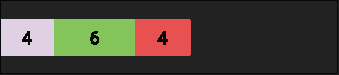
Tier None
Nolan Schubart (OF, 21)
This pick wreaks of the Guardians doing the “see, we’re cool, we don’t just draft high-contact no power guys!” thing. He’s, in fact, the exact opposite of that. To me it’s interesting that since he was their fifth selection (3rd Round, 101 overall), there’s less organizational pressure to be more than who he is. Schubart is perhaps the most physical player in the entire draft. He has a linebacker’s physique at 6’5” 230 lbs. That, at the plate, is everything you think it is. There are some massive holes in his swing, and he’s especially susceptible to high fastballs in the zone at present. His contact rate has been talked about ad nauseum as never been “good enough”, and that may be the case. However. He does hit bombs. Effortlessly. A three year performer at Oklahoma State, he totaled 59 HR. He produces triple digit exit velocity with regularity, and has been over 110 in games multiple times. The raw power is easily double-plus and he gets to a lot of it in games, and because he’s not a wild swinger when he connects, it’s usually good quality. He’s also a very patient hitter whose BB% has been near 20 for two years now. Back to the contact rate – at Low-A, it was 57% in a 15 game sample. Pretty awful. But true to form, he also hit 3 HR and had a .424 OBP while hitting .255. To quote The Simpsons “Do you wanna know the terrifying truth…or do you want to see me sock some dingers!”. That’s Schubart in a nutshell. There’s also no defensive value here, whether he ends up in a corner, at 1B, or as a DH, it doesn’t matter. If he makes it, it’ll be for his bat. He’s a really fun player to speculate on for the hobby, and I think his real-life ceiling is better than Franmil Reyes or Jhonkensy Noel. He just can’t slip beyond where he is already from a contact perspective. - Max Arterburn
Risk: 8, Ceiling: 6 (Both)
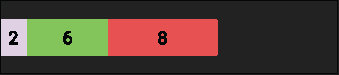
Aaron Walton (OF, 21)
Walton was a bit of a surprise pick when he was taken 66th overall in the CB-B Round, but he did sign for just under slot money so the Guardians saw something in his skillset. It lacks a true drawback, but there’s nothing loud either, so I’ll focus on things to be critical of. Walton transferred to Arizona for his Junior year to showcase his talent on a bigger stage after two years at Samford, and served as the Wildcats’ CF. His speed is good enough to get it done out there, but he’s more savvy in the field than possessing plus speed that transfers perfectly to the bases. He’s also 6’3” with a bit of a thicker frame already. His quickness could easily diminish to the point of his growing off of the position as he hits full maturation in the next few years. That height he has isn’t really used well at the plate. He stands in a fairly deep crouch, uses a big leg kick, and stoops over the plate so much that it looks like with any swing he’ll take, he’ll be more comfortable going to the opposite field. However, in reality he uses his intense coil to rip powerful liners to the pull side – something he’s very adept at doing with fastballs.His swing path is quite short and his contact rate is strong, but it also inhibits use of his levers to the point of his power being just average. It’s possible that he makes adjustments to access more power, sure. That’d certainly make him more interesting for the hobby. But that swing is so specific – there’s not many like it, and asking a player to change who he is in that aspect is a tall ask. I think Walton falls in the bucket of so many Guardians prospects. Good fielder, good hitter, not much true power. Walton also carries the risk of never learning how to hit breaking pitches at an average rate. It’s a significant detriment that showed up in his pro debut at Low-A where he posted a K% near 30 (just a 16 game sample though). It’s more of a tick in the negative right now than a flag. But for a guy that was also drafted into a poor hobby market, it’s enough for me to tip him into the “hands off” bucket, at least at release. - Max Arterburn
Risk: 5, Ceiling: 4 (Both)
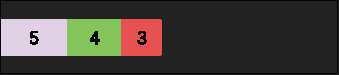
Colorado Rockies

Tier None
JB Middleton (RHP, 22)
Middleton was drafted 45th overall and signed for near-slot money, which was an expected outcome for the 6’0” righty. At only 178 lbs he is undersized for a starter, but he does have an athletic frame and he went out this year at Southern Miss and proved he can handle the workload, throwing over 100 innings. What’s more, he pitched very well – so much so that he was a Golden Spikes semi-finalist. Middleton gets it done with a fastball that can get into the high 90’s with solid ride traits, but there’s more to be unlocked yet with its consistency. He then uses his change and gyro slider to pair off it. Both of those pitches have similar mid-80’s velocity and have two-plane breaks, but in opposite lateral directions. There’s some work to do in developing consistency and shape with both of those pitches as well, but he’s an intriguing ball of clay. The problem is, everyone hates balls of clay in the Colorado air, and the hobby is doubly so. Even ready-made collegiate pitchers struggle in this system, and by all accounts Middleton is more stuff than a finished product at this juncture. The new Rockies regime could somehow(?) bring some changes with how they develop pitchers, but they get no benefit of the doubt. As it stands Middleton can get thrown in the “Rockies pitcher” bucket for now. He doesn’t have enough present skill to escape it. I’d rather be wrong about one single Rockies pitcher before I advise chasing one. It’s a shame, because there is significant upside with Middleton. - Max Arterburn
Risk: 6, Ceiling: 6 (Both)
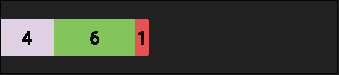
Ethan Hedges (3B, 21)
I don’t know what in Hedges’ profile made the Rockies reach to draft him in the 3rd Round, 77th overall (and then essentially pay him slot money). Do they value his ability to pitch in relief? You expect 3rd Rounders to have either a high ceiling or a high floor. There is some floor by advent of playing at USC and being a major offensive contributor for them, but there’s not enough here to say he should have been taken before the 5th Round. Hedges loves hitting to the opposite field. His setup is is a deep crouch that uses a high leg kick, and when he plants his front foot he tends to keep it significantly bent as he rotates his back side. It makes lacing liners to right field look really natural, even without engaging his lower half fully. Of course, the reverse can also be true. When he has to pull well placed pitches on the inside (especially harder breaking pitches), the need to straighten that front leg is a bit of an obstacle and can create timing issues, and he either gets weak contact or bad launch angles. It’s just a really funky swing. But he’s been able work through it all to the point of where there figures to be average hit tool projection. With a 6’1” frame there will be obvious flashes of power as well, but I think he’ll be more of a fringe-average asset in that regard. As I mentioned, he pitched last year as USC’s closer, and was a John Olerud Award finalist. That goes more towards his being a surefire candidate to stick at 3B, where his arm plays very well. This package sounds an awful lot like more of a 5th Rounder than a 3rd Rounder, doesn’t it? The hobby potential is really lacking in the ceiling, even with the Coors effect, since his power isn’t a calling card. The reasonable downside is that he doesn’t even have enough power to stick at the position. Likely median outcomes for Hedges include a short-side platoon, and a bat-first util whose value isn’t power-centric. Is that something we’re really interested in for the hobby? For me, that answer is “probably not”. - Max Arterburn
Risk: 6, Ceiling: 4 (Both)
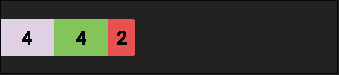
Max Belyeu (OF, 22)
The Rockies had to be thrilled to snag Belyeu (pronounced bell-oo). The 2024 Big 12 Player of the Year was projected to be a top 50 pick in the Draft, but slid to 74th overall where he only signed for slot money. So what happened? Was it just poor performance? Nope, Belyeu broke his thumb in March, missed 6 weeks, and upon his return, really struggled to find his rhythm, seeing his average slide from .358 to .303. He really needs that rhythm to operate properly, because his approach is entirely based in aggression. Belyeu is a really well built 6’2” 215 lbs, and he uses that strength to his advantage to powerfully slash to all fields. He’s really good at manipulating the barrel as well, although he is susceptible to getting fooled by pitches and rolling over, so it may not always show up on the stat sheet. He also swings and misses a lot in general, which has led to some high K numbers. He toned down his swing frequency in his High-A debut, but that didn’t help matters. In 21 games he racked up 32 K, a mark well over 30%. His contact rate in the mid-60’s isn’t surprising – it’ll always be low, I think he can get away with it being low – but not this low. I think the all fields power is intriguing enough for the Coors effect to have some hobby impact here. It’s also possible he never found himself in his recovery from the thumb injury, and we can expect a recovery of some sort. He’s a pure RF profile that should provide some defensive value, especially with his arm. So, in addition to the obvious raw power, there’s plenty of things to think of positively. He’ll just probably need to get to a solid 40 on his hit tool to make it as a strong-side platoon bat. An everyday player though? I’m not so sure. - Max Arterburn
Risk: 6, Ceiling: 4 (Both)
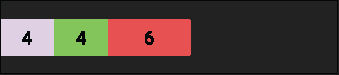
Cameron Nelson (OF, 21)
Another look at the MLB draft for the Rockies, another of my “what in the world are they doing” shake of my head. Hopefully the new regime can effect positive change there, but that’s a tall task when you have no change in ownership. Nelson did not crack our top 400 draft prospects, yet the Rockies drafted him in the fifth round and gave him 70K overslot. During the draft show on the MLB Network, Jim Callis commented that this was the first player that had been drafted up to that point that neither he nor Jonathan Mayo had on their radar and he wondered if this was going to be a money-saving pick to help sign first round pick Ethan Holliday. And nope, Rockies gonna Rockies. Insert your choice of shaking my head or scratching my head or head in hands gif here. Nelson’s standout traits are playing a solid center field with the speed to stick there and an above average hit tool from the left side of the batter’s box. Nelson did pitch a handful of innings out of the pen for Wake Forest in 2024, so maybe the Rockies did draft a pitcher here! Just kidding. The Rockies did not give Nelson any official game reps post-draft, so the college tape and reports are all we have to reference. He missed the first half of the season as well, making it doubly hard to know how much of his improvements with contact and cutting his K rate in half are real or are small sample size noise. One thing that was consistent was his lack of power - he hit just one home run in 2025, and none during his freshman year. This is a punch and judy 4th-5th outfielder type at best but more likely serves as org depth. We can ignore Nelson from a Hobby perspective. - Joe Lowry
Risk: 9, Ceiling: 3 (Both)
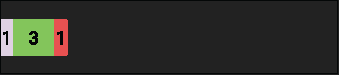
Riley Kelly (RHP, 21)
I really hate piling on the Rockies, but there’s a million legitimate ways to do it. Here’s another. The fact is that they are both bad at developing pitchers and it’s a bad MLB environment for proving their stuff. So, there are major caps for any pitcher coming into their system, and Kelly is not an exception. If he had built up a big workload or had pinpoint command of his stuff within his 6’5” frame and had potential to be a quick riser, then we could have a discussion. But Kelly really rose up draft boards because he was emerging as a starter midway through the year for Irvine, his first time doing that in his three years in college. Guys like this almost always need more development once they get to the pros, and, well, you can see where I’m going with this with him being in the Rockies system. He has a low-90’s fastball, but it plays up thanks to his higher approach angle and jerky deceptiveness in his delivery. When he’s locating it well he’s really tough to square up. Even better is his high 70’s hammer curve, which he’s pretty consistent about keeping down in the zone – it has the makings of a plus pitch and a great swing-and–miss offering. If only it were a pitch he could throw more than 25% of the time, right? He also has a change-up that is a legitimate weapon against lefties, but for it to be a true third offering there’s work to be done. There is not a strong track record or command. In fact, there’s not a strong track record of much – he had only thrown 20 collegiate innings prior to the 66 he threw this year. His 10 BB% is a fringy number, and will need to be improved upon considering the lack of depth in his arsenal and being void of an above average fastball. There is not much of a likely positive outcome here considering everything. Right now, we’re likely looking at a backend SP or a middle reliever. In this system, it’s an all hands off situation. - Max Arterburn
Risk: 6, Ceiling: 3 (Both)
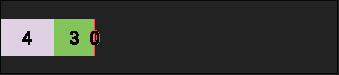
Detroit Tigers

Tier 3
Malachi Witherspoon (RHP, 22)
Malachi, who was actually more highly regarded than his twin brother Kyson (1.15, BOS) coming out of high school, was a key cog in the Oklahoma rotation alongside his twin in 2025, and was snapped up by the Tigers in the 2nd round (62nd overall). Malachi is actually a bit bigger than his brother, standing an inch taller at 6’3” with a 211 pound frame. Malachi has a similar repertoire to his brother Kyson, but lacks the polish and refinement in his offerings to stand out as a top tier arm at this juncture. The fastball sits in the mid-90’s and can be dialed up to 99. He has a lower arm angle than Kyson, which gives it a bit of horizontal run. Our scouts at Prospects Live did note, however, that the HVB and fastball shape in general aren’t great, and he can lose command of it at times. He features a very good curveball, a solid slider, and like his brother, has a developing changeup. As I mentioned, very similar repertoire, except the fastball is a few grades down and the command is a grade or two down, which makes him a pretty volatile arm for now. 2026 will be interesting- if he can make some tweaks to the heater and hone in his command, he’s got the secondary stuff to be a good starter. If not, he could be a frustrating talented arm plagued by control issues. Malachi will certainly begin his minor league journey as a starter, however he carries a good bit more reliever risk than Kyson. Detroit is a great pitcher's park if he can make it to the bigs as a Tiger, but the reliever risk limits the Hobby appeal here (not to mention it took a couple Cy Young awards for Skubal’s cards to take off). Make sure to double check which twin you’re chasing on eBay, folks! - Will Jarvis
Risk: 8, Ceiling: 6 (Both)
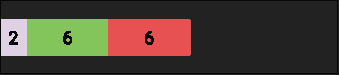
Jordan Yost (SS, 19)
The Tigers continued their quest to draft a stud high school shortstop every year, grabbing Yost with the 24th overall pick. Yost is a left-hitting shortstop and another big-time pre draft riser- we had him at 65th on our final 2025 Pre Draft Big Board. Yost’s calling card is his speed, athleticism, and effort. Standing at only 6’0” 180 lbs, Yost has a ton of room to fill in and mature physically, and his long term outlook will be pretty dependent on his physical development over the next couple years. He is almost entirely hit over power, and profiles as a future table setter. Now, we did see the Tigers nab Kevin McGonigle who has gone from all hit to showcasing elite exit velo’s, but I’m not sure you can expect to replicate the development curve of McGonigle on every prospect. I think Yost is a great real life prospect, someone reminiscent of a Brice Turang-esque offensive profile but at SS. The speed is dangerous, and the hit tool stands out right now. But as far as hobby value goes, I’m wary about the need to gain serious weight and make major changes to tap into power. It probably isn’t in his best interest to re-gear his swing or make those tweaks to sacrifice his elite hit tool for a marginal increase in power, so that is why I have him in Tier Three. I actually really like him for the real world, and think it’s a nice pick with a combo of high floor but a real ceiling as well. But, card markets for guys who play up the middle with an elite glove and speed with no power are historically quite weak. Love the pick, just not for the hobby. - Will Jarvis
Risk: 8, Ceiling: 6 (Both)
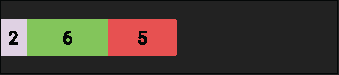
Tier None
Michael Oliveto (C, 18)
So, there’s no doubt that the Tigers reached with taking Oliveto 34th overall. We were among the highest with our 4th Round grade on him. But when something like this happens, it’s important to look at the context of why. For me it’s three things. First, he’s a catcher with size (6’3”) who wasn’t committed to a school with a major development program (Yale) so he was going to be easier to sign. That proved true, but it was only a slight underslot signing. Second, Oliveto had a loud performance in a prominent showcase event that likely put him higher on scouts’ lists than he was on many of the pundits’ lists. So, he was never truly going to last until the middle rounds. Third, the Tigers had a clear philosophy in this draft to go prep-heavy in their spending, get volume, and take players who can have exponential growth. That last bit should be the most interesting hobby-wise, and Oliveto certainly has the power potential a player of his size should. He has a simple setup with smooth and balanced swing that generates great exit velocity, but there’s quite a way to go in actualizing an ideal launch angle and using all fields for power. His hit tool, especially swing and miss, is a bit of a question at present, but we should not trifle with that fact right now. We know he’s raw – there’s a reason most evaluators had him where he was. For his age he’s fine defensively, which is actually a ding to his hobby status with the longer pipeline catchers normally go through. For instance, Joe Mack has hit an ideal trajectory to the majors, comes from a similar background, and was taken at a similar spot in the draft. He has a little bit of hobby status, but is he in anyone’s top 10 anticipated debuts for 2026? Not so much. I think Oliveto is a fine pick for the Tigers from a real life perspective. But prep catchers, in my opinion, are the worst demographic from a hobby perspective. - Max Arterburn
Risk: 9, Ceiling: 6 (Both)
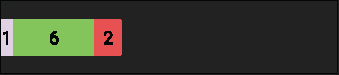
Caleb Leys (LHP, 22)
A base only subject in the product, the lefty-throwing Leys was the ace for the Maine Black Bears in 2025, coming off a 2024 that was lost to Tommy John Surgery. The Rhode Island native, who will begin his first pro season as a 22 year old in the Spring, stands at 6’ 1” 190 lbs. Leys got a lot of work from the jump in Orono- he threw 66 innings as a freshman over 14 starts, and threw 71 in 19 appearances (13 starts) in 2023 before going under the knife with Tommy John, missing 2024. He was OK in his first two years, but realistically not a huge pro prospect as he posted ERA’s of 4.64 and 4.94, respectively, walking 6.4 then 6.6 per 9. The strikeout numbers hovered slightly above 9 per 9, but the walks were clearly a bit of an issue. Leys was a new man in 2025, bursting on to the scene with a 2.69 ERA in 14 starts while slashing his walks nearly in half, posting a much more pro-ready 3.6 BB/9 to go with an increased K/9 of 9.9. Leys didn’t concede a single homer across his 67 innings of work. Like most drafted pitchers these days, Leys did not pitch a pro inning in 2025 post-draft. The heater sits in the low 90’s and can get up to 95 MPH, however it has a pretty elite 7+ feet of extension which makes the stuff play up a good bit. He throws a pretty good slider as his 2nd offering, and mixes in an OK change up as his 3rd. Leys checked in at 395 on the final 2025 Draft Big Board on Prospects Live, but it was noted that he posted a 1.80 ERA over his final 40 innings of work at Maine while showcasing elite deception and a knack for inducing weak contact. There’s a nice floor to work with here, especially given how much he improved as the post Tommy John year went on. The 3 pitch arsenal (with a change receiving mixed reviews) worries me a little for long term starter potential, but I do like his ability to get results to date and his advanced metrics make me feel good about his fastball being a weapon long term despite average-ish velocity. If the change-up can develop I think Leys could be a starter in the Majors in a few years, but if not I think the strong fastball/slider combo could see him become a valuable bullpen piece from the left side and take a fast track to Comerica. It’s not a super exciting profile, but as far as day 2 college arms go, it’s about as good as it gets once you’re outside the elite grouping of arms. - Will Jarvis
Risk: 6, Ceiling: 5 (Base Only)
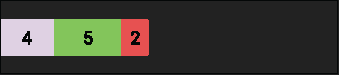
Ben Jacobs (LHP, 21)
Taken in the 3rd Round and signed for just under slot money, Jacobs is an Arizona State lefty whose overall performance has never really matched his fantastic swing-and-miss stuff, mostly due to poor command. But let’s look at the positives. He’s an athletic 6’2” with a fluid, repeatable delivery. He increased his workload to over 80 innings in 2025 and maintained a K% over 32 for a second consecutive year. His fastball is a highlight of his arsenal despite unspectacular velocity (92-94), because he has a lower arm slot, hides the ball well, and it has very good spin traits with its ride. He also has a sweeping upper 70’s curve that squarely has above average potential, a low 80’s splitter, and a high-80’s slider. All of these pitches get a good deal of whiff when he’s locating. In my look he left way too many pitches over the plate though. It’s a regular refrain for him – with his wide array of offerings, there isn’t consistency with any pitch. There’s nothing he can go to at any given time to paint a strike on any given day. His best pitch will vary from start to start. Because of all this irregularity, there is considerable relief risk with Jacobs. He probably needs to streamline his offerings – work on 2-3 pitches, focus on getting his command straight with those. I think the Tigers took a fine shot on a guy who can certainly put away hitters, but Jacobs is definitely a project. The stuff is there. But there’s nothing about his profile that screams mid-rotation SP as a 50th percentile outcome. Furthermore, without autographs in the set, he’ll surely just be an afterthought. - Max Arterburn
Risk: 7, Ceiling: 4 (Base Only)
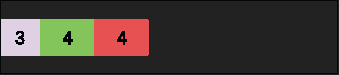
Houston Astros

Tier 2
Xavier Neyens (SS, 19)
Neyens has been a big name for a long time, dating back to 2022 when he played with Team USA’s U15 team – he’s always been talked about as a surefire first rounder in this class. He’s grown into a very physical 6’4” 215 lbs pillar of strength, with just enough flexibility to give him a chance to stick on the left side of the infield, likely at 3B. He also experienced a bit of growing pains, never really getting to the consistency of hard contact you’d like to see in a top 15 pick. But the Astros paid him slot money at pick 22, and they’re a great system in which to develop. Power is very clearly his carrying tool, and it’s ceiling is such that how his hit tool in full develops is less important to us in the hobby.. There’s 70 grade raw pop already, evidenced by exit velocities over 110 in showcase events. He uses all fields with that power in games. And on and on with the power. We’re not worried there, and I think everyone knows that. It’s the hit tool that’s the most concerning, but I’m not as worried about it others. The X’s and O’s of his swing is such that he uses his lower body to rotate extremely well, then he finds a place for his hands to drive though with tremendous bat speed. The plane of that swing stays in the zone for a long time, so as long as he has a semblance of timing, there will be contact. Neyens is a smart hitter, very patient at the plate to the point of passivity. He just has to get better at choosing when to attack, and how to dial back so that his contact stays meaningful in unfavorable counts. There will likely continue to be quality of contact issues early on – don’t let that dissuade you from going in on him now or even a year from now. The hobby benefit here is that you’re getting a guy that’s like some of the higher ceiling college power bats, but at a younger age. He’s mature enough (both physically and mentally) to pay dividends on it, and reach the majors by the time he’s 21. It really all comes down to how he all comes together with his performance in the minors. He’s pretty clearly a Top 10 name in the product, and firmly Tier 2. - Max Arterburn
Risk: 7, Ceiling: 8 (Both)
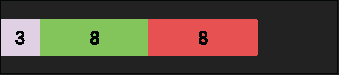
Tier 3
Ethan Frey (OF, 21)
The Astros didn’t have many picks, and knew Xavier Neyens was going to take full slot after taking him in the 1st Round, so for them to take Frey (pronounced fry) and pay him overslot money says how much they think of the slugger, even with a short track record that saw him with under 100 PA before his Junior year. At LSU he was surrounded by superior defensive options so he mostly DH’d, but he does have the ability to handle the OF corners, and the Astros even gave him run in CF in his pro debut. He’s a very athletic 6’6” 225 lbs, but isn’t a great runner in terms of being a threat on the bases. With that frame, we’re of course talking about power. He definitely has it, but I see a player who’s not really willing to use all his levers in a loose, fluid fashion. Instead, he takes half measures by staying in a deep crouch throughout his swing. He’s a rhythm hitter who doesn’t pick up his front foot or stride out, and relies heavily on the flexion in that front leg to rotate his hip through. It’s a bit of a weird swing, and a longer path. Obviously, looking weird isn’t the be-all-end-all, and he was a key player on a National Championship team. His strength, especially to his pull side, is exceptional, and he sells out for it in favorable counts to great effect. There’s a lot to like in his ability to get to power in his game, and to get balls into the air. That continued at the pro level for 26 games (although for a man with his strength, it was expected at Low-A.) With his setup, he is prone to high outside pitches when he’s not selling out for power, and in general needs to continue to be measured in which pitches he chooses to attack. There will always be some swing-and-miss concern considering his size, but it’s been a complete non-issue as a pro thus far. In fact, his SwStr% was an elite 6.2%. It’s really so far so good for Frey, and he deserves to have an up arrow next to his name based on what he did in Fayetteville. The hobby may not fully take note of this, but being an LSU product reduces the possibility that he’s much of a sleeper. I like him quite a bit – he’s pushed himself up far enough that it would take a lot for him to become insignificant for the hobby. - Max Arterburn
Risk: 6, Ceiling: 7 (Both)
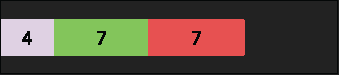
Kansas City Royals

Tier 2
Sean Gamble (OF, 19)
At $4 MM, The Royals had to go slightly overslot with the 23rd overall pick to sign Gamble to get him to forego his Vanderbilt commitment, but there was never really any doubt he would do so. He had plenty of experience against high level competition at IMG Academy in Florida, which was a destination program for him as an Iowa native. So the natural progression was for him to go pro next, and there’s already some strong indicators that doing so from the prep ranks will pay dividends. It’s impossible to discuss Gamble without mentioning his truly elite bat speed. He started his physical development through his shoulders, but he’s also always been great at rotating with his hips. Those two things combined that have lead to, when he squares up, some pretty titanic HR. There’s a video out there of him hitting one at an estimated 450 feet in a HS game, for instance. He has filled out beyond his shoulders now, but there’s plenty of room for physical growth remaining. His current plus speed and ability to handle CF could take a hit when that happens, but it doesn’t, man this guy has unlimited hobby potential. He’s a good OF defender for his age, and if he slows down he would be a great fit in the modern super-athletic RF mold. His hit tool is a bigger question mark, but there have been strides recently. He loves swinging for the fences, to the point of his ability to hit to all-fields with true power being limited. Still, he has been able to stay connected to the spin of breaking balls and make contact with regularity, manipulating the barrel well enough to drive those balls with meaningful contact. There’s hope that he just flips that approach into going oppo with less ferocity in his swing which would let that excellent natural bat speed play better. At present he does seem to be on the aggressive side, and that aspect will definitely need to be massaged as he develops to hit his ceiling. Gamble’s hobby ceiling is clearly immense. He had a wide base of tools that all have clear above average potential, with his power being even higher. If his hit tool takes a jump – which isn’t a surefire thing – he would be a hobby superstar. He likely only needs to develop a below average hit tool to make it to the majors though, and if that happens he’d be a middle of the order bat with 30 HR potential. He’s a Top 10 name in this product, and since he’s a more versatile player I’d take him over a fellow 1st Round prep like Xavier Neyens. (No, I'm not gonna make the "take a Gamble on Sean" joke, even though it's right there. He's a better player than that.) - Max Arterburn
Risk: 8, Ceiling: 9 (Both)
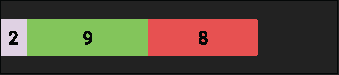
Josh Hammond (SS, 19)
Although he also had interest as a pitcher, I’ve written SS above here because that’s how Rob Manfred announced him on Draft Day, and I think that’s how the Royals intend to deploy him. He also likely isn’t a SS long term – not already weighing in at as a muscular 6’1” 210 lbs with some physical development yet to come. But as you might think with the kind of arm that he has, 3B will be a great defensive home. Hammond is the son of the High Point University baseball coach, but he was committed to a much more prestigious North Carolina baseball school – Wake Forest. It’s all moot now and likely always was, as he was taken where he was expected at the end of the 1st Round, 28th overall. He has off the charts athleticism – there’s at least above average speed, but that needs to be developed – more intriguing is how it translates to his power. He doesn’t have to do many things players of his age need to do to generate power. He’s able to be simple and conservative in his setup, with his hands low and a simple stride, staying balanced throughout it all. It looks boring until he starts his actual swing, which is an explosive quick effort that has produced exit velocity in excess of 110 MPH. He has had a bit of an issue with elevating in that past, and more often the highest of his exit velocities have a low launch angle. But the bones of a very high power ceiling are here. As you can imagine, with so little effort required, he’s able to employ a very patient approach at the plate, willing to take a strike that he doesn’t think he can do damage with or work a walk. Like Sean Gamble, his hobby potential is immense. But how to choose between the two if it comes to it? Well, if you’re looking for a player with a better HR ceiling, it’s Gamble. But if you’re looking for a player that’s likely to provide better overall offensive value, to me it’s Hammond. Either way you slice it, the Royals have executed a draft that’s quite exciting through the hobby lens, and I would put them right next to each other in the overall product ranks. - Max Arterburn
Risk: 7, Ceiling: 9 (Both)
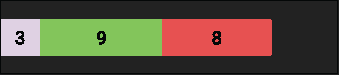
Tier None
Nolan Sailors (OF, 22)
Sailors had the honor of being the first collegiate Senior off the board in the Draft this year, which happened in the 4th Round, 128th overall. His bonus was one befitting a post-Round 10 guy (150k), and was surely taken as high as he was to allow the Royals to go overslot with other players. Sailors played all four years at Creighton, posting solid on-base numbers in each of his final two. That’s a nice piggyback on his best tool, which is above-average speed. It plays even better that on the bases, where he’s an aggressive runner who was really let loose once he got to pro ball. He stole 17 bases in 32 games (with 4 CS). Everything he does really helps that aspect of his game. He does not engage his lower half particularly well, instead whipping through with a flat plane meant for contact. The reason he’s not as highly regarded as others of his ilk? He wasn’t elite as his execution of that contact – it was only an above average rate in his High-A debut. Teams prefer projectability in the power department if that’s the case, and Sailors has four years of a track record with little gains there. Thought to be a longer term corner OF because his arm strength is not great, the Royals deployed him to CF in his debut to see if his range was enough deodorant. It’s definitely so far so good in the pro’s so far for Sailors – the guy successfully continued his high OBP with a .412 mark. But there is simply no ceiling here for the hobby to latch onto. It’s pretty clear that his ceiling is a second division regular or 4th OF, and certainly will mostly hit at the bottom of lineups to provide wraparound value to the more dynamic top of the order. - Max Arterburn
Risk: 4, Ceiling: 4 (Both)
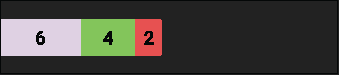
Michael Lombardi (RHP, 22)
Taken in the 2nd Round and signed just under slot money for $1.3 MM, Lombardi has two great pitches.There’s a mid-90’s fastball with great carry and run, and curve with big downward break. Both figure to be at least above average at the next level, but curveballs aren’t particularly en vogue for starters as a pitch used more than 20-22% of the time, so there really needs to be a third quality pitch added to his arsenal. He does have a change, and he used it more in 2025, but it will need to continue to be developed in the Royals’ system. There is a probability that he’s a reliever long term even with the development of that pitch, but I don’t want to dismiss his potential as a starter, even though he’s never done it for any extended period. See, Lombardi was a two-way player at Tulane, and the athleticism he showed in center field will absolutely transfer to the mound – to just stick a guy like this at closer is a bit of a waste. He could prove himself to have some surprising stamina as soon as next year. Maybe 80 innings, independent of his results? If goes out and rips that off, I’d be very interested in him for the hobby. I know he has the stuff to be successful, and if he can come anywhere close to the 43 K% he posted in his Junior season, you’ll see it too. There’s definitely a lot of wishcasting here. I haven’t brought up his command, which is squarely below average. You’re saying “c’mon man, he’s just a reliever” right about now. I don’t think that’s wrong! I just think his ceiling is better than that, and if he does somehow, some way make it as a starter, he’ll be significant for the hobby. - Max Arterburn
Risk: 6, Ceiling: 5 (Both)
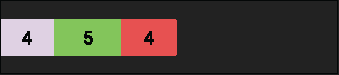
Cameron Millar (RHP, 18)
The Royals had a lot of early picks, none of which they went significantly underslot with, but the sheer size of their pool allowed them to select Millar in the 3rd Round and meet his $1.50 MM bonus demand, significantly overslot for that point in the draft. Millar is quite strong throughout his 6’2” 200 lb frame – he has athleticism for days. That will go a long way towards maintaining his mechanics deep into starts as he matures further. But there is already more than just a ball of clay here. Millar was a later riser to the California prep scene when his fastball popped up into the mid-90’s in early spring. Its shape is inconsistent, but at its best there is significant armside run and ride up in the zone. And while the shape of the pitch isn't quite there yet, his command of it is. He can put it wherever he wants in the zone, or elicit chase. The command of his other pitches are fringier right now, but that’s common for prep arms. His change is an offering with great shape and clear plus potential, and his arsenal is rounded out by a slider which he doesn’t have much feel for at present, and may need a complete rework. Hobby-wise, see a guy with a lot of potential but a long way to go. The depth of his arsenal isn’t great yet, and he’ll need that third pitch to have success beyond the low minors. He’s definitely strong enough to go out and handle a significant load right away, but it would also be fair for the Royals to slow play him in a more developmental setting to give him a better chance at throwing a third pitch with regularity. He’s a good get for the Royals, but as their fifth pick in the draft I don’t think he will be a strong hobby name at release from a team context. - Max Arterburn
Risk: 8, Ceiling: 6 (Both)
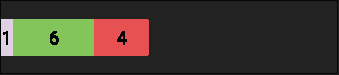
Justin Lamkin (LHP, 21)
Lamkin has a lot of things every team likes. He’s still only 21 until June, was a three-year starter at Texas A&M, and has a good deal of polish coming from the left side. At 6’4” there’s just very little doubt that he’s capable in a starting role. So with such a high floor, it’s little surprise that the Royal grabbed him with their CB-B pick, 71st overall. He’s a prototype crafty lefty, who hides the ball extremely well coming from his lower three quarters delivery. As he’s matured he’s actually pitched to more contact, relying on his command to elicit weak contact – and it’s made him a better pitcher overall. And as I say that, the hobby wheels come to a screeching halt, right? Yeah. He’s not going to be a dominator. But he will be frustrating for opposing hitters, without much doubt. He has a fastball that he works with in the mid-90’s, but it’s not one with great movement traits. His slider is his main go-to, a traditional slider with plenty of two plane late break that gets loads of chase and awkward swings. He also has a change-up, which has fallen by the way side with the emergence of his slider, but it also has polish. Lamkin is so unremarkable though, that his ceiling is a backend starter. There’s also the possibility that he gets moved into a middle relief/swingman role if the team determines that his moxy is just not quite enough to last two times through the order. But he should get to the majors quickly – there’s not much doubt that he has that ability in him. - Max Arterburn
Risk: 3, Ceiling: 4 (Both)
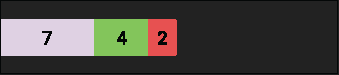
Los Angeles Angels

Tier 2
Tyler Bremner (RHP, 21)
The Angels, as they tend to do, surprised many when they grabbed the right throwing Bremner coming off a good but not great Junior year at UCSB. The Angels signed him for $2.5 million under slot, in a move that is both defensible and disappointing for Angels fans. Bremner is certainly a good pitcher, and was one of the best college arms heading into the draft. But he wasn’t at the top of any boards, and there are a half dozen or more names that seemed more qualified to go 2nd overall. Bremner lacks the real ace upside you’d hope for on someone taken with this draft capital, however he does have a nice floor thanks to a three pitch mix including a 70 grade changeup. The fastball pops in terms of velo, but our team at Prospects Live has been quite wary about the actual fastball shape, believing it plays down due to a lack of extension, spin rate, and HVB. It’s fairly empty velocity at this point in time, and sets him back a notch from the elite arms here. Bremner was phenomenal in his Sophomore year, splitting time between the pen and the starting rotation, then took a bit of a step back as a Junior when he became a full time starter. I think he’s a perfectly fine middle of the rotation guy eventually, but what really scares me off Bremner is the team who drafted him. The Angels have gained a reputation for needlessly fast-tracking prospect after prospect, and Zach Neto is really the only one they haven’t stunted developmentally. Jury is still out on Christian Moore, but you get the idea. I worry that they chose him due to his perceived high floor and will try to speed him through the minors to have a Chase Burns timeline. Bremner is solid, but needs a lot more work than a guy like Burns and will benefit from a full year in the minors in 2026. Bremner is a good prospect in a vacuum, but between the fastball shape making it play down and the fact he may be in the worst organization for developing prospects, I’m scared off from buying here. Let’s hope that, similar to Neto, his talent is simply too much to ruin. - Will Jarvis
Risk: 8, Ceiling: 7 (Both)
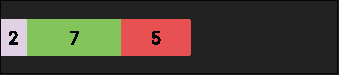
Tier 3
Johnny Slawinski (LHP, 18)
By drafting Tyler Bremner 2nd overall and signing him for a significantly underslot bonus, the Angels had a ton of extra money to play with in their pool. They used almost all of it on five prep arms, and Slawinski was the highest overslot of all, signing for $2.50 MM after being taken in the 3rd Round. Hailing from a small town in Texas west of Austin, the 6’3” lefty drips with projection. The effort in his three-quarters delivery is fairly low. The fact that I can see him putting more effort into fastballs is irrelevant for now, as it has great life up in the zone, he’s able to locate down in the zone, and there is some natural deception in his delivery. He works with that fastball in the low 90’s for now, but it’s really easy to see it becoming a true swing-and-miss weapon with a bit more physical maturation. He even already has a clear-cut second best pitch – his change up. It has so much movement that it really functions as a reverse slider, and is a nightmare for righties. He also has a traditional slider, but that is further behind due to it’s inconsistent command, shape, and velocity that’s too similar to his change (in the high 70’s). Even if the two secondaries are moving in opposite directions, savvy hitters can sit on offspeed and punch it meaningfully to the outfield. What I’m saying is – he needs a third pitch that he simply does not have yet. That’s the one thing that will slow his ascent – we all know the Angels will push things as fast as possible regardless though. I think that despite his slightly underdeveloped frame, he should be able to handle Low-A right away next year, and we should expect decent results. His command being so far ahead of peers will go a long way in the low minors. How his third pitch develops will key how high the ceiling truly is, but it already looks to be substantial. Hobby-wise, being an Angel actually works in Slawinski’s favor here. We don’t have to worry about him being slow-played. He can also pour all his developmental focus into that one thing – that’s easier than most preps, and we can lean on the coaching for at least that. He’s still likely several years away, and it should be like, actually fun to see how he comes along – he’s likely to be moved quickly, but not jammed through like Caden Dana. I think the organization has learned from that. - Max Arterburn
Risk: 8, Ceiling: 7 (Both)
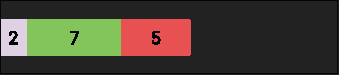
Luke LaCourse (RHP, 19)
The Angels took seven pitchers in their first eight picks of the 2025 MLB draft with LaCourse being the sixth of that group of seven. A prep righty, LaCourse was the Michigan’s Mr. Baseball in 2025 and a super high spin slider that got above 3500 rpm was what put him on the map. A fastball, change-up, and curveball complete the arsenal. A future starter’s frame at 6’4” and 215 pounds at 19 years old with the arsenal has one dreaming of at least a mid-rotation starter. Very little tape is out there as he did not pitch after the draft, but that Super 60 bullpen reel on social media is likely all he really needed. If LaCourse was in a strong dev org, I’d feel a lot more comfortable with my Tier 3 ranking and I’d definitely bump his Ceiling up a fair bit. In the Angels org, until we see evidence otherwise, we simply have to take a pessimistic position. This is probably a 7-8 ceiling in the Marlins or Guardians or Dodgers or any of a handful of other orgs. With the Angels, you just hope he’s a mid-rotation starter developed through sheer strength of personal willpower to build himself to that ceiling. As a player that only has base cards in the product, this is an easy avoid from the hobby perspective. - Joe Lowry
Risk: 10, Ceiling: 6 (Base Only)
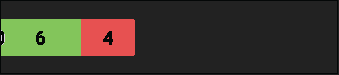
Tier None
Jake Munroe (3B, 22)
Monroe transferred from JuCo for his Junior season to Louisville, and he served as their everyday 3B. It was a showcase for him where he showed that he can continue to have great batted ball results, as well as an ability to handle the hot corner. It got him drafted to an underslot 600k deal after being selected in the 4th Round, 109th overall. He's a burly dude at 6’2” 230 lbs, and certainly no threat on the bases. At the plate he has a quiet setup with just a small leg kick, and a quick trigger with good bat speed. He has a really good feel for the barrel, and when he’s locked in he can be a true all fields slasher. There’s even a semblance of discipline in there, as his BB% was over 12% both in college and his Low-A debut. His power ceiling is not plus though – that’s the drawback to being a more complete hitter as Munroe is. Still, with above average power, an average hit tool, and plenty of extra base hit projection, there deserves to be a lot of hobby interest. We’re talking about a player with a 20-25 HR, high OBP ceiling here. He has a legit shot to stick at 3B as well, so it’s not like there’s a narrow path here. The Angels, surprisingly, may have found a diamond in the rough with Munroe. Considering his underdog draft stock, I don’t think he’ll be too expensive. That leaves me quite interested in acquiring a few pieces. But as you might be able to tell by the brevity of this writeup, he’s just a hair boring. Considering where he was before his time at Louisville, I’m sure he’d take that. - Max Arterburn
Risk: 5, Ceiling: 5 (Both)
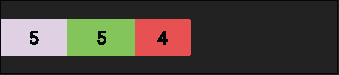
Chase Shores (RHP, 21)
Shores was taken in the 2nd Round and signed for slot money from LSU. Everything about who he's been and the professional organization that he’s been born into screams that he’ll be a reliever. However, what if he’s not? What if the Angels give the 6’8” athletic righty a chance to start? Well, if that’s the case he becomes a bit of a developmental project. The 2025 season marked his return from Tommy John the previous year, and though he started in LSU’s rotation, the rust that typically accompanies that return to game action proved to be too much once SEC conference play started, and he was instead deployed as a multi-inning bullpen arm for the rest of the season and really had middling results. Those are just results though. Shores has an effortless low three quarters delivery that flashes a fastball that gets into the triple digits with regularity in relief outings. At its best it has excellent armside run and occasional sink making it truly an electric pitch, but he also simply did not locate it well enough to get much whiff with it. In fact, most of the trouble I saw in my look is due to his leaving that fastball over the plate. He also has a change in the upper 80’s that’s squarely his second best offering, and a high-70’s breaker that lacks a true definition at present. There are two pitches here that have clear above average or better potential – that’s what we should be taking away as a bare minimum. Everything else will stem from how the organization chooses to develop him. Will the Angels streamline his mix and try to promote him aggressively as a bullpen arm? Or will they give him time to refine everything and let him truly get back to a place where he feels like he’s growing from where he was pre-TJ? LSU didn’t really let him do that, but if the Angels are smart they will. There’s a lot of upside here, even from a hobby perspective. But this context is just about as murky as you can get. The risk he has lies in both not getting to where he needs to be from a command standpoint, and the more obvious penchant for the Angels’ overpromoting prospects and then quickly turning everyone into a bullpen arm. - Max Arterburn
Risk: 7, Ceiling: 6 (Both)
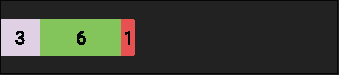
Nate Snead (RHP, 21)
Snead was high on my mind entering draft season. See, he’s from my area, and my son had his offseason baseball conditioning at the HS he attended, where he already has photos adorning the wall in a semi-permanent fashion. He’s truly a highlight of recent South Milwaukee athletics. Unfortunately, in his three years in college (Wichita State then Tennessee) he never developed into a starter of any sort, and with being drafted by the Angels, he likely never will. His Junior year was really a step in the wrong direction that saw him relied upon less by Tony Vitello, and his command drift squarely backwards. But his stuff has never been in question, and the Angels took a chance on him with an underslot deal at the end of the 3rd Round. His clean, athletic low three quarters delivery screams there’s more projection in the tank, which would build upon his already high-90’s fastball that has touched triple digits. It’s unusual for a RP to have a cutter of significance, but the movement profile and velocity difference (91-93 MPH) of his is such that it plays very well off of his 4S. He has a slider that to me looked to have really nice depth, but it’s more bullet movement than much sweeping action, and being in the low-80’s I’m not sure how effective that will end up without consistent 2-plane break. He also has a rarely used change-up which you can understand has been on the back burner because of his lower-velocity slider. But, perhaps if he can find some differentiation between those two pitches, there’s the ceiling of a true closer. As it is though, possessing a big fastball with a cutter as his main secondary? He’s more of a weak contact guy than one with true high-K potential. As I previously mentioned, he also needs to re-gain his command to hit a quick-rising profile. If you stuck with me for the entirety of this surefire relief profile, thank you! - Max Arterburn
Risk: 5, Ceiling: 3 (Both)
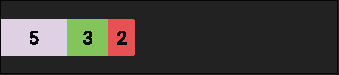
CJ Gray (RHP, 18)
The Angels’ 5th Round pick signed for an overslot $1.25 MM, Gray’s athleticism is just fantastic. He was a two sport star at his HS in North Carolina, playing quarterback for their football team, but his passion is baseball. He’s an extremely well built 6’2” 200 lbs already, and has plenty of projection remaining. His wide, well built shoulders and clean delivery allow him to be a reliable and consistent force on the mound, mostly with his fastball right now. It’s an offering that’s been up to 97 with great spin traits, though he’s still developing a feel for exactly how to attack hitters with it. He also features a slurvy breaking pitch in the low 80’s that needs refinement, perhaps being branched into two more distinct pitches. His change may be scrapped in time, as it has quite a long way to go in it's development. Gray is a very fun ball of clay to work with figures to have the durability needed to be a starter. But he has a long way to go yet, and will almost certainly start his career by playing in the Complex league as he refines, well, his entire pitch mix. Trusting the Angels with a guy that has so far to go doesn’t feel fantastic – that should be the overriding feeling as we address his hobby potential. But there is significant upside. I’d definitely be interested in him in another system, so perhaps those of you that are less Angels-averse should take a shot? - Max Arterburn
Risk: 10, Ceiling: 6 (Base Only)

Los Angeles Dodgers

Tier 3
Landyn Vidourek (OF, 22)
In his three years at Cincinnati, Vidourek (VID-uhr-eck) really grew into a fantastic base-stealing threat, and flashed an impressive power increase in his Junior year as well. He rose from relative obscurity before the season all the way into the 3rd Round, where he signed an underslot deal for $525k. The power-speed blend is intriguing, but most of his power is created from his twitchyness and impressive physique rather than a great swing. He actually has a low-handed setup that portends a flat swing plane, but he’s so great with his lower half that he’s able to elevate and create premium exit velocity pretty easily. I know there was a little bit of conflict in those last two sentences, but this is a tricky player to evaluate. He swings and misses a lot, including zone whiff. His approach at present is decent, but there needs to be a more…measured…approach for him to truly get close to his ceiling – but I see it as quite significant through the hobby lens. Vidourek’s debut in Low-A was true to he is. Ridiculous BABIP, nice surface-level stats, and some ugly contact rate (68%) and K (33.8%) numbers. He only swiped three bases in his 16 games there, but I would expect a greater frequency next year – this is a guy who was 39 for 40 in that department in his Junior year. His speed is enough to be a fit in CF, but Cincinnati (or Dodgers in his limited sample) didn’t deploy him there much. Instead, he’s the very image of the modern super-athletic RF. Don’t be fooled by the fact that he wasn’t a highly regarded draft prospect (we had him as an 8th Round value). Vidourek is exactly the type of player the hobby loves – it’s potential plus power and clearly plus speed. I wouldn’t be surprised by 20 HR / 40 SB seasons if he develops as we hope. Or course, it’s the value when he’s not doing those things that’s the biggest question mark. But we don’t really care about that sort of thing in the hobby at this stage of development. Landing in this market kinda stinks for collectors at large, because he’s not likely to sneak through as a cheaper option. But I’m just here to say that while there’s plenty of risk, he’s worth the shot at the higher price. - Max Arterburn
Risk: 7, Ceiling: 6 (Both)
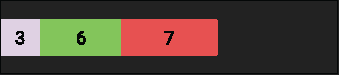
Charles Davalan (OF, 22)
A Canadian native, Davalan attended a high school academy in Florida before heading to FGCU for a year, then Arkansas this year as a draft-eligible Sophomore. Quite a journey, but it paid off, being drafted just before the 2nd Round, 41st overall, and signing for $2 MM. He may just be an elite contact hitter, and there’s a fairly rosy outlook on his hit tool in total as well. After striking out in well under 10% of his plate appearances as Arkansas, he got acclimated to the Dodgers’ system then went to Low-A for 8 games, where he hit .500 with a contact% of 88. Crazy. Everything Davalan does is truly built for contact, standing in at 5’9” with a deep crouch and a short stroke, and he slashes with to all fields, against all pitch types, in any count. His approach is disciplined, working walks easily, and he runs everything out hard with his plus speed. With that speed he could very well be a fill-in option in CF, but he’s truly a better option in left. On the bases he hasn’t been aggressive, but that could easily increase as he’s asked to do more in the professional ranks. He does have a little bit of power, to his pull side. He doesn’t look for HR, but when he sees something he can really rip he takes opportunistic hacks with confidence. It’s something like a 15 HR ceiling. So with that said, where does that leave him in the hobby? I’d call him extremely safe, and he’s not exactly boring when you watch him play. That mature approach at the plate and those contact skills could have him in AAA before 2026 is out. All of this is something that Dodgers fans are sure to glom onto. Still, his real-life ceiling is no better than an average major leaguer, but I can see his hobby interest outstripping that by a sizable margin. - Max Arterburn
Risk: 3, Ceiling: 5 (Both)
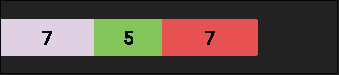
Tier None
Zachary Root (LHP, 21)
The Dodgers didn’t make their first pick until 40th overall, which they used on Root, a collegiate starter who (like his now org-mate Charles Davalan) transferred to Arkansas for his Junior year and further proved his ability to handle workload – he threw 99 innings. Only 6’1” but very sturdily built, the lefty is more than just an innings eater. His secondary stuff is great. He has a slider (or cutter) with tight spin that’s into the low 90’s that has great effectiveness against fellow lefties. I saw his curve in the low-80’s with some big break that he throws with confidence. But his best pitch is a change up that’s a little faster than and moves on a different axis than the curve, with great armside tumble. He’s a fiery competitor on the mound too, and when he really gets amped he can juice his fastball into the upper 90’s – but usually it sits around 95, where it’s a squarely fringy pitch and lacks consistent shape. But with a little bit of deception in his delivery and those three secondaries, there is legitimate hope that he can make it at a high-K mid-rotation starter. If he’s to stick with the Dodgers system though, color me skeptical that he makes it to the majors in that role. His entire package, with that plus change-up and mix that plays so well against same-handed batters, is the picture of what the Dodgers love to use in a situational multi-inning role. But in their market, I think that still holds his ceiling to where it could be as a definite starter in other organizations. It all washes out, but read the context here as well. He’s fairly safe and could get to the majors quickly, but if he doesn’t get closer to his ceiling than his floor, there won’t much of a hobby market even with the Dodgers. - Max Arterburn
Risk: 4, Ceiling: 5 (Both)
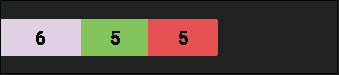
Aidan West (SS, 18)
West was the Dodgers’ 4th Round pick, taken 135th overall right where he was expected, but it took a substantially overslot $1.27MM to get him to forgo his NC State commitment. He’s a bigger kid, already standing in at 6’2” 200 lbs and thick in his lower half, but he moves so naturally in the field and at the plate that’s hope that he retains quite a bit of versatility. I watched video of him before I saw how tall he was – he really has a compact frame that should, anecdotally, provide a good floor. But that’s not who he is now. Right now at the plate he does have a beautiful, fluid swing with a flat plane, but it’s also longer with its path. He also has too much aggression in his game, and those two things combined have lead to more swing-and-miss than you’d like. The longer path and strong frame does afford some nice exit velocity when he barrels though. There’s just a lot that’s very unfocused with West on the offensive side right now. Can he shorten his swing without losing much power? Can he develop more discipline to have more consistent results? Can he improve his launch angle in hopes to get to over-the-fence pop? How the Dodgers develop him will key, well, everything. He’s very clearly just a ball of clay at present, with nothing that will definitely be loud just yet. He’s a dart throw, but in this system, he gets a sizable bump to the top of Tier None. - Max Arterburn
Risk: 10, Ceiling: 5 (Both)
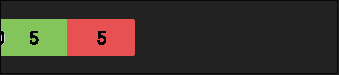
Miami Marlins

Tier None
Brandon Compton (OF, 22)
Compton really showed he has significant thump in his bat in 2024, slugging 14 HR while hitting .354 for Arizona State. There was never going to be a significant slide based on that performance, and the Marlins ended up taking him 46th overall in the 2nd Round, right around where he was expected to go. I mention the good Sophomore season for a reason, because 2025 was not a good Junior season for the 6’1” slugger. He ended the season with only 9 HR and a .271 average, including an awful 5-for-41 stretch in April where he only had 1 XBH. The point there is that he’s prone to this sort of thing. He has a high effort swing – sure, it can yield some fantastic exit velocity and his muscular physique lends itself well to it. But man does he have some bad chase tendencies when he’s not going well. Overall there is an approach that should yield solid OBP numbers, but contact rate isn’t ever going to be great either. All of this showed up in his debut, but it’s at least encouraging that the Marlins immediately deployed him to High-A. He got into 27 games, where he had a K% over 30 and a contact% under 60, but also 7 XBH and a .354 OBP. There’s two more negative things to contribute to Compton’s profile. First, he’s a negative defender everywhere he’s been, and will need to learn 1B to have a shot to have a real home. As a lefty, there is some strong side platoon appeal here if he achieves that, but to me that’s closer to a ceiling than one of the likeliest outcomes. The second negative is his team context. Ethan Petry has a very, very similar profile, but Compton comes in just a quarter tick lower because his team context is just about as bad as it can get. Compton has a long way to go to gain back my confidence that he can repeat the high-end power numbers he showed in 2024. He’s completely hands off for me, and definitely very risky for a collegiate bat. - Max Arterburn
Risk: 7, Ceiling: 4 (Both)
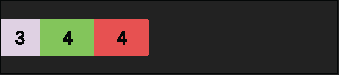
Max Williams (OF, 21)
Williams was the Marlins’ 3rd Round pick, taken 78th overall and he signed for just under slot money. He was a consistent performer for Florida State each of the last two years, but I say that as a double edged sword as his game comes with some concerns that will almost surely be exploited in professional ball. He’s already lower on the defensive spectrum – despite handling CF for the Seminoles, he doesn’t have great range or a great arm, and was deployed in the corners in his pro debut. His speed, also, is nothing special. With good size at 6’2”, 207 lbs, the lefty sets up with a deep crouch and stooped over the plate. It’s clear that given the opportunity, he’s looking to do damage to the pull side. He does produce excellent exit velocity with this setup, and it’s not only to the pull side either. The raw power is great. He’s strong enough and smart enough to know that he has to use all fields, and did so at Low-A Jupiter. But he also has trouble lifting the ball with regularity, and too many of his well struck balls are on the ground or low liners. There are larger issue is with his hit tool. I saw him getting fooled with regularity by spin, and he also has a penchant for chasing out of the zone. He’s adept enough to foul some of those off so his K% doesn’t look bad, but against more advanced pitching, at least his quality of contact is going to suffer greatly. I don’t use the “ball of clay” term often with collegiate bats, but if I’m to look at Williams positively, then I need to. There is a chance he gets to 25+ HR power. But how he gets there is not easy to see, so I consider him more of a developmental project. I think you can take a cheap shot on him, but since he performed well for a major school, I’m not sure that opportunity will be there. - Max Arterburn
Risk: 7, Ceiling: 5
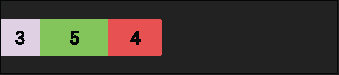
Milwaukee Brewers

Tier 2
Brady Ebel (SS, 18)
There’s a lot of anecdotal things in Ebel’s favor. He was a part of a powerhouse Corona HS team that featured fellow 1st Round picks Seth Hernandez and Billy Carlson, so he’s been heavily scouted. Also, being the son of longtime coach Dino Ebel has eliminated any immaturity or culture shock concerns as he becomes a pro. There’s not a lot of question that he’ll hit once he grows into his 6’3” frame. I can make that call just by looking at his calm demeanor at the plate and his willingness to take pitches that many preps would flail at. Ebel doesn’t really flail at all. He seems to have a realization that with his current body, staying within himself and whiffing while staying balanced is better than weak contact. It doesn’t show up in anything statistical, but there’s some serious projection with his hit tool. As I mentioned, he has a lot of physical development to go. His power doesn’t play much in games at all right now, and his lack of strength also affects his quality of contact. His swing is simple, quick, and direct for a kid of his size, but it does get a little stiff at times. However, there’s no point in making a swing adjustment to get more fluid when the end goal is for significant power. I think that eventually having the brute force aspect in his swing will serve him well. But that’s the future. What he’s showing now is some high quality defense. He’s not a lock to stick at SS, but until his body actually gets cumbersome, he’s quite the valuable piece there. It’s all about the infield actions and strong arm with him, so moving to 3B would be an easy choice, where he would have easily plus potential. Unless you’re looking for a player that will have immediate impact, Ebel is a great hobby name. He has the things prospectors drool over, with speed as his only tool that doesn’t have above average potential. I love that the Brewers drafted him. Their cadre of premium infielder depth was already unmatched, and he’s a clear addition to it. You can trust them to maximize his ability, and he was already a player who himself was trustable to maximize his ability. I think he has upward mobility to Tier 1, but for now, with being mostly projection and an expectation of middling bottom line stats for the next year, he’s at the bottom of Tier 2. - Max Arterburn
Risk: 7, Ceiling: 8 (Both)
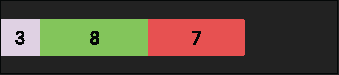
Tier 3
Jacob Morrison (RHP, 22)
I love this pick, and not just because I’m a Brewers homer. Morrison was taken in the 3rd Round, 94th overall. While he signed for slightly underlot money, the Brewers did well to get him where they did because he certainly proved his mettle in being a key member of Coastal Carolina’s team that made it all the way to the CWS final. He was not going to last to where the pundits (ourselves included) had him ranked. His value truly did explode this year, as the 6’8” righty was coming back from Tommy John, and he previously only really flashed potential with his fastball. He works with that fastball in the mid-90’s, and he uses it in two ways. He can use it up in the zone where it has really good ride and run metrics. Or, he can take advantage of his very large frame and over-the-top delivery and really bury it down in the zone to beat hitters with a downward plane and sheer velocity. That over-the-top delivery does lead to him working with mostly vertical movement. But since he mixes velocity with his slider (high 80’s) and curve (high-70’s) to go along with that fastball very well, he gets a lot of contact that isn’t square. Both of those breaking pitches have above average movement with below average command at present – that’s what leads me to really loving this landing spot. The Brewers are just fantastic at maximizing the effectiveness of pitchers like this. Morrison also has a change up in the low-80’s that’s firm, but when he’s locating, serves its purpose as a slower pitch with a little armside movement. There’s more hobby intrigue with Morrison than JD Thompson in my eyes. Sure, there’s also more risk that – if his command doesn’t improve enough, his breaking pitches will be hammered at the upper levels. But his upside is a ferocious 6’8” presence that imposes his will on hitters and makes them constantly take contact swings, hoping to place their batted balls where fielders aren’t. He’s certainly only a mid-rotation ceiling, but he’s a fun one with a good chance to get there. He’s at the top of Tier None, but to me, he has that it factor that pushes his hobby intrigue a bit. - Max Arterburn
Risk: 5, Ceiling: 5 (Both)

Tier None
J.D. Thompson (LHP, 22)
The Brewers’ 2nd Round pick (59th overall) from Vanderbilt was drafted right around where he was expected to be and signed for slot money. True to what the organization is known for, the Brewers are getting a lefty that knows how to spin the ball really well. Thompson is an advanced arm that should move through the system quickly as a starter, but any ceiling he has will be thanks to the Brewers’ development. Thompson has the look of a #4 SP now, and there’s not much that will move him from that line. He’s slightly undersized at 6’0”, but he hasn’t gotten where he is by pumping big velocity, so that matters less. Thompson threw 92 innings this year – a great sign that he can handle the load (probably at High-A to start) right away. He works with his fastball in the 92-94 MPH range, but gets great carry with it and hides the ball very well. He throws this pitch in any count with confidence, and has great precision with it. The rest of his repertoire isn’t commanded quite as well, but it’s not lacking in quality. His slider and curve work in tandem with each other. The slider in the low-80’s is shorter in its movement profile, but again the deception in his delivery makes it play up as it moves opposite his fastball. Batters can’t just sit on it though because his curve moves in the same plane, but is slower with much more break. When he’s locating well, he really tests those swing decisions. In my look I saw a few misplaced breaking balls get crushed, and that’s something that will likely be an issue in the pros…unless the Brewers work their magic and he finds more consistency, that is. Hobby-wise there are definitely things to like, the best of which is the likelihood of a quick ascent and high-K upside. I think his absolute ceiling is a lefty version of Freddy Peralta – but in saying that, I’ll ask…how much hobby interest is there in Freddy Peralta? - Max Arterburn
Risk: 4, Ceiling: 5 (Both)
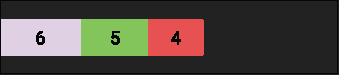
Joshua Flores (RHP, 18)
There’s something in the water at Lake Central HS in Indiana, at least as pertains to the Brewers. Flores marks the third player in the last three years they’ve taken from the school, following Josh Adamczewski and Griffin Tobias. Like Tobias, Flores is a pitcher, but he figures to have better upside. He stands on the mound at 6’1”, but he looks fairly compact out there with some violence in his delivery. HIs pitch mix though, is really solid. He has a fastball that’s already been up to 97 in games that features some nice spin traits. His curve is an absolute tomahawk, so much so that he struggles to keep it in the zone. His slider is a little faster in the mid-80’s and has sharp, tight break. Finally, he also has a change with some promise. Putting it all together, this is the type of pitcher the Brewers love – we should have known the guy from the HS they have a history with with an excellent feel for spin was a target of theirs. His command is less rosy. He walked around a batter per inning in his senior year. That, coupled with the effort in his delivery leaves him with considerable relief risk. But, if he develops, there’s definite potential that he’s a high leverage arm. I think this was a great developmental arm for the Brewers to grab, and down the line should be filling a position of importance, assuming he can maintain health. But for the hobby? He’s not at all a desirable name – there’s just too much smoke that he becomes something that’s not a desirable player type, even as a ceiling. But as a Brewers fan, he seems fun! - Max Arterburn
Risk: 9, Ceiling: 3 (Base Only)
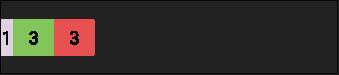
Sean Episcope (RHP, 21)
If you ever have trouble remembering facts about the Crew’s 5th Round pick, just remember that his name looks like a medical device, and he went to Princeton. It’s an easy association, right? But is it helpful? Probably not. Anyway, Episcope was a draft eligible Sophomore (due to TJ recovery between HS and College) that the Brewers signed for an underslot $335k – their seventh overall pick in the Draft. The lower figure they signed him for was certainly due to his undergoing a second elbow surgery after only pitching in four games – an internal brace procedure that should have him ready to go in the first few months of 2026. Of course, those two significant injuries, coupled with the fact that he’s only 6’0”, leaves him with significant relief risk – probability even. It’s almost boring saying that he has everything a typical Brewers draftee has – clear ability to spin the ball and an above average pitch. His fastball is the star of his mix, an up-to-98 MPH offering that has nice life up in the zone. There’s consistency and enough deception in his delivery that the fastball really makes hitters respect his secondaries. I’ll stop at specifying his secondaries, as the Brewers will help streamline them and determine which of his slider, curve, cutter, and change stick in his mix as he develops. But whichever do stick, will likely be above average or better offerings – he’s really good with spin, and this is an organization to trust in developing it. If Episcope can stay healthy, there is some high-leverage reliever potential here, which I see as his likeliest ceiling. That’s not particularly endearing for hobbyists though, so he’s firmly in Tier None. - Max Arterburn
Risk: 6, Ceiling: 3 (Base Only)
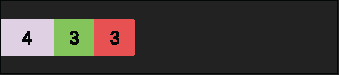
Minnesota Twins

Tier 3
Quentin Young (3B, 18)
So, this is an interesting one to track, especially from a hobby context. Taken in the 2nd Round and signed for slot money, Young is the nephew of former 1st overall pick Delmon Young (& Dmitri Young), so the bloodlines are there. He has a huge 6’5” 215 lbs muscular physique. He has light tower power, posting multiple exit velocities over 110 at the Draft Combine. He has fantastic bat speed, caused by both his strength and the torque he’s able to generate with his hips. There have even been some slight improvements to his pitch selection, which may or may not be completely sticky as he moves to pro ball. But there are just…a lot…of swing-and-miss issues. He wraps his bat so much that its end points almost at the pitcher – that’s not just in his setup, but there is wasted movement even after he starts his stride. There is just an incredibly long path in his swing. Coupled with just how hard he swings, contact can be tough. Even if he identifies a breaking ball correctly, there's a pretty good chance that unless it’s hung, he’ll miss if he swings at it. If he doesn’t find the barrel it frequently results in easy fly outs, as he’s currently trying to pull everything to oblivion. He may never be a complete hitter. But, oh man, is the power ceiling great. That provides way more deodorant than it should for a player of this ilk. The hope is that the Twins can coach him up to find even a 40 grade hit tool in short order, then develop from there. Defensively it doesn’t matter that much – think the Dmitri Young arc as an optimistic outcome. Start at third, mix in some corner OF, then end up at 1B. Folks are going to take shots on him in the hobby regardless, which is fair, but I’m standing on a hilltop waving my hands saying “be careful!” If I could, I would Spinal Tap his risk rating. And that’s saying something, because no other position player in this product that was drafted in the top three rounds has a risk of 10. - Max Arterburn
Risk: 10, Ceiling: 8 (Both)
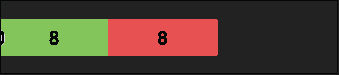
Riley Quick (RHP, 21)
Quick signed for slot money after being taken 36th overall – $2.69 MM. It was an expected outcome for a pitcher whose stuff really emerged in his Junior year with Alabama, and he’s landing with a great organization to maximize it. He throttled up as the season wore on with his pitch counts as this was his return from Tommy John surgery that wiped out his entire 2024 campaign, so don’t read too much into the low innings total. Make no mistake, Quick is solidly a starting pitcher. He surely has the frame at 6’6”, and his 255 lbs is quite well distributed. Quick’s best pitch is his sinker, which popped up from his pre-TJ days to working in the 96-98 range. It’s got really solid movement pretty much anywhere he throws it, and can be hard to get squared up. That leads to hitters mainly sitting on his offspeed. This is where I think the Twins can really help him, because those offspeed pitches have a ways to go with their command. He has a slider that he can manipulate into a cutter, but they don’t have a ton of differentiation – the cutter-ish ones seemed better commanded and more effective in my look. But we’re only talking about a few inches of movement and 4-5 MPH of difference, and too often it felt like he was throwing it not knowing exactly how it was going to move, and it was left too far over the plate. But don’t get it wrong – with development this could be an above average pitch, maybe even two. He also has a change up with some pretty wicked armside fade, but not a lot of tumble. It’s a good offering in terms of using against lefties and as a change of pace, and I think it’ll remain in his arsenal, but again, he needs to command it better to miss bats. The potential for four pitches with above average potential is tantalizing. With them already being used with some confidence is a great sign that perhaps he can rise to the upper minors in short order. That should give him quite a bit of hobby upside on its head. But just realize that there’s still a positive outcome of his becoming a true sinkerballer that relies more heavily on ground outs, and the Minnesota market he’s been drafted into is not strong. - Max Arterburn
Risk: 5, Ceiling: 7 (Both)
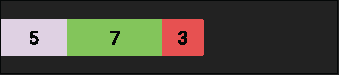
Matt Barr (RHP, 19)
The Twins went almost 300K over slot in the fifth round to sign Barr after his first season as a JuCo bandit with many considering him the top JuCo player available in the draft. All the reports out there are very similar - nasty stuff, shaky command. At 6’6” and lanky, there’s a fair bit of moving parts that could easily lead to challenges with consistent delivery and solid command. Minnesota did not put Barr into any official games post-draft, so there is very little video of him beyond some highlight reels and a draft combine bullpen. That pen looked really good, and the numbers from it are promising, especially on the spin rate side with two breakers in the 3,000 rpm range according to that video. The fastball was sitting 92-93 in that pen, with reports that he can touch 97-98. According to our former amateur scouting director Nate Rasmussen, Barr was throwing a sub-max pen, so mid-90’s could potentially be in the present arsenal, and then you easily have the makings of a mid-rotation starter. There’s just a touch less risk with Barr since he’s a year removed from being a prep righty, but it’s still a higher risk proposition than the standard college pitcher draftee. The frame and the spin rates are hinting at a relatively high Ceiling for someone I will be ranking in Tier 3. I can’t go higher than that with no pro tape and very little amateur tape and no other screaming positive contextual reasons. I’m intrigued, and wish he had some 1st Bowman autos to speculate on. Alas, Barr is a base only subject in this product. - Joe Lowry
Risk: 9, Ceiling: 7 (Base Only)
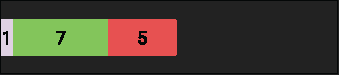
Tier None
James Ellwanger (RHP, 21)
A Draft-eligible Sophomore from Dallas Baptist, Ellwanger signed for a slightly overslot $1 MM after being selected in the 3rd Round. He’s got good size, great athleticism, and hides the ball very well. There is some effort in his delivery, but the hope is that his athleticism makes up for it. He really only has one great pitch – his fastball. It’s a four-seamer that he works with in the 94-96 range, and up to 98 in shorter outings. It has great late life when it’s located up in the zone, and generates most of his whiff. His second-best pitch is his curve. It’s in the high-70’s and features a ton of break, but curves are best used as a tertiary pitch these days. In the game I watched he didn’t throw his slider because it had been ineffective, but instead was throwing a low 90’s cutter that was…also ineffective. There should be some value squeezed from a pitch of that ilk, but its development is best reset to nascent stages. There is also a changeup in his repertoire, but there also needs to be significant development on that front. His command was also inconsistent throughout the season. It’s really flag after flag with Ellwanger, and there’s another one to throw up as well – he’s only up to a workload of 63 innings, and it was only one year. I wouldn’t say any of these flags are red, but there’s simply better options out there to collect. I’d prefer to see how some of his pitches develop before I even call him a potential backend SP. It’s easy to see the Twins’ appeal in his fastball, but he is, in my eyes, quite the developmental project and not likely to debut in next 2-2.5 years unless he’s in a bullpen role. - Max Arterburn
Risk: 7, Ceiling: 4 (Base Only)
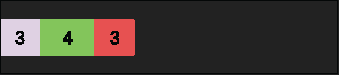
New York Mets

Tier 3
Mitch Voit (2B, 21)
The Mets selected another former two way player to kick off their 2025 Draft class when they grabbed Mitch Voit 38th overall, making it the third consecutive year they did so (Benge in 2024, McLean in 2023). While he was a respectable relief pitcher over his first two years at Michigan, he ditched the mound for his Junior year. I think there’s a great conversation to be had around two way college players and the idea that once a guy starts focusing on one side of the game for the first time, the growth rate could be exponential. But, that isn’t a conversation for today. One downside to Voit is the fact he was drafted as, and projects to be, a second baseman. I feel that the bar for a second baseman to command serious hobby value is quite high. Even with guys like Ketel Marte or Jazz Chisholm the market is shockingly low. There is a chance he comes out in 2026 as a third baseman. If that’s the case, I like him more, hobby-wise. Voit is a good athlete who, as you’d imagine for a former pitcher, can sling the ball around. I’d love to see the Mets try him at the hot corner, even if he’s small-ish for third (6’0”). Listening to Voit doing post-draft media with the Mets, he really harped on loving the big moments, winning, and being a consummate teammate first and foremost. He plays an emotional brand of baseball that has already seen him going viral for the wrong reasons, but you do have to like his passion. Voit has some speed to his game. It didn’t show up much in Ann Arbor, but he went pretty nuts on the basepaths at Single-A St Lucie, where he went 20-21 on stolen base attempts in just 22 games. Our Rhys White slapped a 60 run tool grade on Voit in his first look at the Mets farm heading into 2026. I’ll be curious to follow this into 2026 and see how aggressive Voit gets on the basepaths. The bat profiles firmly as a floor over ceiling approach. Voit walked more than he struck out in his Junior year (40 to 34 BB:K), although that did regress a bit in his 22 games of pro ball (24 K/13BB in 99 PA). After consecutive college seasons with 14 long balls, Voit only managed 3 XBH in those 22 games. Not great, but all to be somewhat expected in coming over from the Big Ten (which is a squarely middling baseball conference). Another positive for Voit is his youth – he will be 21 for the entirety of the 2026 season. I’d imagine this made his profile more attractive for the Mets to “reach” a bit on, as you’re essentially an extra year of development compared to his peers. Long term, I think Voit turns into a dependable bottom of the lineup guy who can put up 15 homers, 15 steals, and post a mid .700’s OPS while manning second base at a serviceable level. With his hit over power approach, the ceiling isn’t particularly high, butI do think Voit has a high floor. If you can get a 2.5ish fWAR player who is known for being great in the clubhouse with exemplary work ethic and attitude at 38th overall, I think you have to be thrilled with that outcome. It’s not sexy, but it’s a crucial piece on any winning team. I think the Voit market will likely be too high initially. Mets cards generally come in high to begin with, and Michigan has a pretty massive and proud fanbase- I’d imagine he’s much more popular than he would have been had he landed/gone to college elsewhere. The profile is not exciting from a card value standpoint, so I’d probably avoid Voit unless his base autographs settle firmly under the $30-35ish range. He should have a nice career, but for our purposes, I don’t love him when it comes to The Hobby. - Will Jarvis
Risk: 6, Ceiling: 5 (Both)
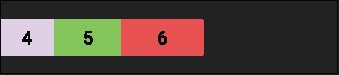
Tier None
Antonio Jimenez (SS, 21)
While not a former two way player, Jimenez fits the general mold of the Mets first selection (Mitch Voit) as a contact oriented hitter and athletic defender. An under-slot over-age Sophomore third round pick, Jimenez is a bit of an underwhelming bat at a premium defensive position (at short, for now). The Mets seem to be gambling on Jimenez developing some real game power, which didn’t really materialize at all in a short stint in Single-A St. Lucie over 95 at bats (1 double, 0 homers). Jimenez posted a .613 OPS with a ton of K’s as a Freshman at U Miami in 2024 (Canes, not Redhawks), and transferred down to the Big 12 with UCF, where he saw much better results- Jimenez posted a .982 OPS over 207 AB’s, slugging 11 homers and swiping 11 bags and making the All Big 12 2nd Team. Obviously there is something deeper here with Jimenez- he was invited to play in the Cape League after his underwhelming Freshman year at Miami, which does definitely mean something. I just don’t really love the pick or see the vision, frankly for the hobby or for the real life Mets org. Jimenez only had 1 good year of college results and will be 22 in June. He has an OK frame, standing at 6’ 1” 200 LBS, and hits from the right side. I just don’t love the lack of tangible results from a guy who is already nearly 22 years old. He wasn’t awful in A-Ball, but he showcased literally zero extra base power (although he did limit strikeouts, at least). In the final Prospects Live pre-draft ranking in June, Jimenez slotted in at 156th. Our team did speak fairly highly of Jimenez, but noted that he will not likely profile as a modern middle infielder with serious power, instead profiling similarly to Alex Gonzalez- premium defense up the middle with fringe power and decent bat to ball ability. Rhys White did note that Jimenez has a pension for chasing, as well as struggling against breaking balls. I just don’t think it's a sexy profile or one that will be particularly desirable in this day and age. Our team sees him likely winding up as a utility guy or a AAAA type depending on how the next couple years go, and I think that seems about right to me. I just don’t think there's anything here to really be excited about, and definitely not much hobby appeal outside of being in the Mets organization. - Will Jarvis
Risk: 5, Ceiling: 4 (Both)
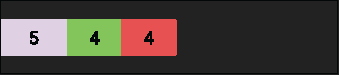
Peter Kussow (RHP, 19)
Arrowhead HS in Hartland, WI has provided a consistent stream of football talent to D1 programs for many years, so the fact that there’s a deviation to baseball is hardly surprising. Wisconsin’s prep class was quite underwhelming this year, and it took a major rise for Kussow to be nabbed where he was in the 4th Round, where it took an overslot deal ($900k) to sign him away from his Louisville commitment. He has a perfect SP starter kit, but is perhaps a hair behind in his development. He has great size at 6’5”, and plenty of hope that he grows into more velocity to pair with the good extension in his high three-quarters delivery. Right now he only works with the fastball in the 90-93 MPH range, but he spins it really well. The significant ride and armside run that comes with it should be a swing-and-miss weapon throughout his development. His slider with bullet movement is a great secondary at its best, although he does get a little loose with its shape at times. His change-up is also already a solid third offering, and it’s more because of his ability to manipulate its spin than much velocity difference. Kussow really has a feel for spin – I think his raw talent is as good as any prep outside the first few rounds. He’s a worthwhile get for the Mets. But his command is very much in a raw state, so everything will hinge on how he develops. Hobby-wise, prep pitchers generally have little floor, and Kussow is no different considering his late-rising status and the need for across-the-board refinements. But the bones of a mid-rotation or better starter are clearly here. - Max Arterburn
Risk: 10, Ceiling: 6 (Both)
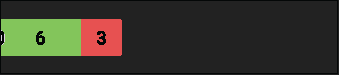
New York Yankees

Tier 2
Dax Kilby (SS, 18)
The Yankees having the player with the loudest pro debut of any player in the draft (loudest debut for a prep for certain) is sure to result in perfectly realistic reactions from collectors, right? That’s something that won’t result in an 18 year old being overhyped? Kilby signed a slightly overslot deal after being taken as the Yankees 1st pick, which didn’t come until 39th overall. It was their only pick in the top 100 – so eyes were always going to be on Kilby from this juggernaut of a collector’s market. After signing, he spent a few weeks working at the Complex then was assigned to Low-A, where he only took another week of further acclimation before he truly began his barrage on the low minors for 18 games. It was a stretch that put a point on both of his current loud tools – speed (16 SB) and hit (more BB than K, .341 average). He’s really fluid in both aspects, and I think that even if he loses a little quickness as he matures, he’ll continue to be a nightmare on the bases. Everything about his setup and swing is very rhythmic, although there’s a small hitch in his elbow that’s a bit superfluous. He’s a very patient hitter and doesn’t chase much. He knows he has the skill to make contact at an elite rate and getting on base is more important than anything for the type of player that he is and wants to be at maturity. This taste of success has certainly instilled even further confidence in that approach. He has already worked on getting stronger, and will continue to do so. That could lead to some true power, or it could just lead to more consistent gap-to-gap pop. We don’t have to talk about a real world ceiling at this juncture, or even where he ends up defensively. That doesn’t matter so much for Yankees prospects – especially guys who are 1st Round picks. I’m sure the collector’s perception will immediately go to Kilby being a guy with a high floor and a high enough ceiling to spend big on. I’m just here to say that as long as he’s a Yankee, that’s not wrong. Other organizations and collecting bases would have me putting him well into Tier 3, but in this system and market, having already been pushed as he has and seen success? I’m in on the push to Tier 2. - Max Arterburn
Risk: 7, Ceiling: 6 (Both)
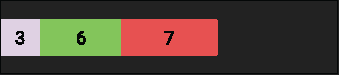
Tier None
Kaeden Kent (SS, 22)
Being the son of the latest MLB HOFer and being drafted into the Yankees market will surely equate to some completely reasonable hobby reactions, right? Kaeden was only a part time player at Texas A&M until his Junior year, but really didn’t fully impress despite showing good power with an effortful swing. He’s good at making contact, but his feel for hitting is simply not there. He tries to pull everything, often times leading to easy outfield flyouts. With that said. there is some hope that if he learns some barrel manipulation, or dials back the effort in his swing in unfavorable counts, he could become a more complete hitter. He was deployed immediately to High-A after being taken in the 3rd Round and signing for slot money, but the results made him look pretty bad. The decent plate approach he showed at A&M went completely went away, and he was one of the most aggressive swingers at the entire level for the time he was there. With the flaws he has in his swing decisions, that yielded a sub-.200 average. Look, it’s not all bad though. There is significant raw power – perhaps even a 20-25 HR ceiling if he finds a way to access it. He proved himself to be a solid SS and started his pro career there, though it’s more likely he ends up as a 3B, or at his dad’s position. All Kent needs to do is kick up his hit tool in general, and I think the power will shine through in some fashion. It’s hard to see him as a full time major leaguer at this juncture, but his power intrigue and defensive versatility should give him every chance to prove himself. - Max Arterburn
Risk: 7, Ceiling: 4 (Both)
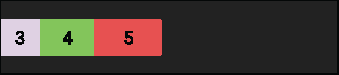
Pico Kohn (LHP, 23)
Kohn (pronounced con) underwent Tommy John surgery in 2023, missing his entire Sophomore season at Mississippi State, then in his return only got 29 innings in 9 games – hardly proof that he had reestablished himself as being able to handle a starter’s workload. So he returned to school for his redshirt Junior year, which explains why he’s already 23 and yet to make his pro debut. So, with that said, is there hope that he’s now fully mature and able to immediately attack AA by June? Well, probably not. It’s not just lack of interest from teams who value youth in their models – he really struggled with consistency, giving up 13 HR in 80 innings with plenty of other hard contact in between the good stuff. I bring all this up off the top because to be a good name for the hobby, unless you have a really loud tool that plays after MLB debut, it’s very hard to become a significant name debuting at age 25 or later. It won’t take much for him to slip to that. Although being in the New York market helps as much as it possibly can, it’s probably not enough. Kohn has good size as a 6’4” lefty with very long limbs to boot, and he makes good use of that with deception in his delivery. He sort of spins in a half pirouette on the mound, with an intentionally over-rotated action from a low three quarters arm slot, which isn’t something hitters aren’t used to seeing. HIs fastball is nothing special in shape or velocity, usually working in the low 90’s. But he’s able to locate it well, and with all that deception it plays as a viable weapon in any count. Location with his secondaries were what caused him all his strife this year, though they are all promising pitches. His slider is an offering in the 80’s with great horizontal movement and he compliments that with a change up (especially to righties) with nice depth that moves in the opposite direction. Too often though, location on these pitches were hung and hammered this past year. But by the same measure, all he needs to do is regain that command, and his K% could stick north of 30% without all the hard hit ugliness. There’s clear potential that he makes it as a lefty reliever because of the deception. But there’s also a possibility he’s significantly more than that. It just depends on how his development goes in the Yankees system. But unless he hit a 90th percentile outcome, he’s not likely to be significant for the hobby. - Max Arterburn
Risk: 5, Ceiling: 4 (Both)

Philadelphia Phillies

Tier 2
Gage Wood (RHP, 22)
Yes, he’s the Arkansas College World Series hero who threw a no-hitter in Omaha marred only by a late HBP, in a ridiculous 19 strikeout effort in a victory over Cinderella squad Murray State. It isn’t ridiculous to say that Wood’s draft stock was not insignificantly heightened as a result of the performance, however it must be said that Wood wasn’t a flash in the pan in a big moment either. The Phillies snagged Wood with the 26th pick in the Draft- we had him as the 13th best prospect in our final 2025 Draft Big Board, up from 137th in our April rankings. Now- why? Well, Wood suffered a shoulder impingement early in his 2025 campaign, missed two months, and was a bit slow in his return (a 3.82 ERA that smoothed over later on and a can’t-miss 16.5 K/9- 69 K’s in 37.2 innings! Even more remarkable is that he posted those strikeout numbers against 7 walks all season- good for a 1.7 BB/9. College baseball sees a lot more walks/pitchers with control issues than the minors, and you’ll see plenty of arms drafted in the first 5 rounds with bloated walk numbers that make you sick to your stomach. Wood only threw 108 innings in college, partially due to the early injury in 2025 and the rest the result of being used primarily out of the Razorback pen in his first two seasons. He just about halved his walk rate every year, and the strikeout numbers went from great to ridiculous. He made one appearance for the Phil’s A-Ball affiliate before shutting things down for the year, a little 2 inning taste for the future where he fanned 5. As a Mets fan, the more I researched Wood, the more irritated I got. That should be a pretty big green flag for Wood. He’s got the “it” factor off his CWS heroics, he’s got the ridiculous K numbers, and he’s in a popular organization. The downsides- can he be durable enough to remain in the rotation long term, and will the bandbox at Citizen’s Bank Park hurt his overall numbers? I think there’s fairly real reliever risk here given the lack of innings thrown in the past few years, but you could also spin that to say that there’s a lot of gas in the tank. Dave Dombrowski is known for his aggression- could he get impatient and fast track Wood through the minors to get him into the Phillies bullpen late in 2026? It wouldn’t shock me, given the aging core and “win-now” mentality as Trea Turner, Bryce Harper, and the re-signed Kyle Schwarber aren’t exactly spring chickens. This worries me for Wood’s long term hobby outlook, as relievers- even the most elite closers around- have next to no hobby market. He’s an incredible arm and oozes talent and charisma, but the risk of becoming a reliever is a serious yellow flag at the very least. High ceiling, high risk, his cards are either going to be really, really expensive in a year or under $10 for a base auto. I like him, some won’t like him, it just comes down to your risk tolerance. He’s a dude. - Will Jarvis
Risk: 9, Ceiling: 8 (Both)
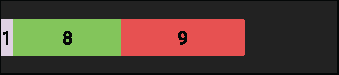
Tier 3
Matthew Fisher (RHP, 19)
The Phillies first six picks in the 2025 MLB draft took an underslot deal, from as little as $2.5K to as much as $490K. That was all part of the strategy to take Fisher in the 7th round with an overslot deal that was roughly second round money. Like most prep pitchers, Fisher did not see any official game action post-draft, so the sparse video available is from high school games and local news reels. With so little to draw conclusions from, at this point we have to go off the scouting reports and play the typical guessing game. Our own Grant Carver lists Fisher with four pitches - a low 90’s fastball as the primary and then three secondaries - a curveball, slider, and change-up. Grant rates the curveball the best among the secondary group, on par with the fastball as above average pitches. The main concern is command, which is not surprising with prep pitchers - the typical stuff over command profile is almost always a given. Fisher was a two sport star in high school, not only excelling at baseball, but football as well. As the quarterback of the football team, he threw for 34 touchdowns and added another 8 on the ground in his Senior season. That athleticism is nice to see, and it also leads to an expectation that with a full focus on baseball moving forward, Fisher could see a significant jump in his pitching skills. Grant calls out a mid-rotation upside, but as with all prep pitchers, this is one of the riskiest profiles in baseball. The Phillies gave him a lot of money, and there are definitely some nuggets in his reports to get excited about, especially for the Phillies fans. However, the smart money avoids risks like these. - Joe Lowry
Risk: 10, Ceiling: 6 (Both)

Sean Youngerman (RHP, 21)
Youngerman enjoyed a lights out season for the Oklahoma State Cowboys in 2025, appearing mostly in relief and posting a 2.08 ERA across 52 IP (20 appearances, 6 of which were starts), striking out 59 to just 8 walks issued. The WHIP of 0.86 is pretty incredible, and the Phillies did well to snap up the 6’3” 225 pound right hander in the Fourth Round of the 2025 Draft. Youngerman features a nearly Jonah Tong-esque fastball that reaches 97 MPH and comes from a seriously over the top arm slot. The shape is excellent, and it plays up for Youngerman, and he uses it a ton. He also employs a slider that sits in the low-mid 80’s as well as a so-so changeup in the low 80’s. The command is pretty incredible on the fastball, and the ability to limit walks surely impressed the Phillies scouts. Our scouts at Prospects Live had Youngerman at 178 on our Pre Draft Big Board, noting that the general process remains raw- “the delivery has some effort and he can get out of sync at times, but the raw ingredients: size, velo, and whiff-inducing secondaries all point to upside”. He’s almost certainly a reliever long term- it’s worth giving things a shot in 2026, however I’d be pretty surprised if this isn’t a profile that gets fast tracked to the Majors in a relief role (a potential profile reminiscent of the Phils first rounder, Gage Wood). The stuff is high end, the approach is nasty, but as a likely reliever it really limits the hobby ceiling for Youngerman in the product. A talented arm, but probably not one that is super relevant for our purpose here. - Will Jarvis
Risk: 10, Ceiling: 6 (Both)

Tier None
Cody Bowker (RHP, 22)
Taken in the 3rd Round and signed for slightly underslot, Bowker proved himself at Vanderbilt last year as a starter, after two years of being a swingman at Georgetown. It was only oan innings jump up to 72 though, so he’ll be maxed out at something like 100 heading into his first pro year. He’s smaller for a starter at 6’1”, and has some violence in his delivery. Although, he gets great extension for a player of his size and comes at you with a very low arm slot so it seems like he’s throwing uphill. That obviously creates some fantastic deception in his delivery, and that’s the main appeal with who he is as a pitcher. I see some significant relief risk yet, as his arm coming out of the bullpen would cause hitters fits (i mean, that’s why Georgetown used him like they did). His command is really good, but all of his pitches need work from a shape perspective. He works with his fastball in the low 90’s and usually gets some life on it, but it’s nothing special and sometimes is genuinely flat. Because of his unique approach angle, his fastball in combination with his changeup have been a deadly K combo. Even so, the change also does not offer anything special unto itself – it’s just an average pitch. His slider is further behind. It has some tight spin, but Bowker has not unlocked great movement with it yet. It seems to hang more than you like. Bowker certainly elevated his draft status with his transfer to Vanderbilt, and certainly has some hope of sticking as a starter. But, because at present everything is based in deception, I don’t see him eclipsing the backend SP. To me, from a real baseball perspective he needs to markedly improve his mix to escape a bullpen home. But I do think that’s a solid floor for him. He’s likely to take some time if he develops as a starter, so he does not carry much it factor. - Max Arterburn
Risk: 3, Ceiling: 4 (Both)

Cade Obermueller (LHP, 22)
Though the Rangers took Obermueller late in last year’s Draft as a Sophomore, it was a near certainty that he would return for his Junior season at Iowa, and it proved to be a great decision. The lefty performed well enough to be taken in the 2nd Round, where he signed for just a slightly underslot $1.20 MM. There’s a lot of signs to point to Obermueller being a reliever as a pro. First, he’s only 6’0”, 170 lbs. Second, he only has two pitches of professional quality. However, he did prove his durability in his Junior season, throwing 87 innings with a high K% and better results than either of his two previous seasons. So, there’s a chance that as-it-is might be good enough to stick in the “crafty lefty” SP bucket, and he’ll certainly begin his pro career that way. His pitches play off of his approach angle very well. Low three quarters coming from a short frame can be really tough to pick up. His fastball isn’t one that has excellent velocity, generally sitting 93-95, but he plays with the shape from pitch to pitch with great effect, and gets enough movement with all of them to induce both weak contact and some whiff. (If you want to get technical you could classify his fastball as three separate pitches, but in the grand scheme they’re pretty close to each other trait-wise.) His fastball stands in stark contrast to his primary weapon for swing-and-miss – his sweeper. It’s a weapon that’s nearly impossible for fellow lefties to hit when well located, offering some pretty wicked horizontal break. Last year command was a big obstacle, but after shaving nearly 6% off his BB%, it’s less so now. Proving his command uptick was real and further proving his durability are the biggest tentpoles to plant as he begins his pro career. I don’t think developing a change-up or another third pitch is requisite to success. I think hobby-wise, his floor is a little bit muted by obvious relief risks, but if he goes the other way I can see the realistic outcome of a high-K, five-and-dive rotation arm. - Max Arterburn
Risk: 7, Ceiling: 5 (Both)
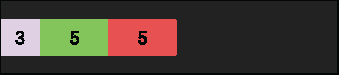
Pittsburgh Pirates

Tier 1
Seth Hernandez (RHP, 19)
This is going to be a fun one. You want the riskiest and most boom or bust guy in the product? Look no further. If you are a risk taker, Hernandez checks every single box. High school pitchers are about as easy to predict as the weather in 2073. In the sordid history of that demographic, he most interesting thing to me is that beginning in 2019 only Jackson Jobe was taken in the top 10 picks. In the 9 years before, there was only one instance of a high school arm NOT being taken in the top 10. So what’s become pretty clear is this: teams have recognized the risk of taking high school pitchers in the top 10, and recognize that they are by far the most volatile type of prospect. The hits include Hunter Greene and Max Fried, with some good names like Jameson Taillon and Dylan Bundy, but also a lot of guys who were either fairly hyped busts or literally never got off the ground (I have genuinely never heard the name Kohl Stewart in my life). So, you could say, “well, Hernandez has the odds stacked against him - the best case is he becomes Greene or Fried, otherwise there’s nothing great to point to”. And that is where I actually think you’d be wrong. To me, the fact that teams have essentially stopped picking high school arms in the top 10 is not solely because they are being risk averse. College arms are safer, sure, but not sure things. I think that most pitchers in this landscape are woo’ed by NIL packages and have agents who tell them “teams are scared of high school pitchers. I don’t know how to project your draft stock”, and at that point college is a pretty easy and logical decision. I think the fact that Seth Hernandez made his intentions to sign clear, foregoing a 3 year stint in Nashville playing at Vanderbilt, and the Pirates taking him 6th overall shows that he is truly a unique talent, and one that is worth gambling on. Now for the profile itself- the 19 year old Hernandez stands at 6’4” 200 lbs, a very strong build that will likely see a bit more weight added in the minors. Hernandez has a fastball that sits in the 95-97 MPH range and can hit triple digits with some regularity. He features a cartoonish curveball in the high 70’s. Our team at Prospects Live had him as the #2 Overall Prospect on our Final 2025 Big Board, and they said of his changeup, “The changeup is among the best in the country, a low-80s parachute with heavy sink and excellent separation off the fastball, flashing plus consistently.” He also features a cuttery slider that sits in the upper 80s, and it's worth noting that our report stated that both the curve and slider have spin rates over 2,700 RPMs (ridiculous). Our scouts noted that the command needs some work, as you’d expect, but the arm talent and pitch mix is ridiculously advanced for his age. He’s an elite athlete (he was projected to play corner outfield in college as well), runs a 6.8 60, and would be seen as a potential plus defender in a corner OF spot. I was prepared to come in here and write that buying Hernandez cards would be lighting money on fire, and I still want to- just so there are more available for me to buy. The stuff is ridiculous, he’s got the build and athleticism to push himself in pro ball in 2026, and being in the Pirates organization has proven to have no downside to hobby value (Konnor Griffin and Paul Skenes, probably the 2 hottest Bowman names in recent memory). I’m buying Hernandez, and you should strap on your big boy pants and do it too. If you don’t, you can’t say I didn’t try to help you see the light. Seth Hernandez has the makings of a monster. - Will Jarvis
Risk: 9, Ceiling: 9 (Both)

Tier 3
Murf Gray (3B, 22)
Gray is a fantastic sleeper from a hobby perspective. He was taken in the CB-B round, 73rd overall, and signed for $1 MM. He’s a big framed 3B at 6’4” 230 lbs, but he’s (probably?) athletic enough to stick there, or at least head to RF where his arm would play well. A move to 1B is an easy last resort option, but that doesn’t need to be entertained just yet. As a man of his size, of course he’s absolutely no threat on the bases. But those defensive and speed shortcomings are really as negative as I can get. At the plate his stance starts upright, then he slightly crouches then strides and unfurls an extremely powerful swing with a longer swing path. But, thus far it hasn’t cost him anything in terms of contact-ability or even quality of contact. There’s signs that he could get to even an average hit tool, in fact. He’s really good at picking up spin in terms of looking not like he’s fooled, and is a true masher of fastballs. He’s aggressive up there, although concerns with chasing too much remain just theoretical for now, as his K% was only just above 10% and he hit .324 with 18 HR in his Junior year at Fresno State. That marked an improvement on an already impressive power profile – his SLG went from .504 to .639. There are some concerns about the versatility of his power – he’s much better when able to pull the ball, but these are things that can be taught, and it’s not as if he’s a one-dimensional dead pull hitter. Hobby-wise, he’s easy to like because there is clear plus power potential, and he has a history of performance and upward ascent. And look, I’m in too if he’s on the cheaper side as I expect. But just realize that Fresno State is not the best competition, he’s not truly a complete hitter yet, and his defensive limitations give him a slightly smaller path to the majors. - Max Arterburn
Risk: 7, Ceiling: 7 (Both)

Tier None
Adonys Guzman (C, 22)
Guzman had an absolute breakthrough on the offensive side of his game, which significantly boosted his draft stock. He was taken in the 5th Round and signed for slot money. There are still major questions about whether he’ll ever be an average asset at the plate, but there were never any doubts about him being drafted because he’s such a strong defender. I would posit that the offensive improvements he showed bring up his realistic ceiling from a career-MiLB catcher to a solid MLB backup. The 5th Round is right around players like this get taken, where the floor is higher, the ceiling is lower, and the hope is that the development goes in an unexpected way that leads to an everyday player. Guzman has a typical catcher’s frame at 5’11” 211 lbs, and his levers are fairly short. That works great for his throwing on defense, but it hurts his natural power significantly. Turning his back almost entirely to the pitcher as he gets ready to swing, Guzman uses a leg kick from a wide stance in favorable counts, and shortens to a toe tap with two strikes. With this setup he’s never struggled with contact in total, but his quality therein improved a ton in 2025. He hit .328, and with a good approach at the plate to go with it there is hope that his hit tool becomes an average asset. His power is certainly fringy, but if he barrels enough balls through the machinations of his lower half, I would not dismiss double digit HR. Hobby-wise, there’s not a lot here. If you even called him a surefire MLB backup, I wouldn’t disagree. But that offers nothing in hobby-terms, and he’s a clear Tier None guy. - Max Arterburn
Risk: 4, Ceiling: 3 (Both)

Easton Carmichael (C, 22)
Carmichael parlayed his sole year as a full-time catcher at Oklahoma into being a 2nd Round pick who signed for slot money. The Pirates clearly had faith in his defense (his biggest question mark) to draft him that high, and he went out and proved it by throwing out a respectable 43% of runners in his High-A debut. Carmichael stands at 6’1” with his hands farther away from his body than most, and standing farther from the plate than most. He dares you to attack him outside, knowing that he has the ability to drive the ball with authority the other way. That’s the theory anyway – he does have significant gap-to-gap power and was better at elevating the ball in his Junior season, where he hit 17 HR. It’s an asset that likely tops out as average. His hit tool is more intriguing, but its ceiling is masked by an approach that is too aggressive, leading to more whiff and weak contact than someone whose swing is as sound as his. If he improves that aspect of his game, that could carry him to the majors. There’s really no tools in his bag that are definitely below average from a projectability standpoint – even his speed is decent. Sticking at catcher in some fashion will be important – he needs more experience back there to get a great feel for if he’s an everyday defender, or if he’s more in the backup C who sometimes plays 1B & DH bucket. As long as there’s some organic growth in his hit tool there’s a good shot that he gets to the majors at some point, but there’s a wide swath of outcomes that leaves him as a name that is not very relevant for the hobby. Catchers are a hard sell to begin with, and without any truly loud tool, Carmichael is easy to ignore. - Max Arterburn
Risk: 4, Ceiling: 4 (Both)

Gustavo Melendez (SS, 18)
The Pirates signings went a little bit wonky when their supposed overslot 2nd Round pick – Miguel Cervantes – opted to attend UCLA. So the fact that Melendez signed for slot money as an early 4th Round pick is perhaps a little misleading. His ceiling and development level is not entirely befitting of that status – we had more of a 5th-6th Round grade on him. Sticking with the negative, at 5’9” Melendez is on the smaller side – moreso, his frame is definitely compact and he lacks much in the way of levers. Though there is room for physical development, it figures to only help him hold serve without a lot of true power potential. He does have good bat speed though. Coupled with an excellent feel for the barrel and mature approach, I don’t think he’ll be a punch-and-judy type either. It really was the full picture of that hit tool that had him drafted where he was. There’s not much risk that he doesn’t develop it enough to reach the high minors. From there, we’ll see. Defensively he’s a really good fielder and does everything right, but because his arm isn’t great and he lacks much in the way of speed, it’s likely he spends more time as a 2B as he progresses. There’s a long road to hitting his ceiling as an everyday bottom-of-the-order utility player, but that’s what I see in Melendez. He’s not a strong name for the hobby, and the team context doesn’t help - Max Arterburn
Risk: 6, Ceiling: 4 (Both)
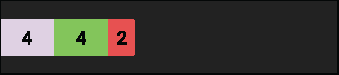
San Diego Padres

Tier None
Ryan Wideman (OF, 22)
If you look at Wideman’s bio it says he was born in Spain. Seems interesting, right? Well, yes, but not in a personal interest story-type of way. It’s interesting because his family was there because his dad was playing professional basketball, which means there are clearly athletic bloodlines here, and a big, lean 6’5” frame. Still, Wideman had to fight from two years at a JuCo program in rural Georgia to Western Kentucky last year. He served as their #3 hitter and CF, an excellent showcase for him to what led to him being drafted to an underslot deal in the 3rd Round. His speed is such that he’s a weapon both on the bases and in the OF, and it gives him a floor of reaching the high minors. He stands in at the plate with a deep athletic stance, which allows him to generate excellent bat speed. As the pitch comes in he lowers his top hand to shoulder height and really unfurls a quick stroke. With as long as his levers are there can be some natural loft, but his access to true above-average or better power remains locked away with that purposefully shorter swing and contact-first approach. There’s also a lot of ground balls in his profile. He’s also not really a true contact hitter. Both of those negative aspects showed up in his 113 PA debut in Low-A, where he posted a 66 GB%, sub-70% contact, and a 28.5 K%. In my look I saw a fair amount of zone whiff. He is a patient hitter though, so I’d say hit tool, overall, does have average potential. In Wideman, I think the Padres have a player who is simply more raw than his age dictates. But if you look at the frame and the bat speed there’s an excellent foundation for a player who could get to four tools, with power included as one. It’ll just take awhile to get there. His ceiling is a significant one for the hobby, but the age at which he figures to get to levels, and hopefully the majors, will lag. That limits his hobby ceiling. The likeliest positive outcomes involve Wideman filling out a weak-side platoon with 20 HR potential while also serving as a defensive / basepath replacement. His floor is not getting past AA. - Max Arterburn
Risk: 6, Ceiling: 5
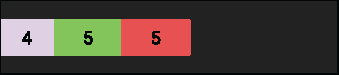
Ty Harvey (C, 19)
An older prep catcher from Florida, Harvey is a power over hit player that struggled in a very small seven game debut post-draft. Because of that small sample, there’s no reason to take the stats and project out from them. But they are indicative of what the tape showed. Harvey appeared to have a good concept of the zone, which most catchers typically do. That regularly led to walks and indeed, there was only one of the seven games in which he did not get at least one free pass. Everything else…well, that was not great, Bob. A ton of swing and miss and when Harvey did put the ball in play, it was mostly on the ground. The one fly ball I saw him hit, which was not struck well, did make its way out pretty far into center field. Not quite the warning track, but the mis-hit did hint of the natural power in Harvey’s bat. A solidly built 6’2” and 215 pounds, I expect Harvey’s power to grow as he continues to mature and end up as plus raw power. Behind the dish, Harvey seemed to be a competent backstop. Plenty of work to do at the craft, but he’s got every chance to stick back there. I could see him move out to first base or a corner outfield spot at some point, but the swing and miss would need to be tamped down before clearing the offensive bars for those positions. Prep catchers may be even more risky of a proposition than right-handed prep pitchers, so there needs to be strong added context for any sort of Hobby investment. The Padres gave Harvey overslot, second round money as a round 5 pick, so there is some positive context. And Harvey has the all-important power tool, but if he can’t hit enough to get there, it’s not enough to confidently put him into Tier 3. I’d spend my Hobby dollars elsewhere and put Harvey on my watchlist, monitoring his contact metrics in 2026. - Joe Lowry
Risk: 10, Ceiling: 4 (Both)
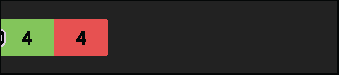
Michael Salina (RHP, 21)
If I were to break down Michael Salina in what I perceive to be his thoughts on the mound, it would be “You want 102? OK, here you go! LOL jk it’s a curve”. Or a change up. He really does fool with a hitter’s mentality in what you’d expect from a power pitcher. And he has that luxury with that very high velocity fastball that has great ride characteristics, a curve with late, sharp vertical break, and a changeup that serves as an offering with an in-between velocity. Don’t have a good feel for identifying a pitch out of a pitcher’s hand? Good luck with Salina. There are several negative things with Salina though, who was signed for slot money in the 4th Round out of St. Bonaventure. FIrst and foremost, he had Tommy John surgery this year after just four appearances, so his pro debut will have to wait until late in the 2026 season. Second, is that his velocity tends to dip significantly deeper into games, even with a well built 6’2” frame. Third, is that his delivery features quite a lot of effort. I’d put him at 80% to end up as a reliever, but man is it ever really clear that he could be a closer. What I described in my first few sentences is exactly what you want in a player pitching in high leverage situations, right? One with the confidence to throw any pitch at any time, expecting a hitter to look foolish? That’s who Salina is in a nutshell, a true bulldog and one that Mariners fans should be excited about to be in their system. But for the hobby at large, he’s not too interesting. - Max Arterburn
Risk: 5, Ceiling: 3 (Base Only)

San Francisco Giants

Tier 3
Gavin Kilen (SS, 21)
1st Round pick, over 5 Million dollar bonus, Tier 3 bat? The Giants apparently have a type. As a Giants fan, I hate it. As a card collector, I hate it. What are we even doing here? Look, I’m sure Kilen is a “gamer” coming out of the University of Tennessee and new Giants head coach Tony Vitello’s program. He plays the game “right”. The intangibles are “off the chart”. Kilen is a floor player that can play up the middle and get on base through contact or the walk. There’s not a ton of power expected to come in-game, and he’s not a burner type that will tally a bunch of stolen bases. The ceiling is just not high enough to consider him as a Tier 2 player that you’d instinctually blind rank most first round picks as their initial minimum landing spot. There’s comps aplenty - our own Rhys White had him as a Jace Jung profile. I’ve seen the names of Gavin Lux and ex-Giant Joe Panik thrown around as well. I’d add in someone like Adam Kennedy. Those comps all sort of fit from a profile standpoint even if the skills aren’t exact matches - sort of a fringe MLB starter that if everything works out can hit towards the top of a lineup with a .270+ batting average and solid middle infield defense but not much else of note. In Jacob Maxwell’s report on Kilen this off-season, he used the descriptors “average and above-average” a total of five times. That’s about five times too many. Even on a fairly strong collectible team, this is easily one we can pass up for the Hobby and sell into any sort of interest. - Joe Lowry
Risk: 7, Ceiling: 5 (Both)
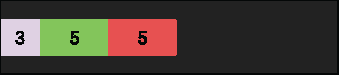
Trevor Cohen (OF, 22)
As a Giants fan, I was relatively down on the majority of the 2025 MLB draft picks San Francisco came away with in July. Now having watched a few of them get some big league reps, Trevor Cohen was a bit of a pleasant surprise. The main reason for that is because the hit tool is easily plus. I loved watching his at bats, his knowledge of the strike zone, and his ability to put the bat on the ball. I saw him succeed against right handers as well as left handers, lessening the strong-side platoon risk. In his 32 pro games, almost all of the hit tool metrics shined - a 91% zone contact rate, a 74% outside zone contact rate, a 15% whiff rate, a sub-12% K rate, and a 15% walk rate. It’s not all rainbows and roses as his ground ball rate was at 59% - that needs to come way down. I saw glimmers of hope in this regard as well, though, as the tape I watched showed him being able to put the ball in the air exhibiting plenty of gap power, and sometimes better than that. Did I watch all of his outlier line drives, balls off the wall, and his only home run? Perhaps, but it was still encouraging, even if he’s currently grading out with below average to fringe power on scouting reports. He regularly looked to run and while he didn’t look overly fast, he looked good enough to steal 20-ish bases with regular playing time. Defensively he looked fine in centerfield, which is where the Giants had him spend most of the time in Single-A. That’s the spot where he’s most likely to earn a full-time job. With a hit tool that looks like it can work at the MLB level, I expect the Giants to continue to give him as many reps as possible in center. If they move him to a corner, it gets a lot more dicey that he can get a full time job. San Francisco has shown a proclivity to not care about the traditional mashing corner outfielder archetype in the past, so maybe Cohen can make it work in left field. It’s not a direct comp, but if everything works out, it could end up looking something similar to TJ Friedl, which is a Tier 3 type of profile. If you can get him cheap, which I assume will be the case, it might be worth it to throw a few Hobby dollars his way. Not a lot, because of the lack of power and groundball rates, but I think we’ll see him near the top of the minor league batting average leader boards regularly which does provide some value. - Joe Lowry
Risk: 7, Ceiling: 5 (Both)
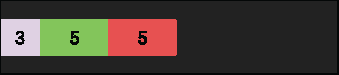
Tier None
Cameron Maldonado (OF, 22)
The 7th round pick of the Giants, Maldonado is a toolsy outfielder with hit tool concerns. He looked very comfortable against left handed pitchers, but anyone with the same handedness and possessing a good breaker were a challenge for Maldonado in his first group of pro games post-draft. He had a pretty good feel for the zone, he just had challenges hitting right-handed spin. The speed stands out as plus - any ground balls he hit, which were plenty, was a challenge for the fielder to throw him out. The power had that feel of being there - he just couldn’t quite get it to with any regularity because he was rarely in hitter counts. As far as outfield defense, reports are that he can play anywhere in the outfield. The Giants had him playing right field exclusively - there were a couple of mental errors on his part in the games I watched, but that was probably more nerves than anything else. This is a short-side platoon outfielder profile as a floor, and an everyday outfielder on a second division team that could put up a league average-ish statline with the exception that he can rack up quite a few stolen bases. There is a Tier 3 upside if everything falls into place, but lacking the draft and prospect pedigree coupled with a so-so debut, this keeps Maldonado in Tier None territory until further notice. I’d spend my Hobby dollars elsewhere. - Joe Lowry
Risk: 7, Ceiling: 3 (Both)
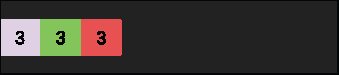
Seattle Mariners

Tier 1
Kade Anderson (LHP, 21)
The third overall pick, Anderson was really the #1 pitcher on most pundits’ boards (and #1 overall on ours). The Angels just continued to beat to their own drum with draft strategy (and elsewhere), and went way underslot with Tyler Bremner with the second pick. Anderson was a more standard underslot bonus for being such a high pick – a massive $8.8 MM, second highest in the entire class. After formally withdrawing his name from the 2023 Draft because he wasn’t fully back from Tommy John surgery, he was only a draft-eligible Sophomore this year. So he’s on the young side for a collegiate draftee, but you wouldn’t know it from the polish he showed. It’s not only the polish, but he has lots of projectability remaining in his 6’2” 180 lb frame. He has an easy high three quarters delivery from the left side with fantastic natural deception and good extension, which helps all of his offerings play up significantly – be he doesn’t really need it all that much. It makes it almost unfair to face him as a fellow lefty. His mix is headlined by a fastball that’s double plus offering already. Not because of velocity – it’s usually in the mid-90’s – but because of its ride traits. That makes it a swing-and-miss offering at any level. His slider and curve are also a nightmare to make contact with, both with great movement – the slider in the mid 80’s mostly moving on the axis of his arm slot, and the curve in the high 70’s moving vertically. If it wasn’t already impressive enough that he spins in three different velocities with different movement profiles, making it hard to sit on anything, he also throws a changeup, which is less developed but a great weapon against righties already. There were massive improvements in his command from 2024. He was on much more than not, and he throws everything with precision and intent, sequencing very well. When his command gets off, it’s not often for more than an inning – he only had four bad starts all year, and they were all against quality competition. He’s shown that his game is just very consistent – he struck out more than 10 hitters in 11 of his 19 starts, and in total it was a 37 K%. That consistency also allowed him to pitch a whopping 119 innings, leading all of Division I by a wide margin. That’s really amazing, considering that he previously had almost no workload. There’s very little concern with his durability now! Anderson is not only likely the safest arm in the draft, he could also be one of the quickest to the majors. I wouldn’t rule out his debuting in late 2026, a la Trey Yesavage. HIs ceiling lies squarely as an ace, but I’m not a fan of putting that on any prospect. His floor is that of an MLB starter, and one with very clear high-K upside. I don’t really have to lay out what anything I’ve said above means for him in the hobby more specifically, but he’s a Tier 1 name. We’re not saying he’s necessarily the best player in the product for everyone – this isn’t a Paul Skenes situation. If you like pitchers, he is the best. - Max Arterburn
Risk: 2, Ceiling: 9 (Both)
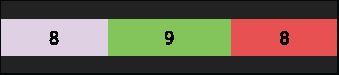
Tier 3
Nick Becker (SS, 18)
Becker was a tough sign from his Virginia commitment, where his brother currently plays, but the Mariners got it done after drafting him 57th overall and signing him for CB-A money ($2.75 MM). He’s a projectability prospect with a great defensive foundation. There’s every reason to think he can stick at SS, and could, in time, be a plus defender. He’s shown overwhelmingly positive traits at the plate as well. For now it’s more with his hit tool. He’s great with his hands, showing great barrel control and having a knack for lacing base hits to all fields. It’s even more intriguing that he has a body that has a lot of room for good weight yet, and that is where we should see some of the power in his 6’4” frame unlocked. It’s all projection, but right now it seems like that power will max out as having above average potential. He’s also flashed some plus run times as well, and with his body type that’s an aspect that should increase as his body fills out. There’s not a lot to dislike with Becker. But by the same token, at present there’s nothing to fall in love with for the hobby yet either. There’s no tool we care about that’s truly loud. His performance metrics all stood out as above average for his age, but that’s it. While it’s easy to see his hit tool could tick up to be better than that by MLB standards, I’ll hedge that it’s not a certainty because a lot can happen within the physical development that he needs. Any floor he has is tied to his defense. As such, I’m not a full buy on him as a prospect for the hobby. But if he’s being treated as a player with only mediocre potential, I’d be interested. There is a high-ish ceiling to be had here, and a lot of rungs to fall down before he’s not hobby-relevant. As he’s already had a 6-game debut, there’s no risk of his not being challenged at Low-A to begin 2026 – he’s a full go to test those waters. - Max Arterburn
Risk: 7, Ceiling: 7 (Both)

Korbyn Dickerson (OF, 22)
Dickerson redshirted his Freshman year at Louisville, then he only got 22 PA playing in 21 games the next year, clearly not the situation he was looking for heading into his draft-eligible year. So he transferred to Indiana where he played alongside Devin Taylor, and formed quite the potent punch in the middle of the Hoosiers’ lineup. He’s always been a fairly well regarded draft prospect because of his extreme athleticism – he’s something of a unicorn, or catdolphin in that regard – but he slipped to the 5th Round before the Mariners took a chance on him, signing for slot money. There are reasons for the slide. Dickerson has a long bat path, and for a player that’s 6’1”, he has shorter levers. The longer swing helps him get to considerable pull-side power, but it causes a lot of swing-and-miss issues, against, well, everybody and every pitch type and location. I don’t think he needs this longer swing to be an above average power hitter, because the rest of his swing is quite sound, and he’s very strong. We’re talking about a player whose hits went for extra bases nearly half the time. He doesn’t need to hit balls with 117 MPH exit velocity. If he can sacrifice a little bit of that for better contact-ability, paired with his speed? Ooh, man it’d be a nice profile. That speed is at least plus, but thus far he hasn’t been aggressive on the bases (that limited playing time surely has something to do with that). I would expect him to grow considerably in that regard in his development. He manned CF at Indiana, which is a position that he should absolutely continue to play, but he’s also a fit in RF with plus arm strength. He’s a lot of things hobby folks like to see in a player. There’s a wide path to relevance, and really only needs to improve one thing. But he’s quite a ways away in that one thing, and the anecdotal evidence of needing to transfer to get playing time doesn’t feel great. But if you’re looking for a high ceiling low price lotto ticket that can potentially get to the majors quickly? I don’t think you can do better, even with him having no autographs. - Max Arterburn
Risk: 7, Ceiling: 7 (Base Only)

Tier None
Griffin Hugus (RHP, 21)
When Hugus transferred to Miami from Cincinnati for his Junior year, he was just a middling reliever, but they offered him a chance to start based on a string of strong multi-inning outings in the Cape. It was a leap of faith that paid off more for Hugus than Miami, as he accumulated a lot of innings and proved his mettle as a starter, but the results were inconsistent, with only 5 (of 17) outings that could be called dominant. His command issues left him giving up a lot of hits, although his BB% was firmly in the acceptable range. The Mariners signed him to an underslot deal in the 3rd Round in the hopes that he develops further. Hugus lives on two pitches, although he has also flashed potential with two others. His low 90’s fastball is unspectacular in velocity but has great life up in the zone and gets a good amount of swing-and-miss. His bullet slider is a pitch in the mid-80’s that he falls in love with too often. It’s squarely his best secondary and definitely has above average potential, but knowing he has mediocre command and that he’s definitely going to throw it to you with two strikes burned him more than once in my look. He has less confidence in his curve and change-up, but the change especially has solid potential. Developing those pitches will be of paramount importance if he’s to stick as a starter. He does have an athletic 6’2” frame with a clean delivery and all of his pitches tunnel off of each other well, so there’s definite hope that command improvements can come. Being new to starting is another notch in the belt of hope. But it’s not a positive one for the hobby. He has a long way to go to say that he has much of a SP ceiling at all, and he could just as easily be converted to a two-pitch reliever if things don’t go well with building confidence in his third and fourth pitches. He’s one to just put a pin in, for me. - Max Arterburn
Risk: 7, Ceiling: 4 (Both)
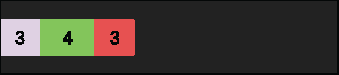
Mason Peters (LHP, 22)
Peters transferred from JuCo to Dallas Baptist for his Junior year and served an important bullpen role for the Patriots, racking up 42 innings in 20 appearances and leading the team in saves. He has a smaller frame at 5’11”, and not a big build. Even trying to ignore his status as being completely off most pundits’ lists, I don’t see much that says he’ll really have a chance to start. I only saw two pitches that he used with any frequency. He has a fastball that he pumps into the mid-90’s with some armside run, but it doesn’t have unique shape, as his high three quarters delivery leaves him with just an average approach angle. His best pitch, by far, is a sweeping curve that has so much spin that he has difficulty controlling it. This is surely why the Mariners sat fit to draft him in the 4th Round and pay him $550k, just slightly underslot. There’s potential that the Mariners take his ability to spin this pitch and branch it into multiple pitches. Even so, we’re looking at a reliever here, and not one that’s close to the majors. He’s a nice developmental piece for the Mariners to take a shot on, but I cannot imagine him ever having much hobby relevance. - Max Arterburn
Risk: 8, Ceiling: 2 (Base Only)
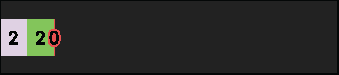
St. Louis Cardinals

Tier 2
Liam Doyle (LHP, 21)
It’s a banner year for collegiate lefties, with Doyle, Kade Anderson, and Jamie Arnold all going in the top 11 picks. Doyle is certainly the most high-octane of the three, with a quiet intensity that’s impossible to ignore on the mound. I suppose the high 90’s fastball doesn’t hurt the narrative either. He has a fantastic mix of pitches to throw at you; let’s start with his secondaries, from most movement to least. He has a low-80’s sweeper which has great horizontal movement, bearing way in on righties, and when he’s locating, impossible to hit for lefties. Hitters can’t just sit on flicking their bat out there for contact though, because he also has a cutter in the high 80’s. There’s less overall movement but it’s still substantial, and induces a ton of weak contact. Then there’s the splitter, a newer pitch, but sitting at a similar velocity to his sweeper, is not fair considering it’s zero horizontal movement. Of course, his bread and butter is the fastball. It’s been a famous pitch for awhile – an offering that’s touched 100, regularly working in the 96-97 range. But it’s more than just velocity. It has elite spin traits with plenty of natural armside run, getting loads of swing and miss. His delivery helps his whole mix play up. Saying “fast arm” is a misnomer – mean, they all look fast – but you really get the meaning of it with Doyle. It greatly affects the timing of hitters. It’s a fairly common thing with relievers, but there’s not much doubt that Doyle is a starter now. That was the development this year after he transferred to Tennessee from Ole Miss, where he was previously pitching in a swingman capacity. He threw a very nice 95 innings in 19 appearances (2 relief). His only negative is that currently only has average command and sometimes has days where he’s just off, which affects how consistent he looks on the whole. But even on the off days he strikes out a ton of hitters – on the season he struck out an astounding 42% of hitters. Hobby-wise, it’s obviously an extremely good outlook. The Cardinals had him promoted all the way to AA by the end of the season for appearance, tipping their cap that he’ll start there or higher next year. That clears a path for him to debut right around the time he turns 22 in June, if it all comes together. He doesn’t quite have the upward projectability of Kade Anderson, so I have him just a touch below in the top of TIer 2, but there’s a strong chance that he’s a mid-rotation or better, High-K starting pitcher in the majors almost immediately. - Max Arterburn
Risk: 3, Ceiling: 8 (Both)

Tier 3
Ryan Mitchell (OF, 18)
Mitchell was taken in the 2nd Round, 55th overall from a Tennessee prep. He was swayed from his Georgia Tech commitment for $2.25 MM, roughly $500k overslot. He’s a great athlete with a lot of projection across the board. But there’s so much work left to do with that projection that we don’t know exactly where his tools will end up. For instance, his speed is good right now but it could go either way in the next 1-2 years. By my look, he didn’t look like the most fluid fielder out there, and his arm is solidly average with just average projection. There’s varying opinions out there on that, but to me, he’s not a lock to stick at SS. Potential homes would be CF or 2B in that case. Of course, that’s what we should care least about hobby-wise, as there’s no doubt that he will end up as a defensive contributor. At the plate, he has a quiet setup with a swing that at its best is twitchy and beautiful. He’s also really good at identifying pitches in the zone. At present he’s very aggressive at attacking them, to the fault of where his swings can sometimes look like a sellout for contact, losing his balance a little bit over the plate. His bat speed is excellent in a general sense though, so he gets away with much of it for now. As he matures into his body I’d love to see him be more disciplined and have more of a damage-first mentality. At 6’1”, he has the body type for it without sacrificing much contact-ability. Power you ask? Well, we don’t know just yet. That is a question no one can answer right now. With organic growth there will be some, but it’s not going to be his carrying tool. In terms or successful paths, maybe he gets to 20 HR pop? Or maybe he leans into his contact-ability and pitch identification strengths, and makes himself into more of a high OBP leadoff hitter-type with a 12 HR ceiling. There’s a wide range of outcomes for Mitchell. Like many preps there’s not a lot of floor, and the physical growth he needs will make him a slower riser. That leaves him in the intriguing dart throw bucket, and he should be somewhat affordable as we see where his development goes. I have to look at his negative when I’m calling out his risk here – a scenario that sees advanced pitchers taking advantage of his aggressive nature and his not getting out of High-A. It’s not likely, but it’s possible. - Max Arterburn
Risk: 8, Ceiling: 7 (Both)
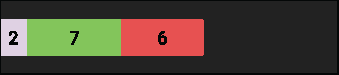
Tier None
Tanner Franklin (RHP, 21)
Franklin is a reliever. If that turns you off, go ahead and keep scrolling. He is, however, probably the best pure reliever in the class. Fellow draftee Nate Snead was the closer at Tennessee, but Franklin is a bigger body and was also used frequently in their run to super-regionals. While Snead should also have success in an MLB bullpen, Franklin has more current polish, better K upside and perhaps a better shot to end up as a closer. His collegiate teammate and now org-mate Liam Doyle might beat him to the majors as one of the first from the class to get there, but if things go well there’s no reason to hold Franklin back. He comes at you with a 6’5” frame and has a fastball that touches triple digits with regularity – and that’s a pitch with solid run into righties as well, not a flat offering. With the extension he gets in his simple delivery, it’s a really tough pitch to hit. He pairs it with a cutter that moves to the opposite side, and a curve that he uses specifically to get whiffs. His command is also better than most relievers, which lends to the probability of being a quick riser through the system. It’s just that curve that he needs to bury with more regularity. As far as hobby-specific context? There’s not a ton to like. I don’t think this is a player that will be a surprise SP. The hobby really hates relievers, and those that do have some following have earned it on merit. Now, merit can be doing something like helping win a National Championship like Snead and Doyle did, but Franklin wasn’t on that team. He doesn’t carry the same gravitas. He’s going to have to earn his way to the top of the bullpen to enter our hearts in the hobby context, and even then it’ll probably just be team collectors. - Max Arterburn
Risk: 3, Ceiling: 3 (Both)
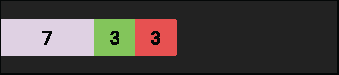
Jack Gurevitch (1B, 21)
If you like Quad-A corner bats, then Jack Gurevitch might just be for you. Gurevitch was billed as an above average hitter that had power potential lurking but was yet to be unlocked. In his first 22 professional games, the second half of that statement held true to form. All of his EV data looks promising with a 103 mph 90th percentile exit velocity mark being the best of the bunch. The hit tool - well he struggled with swing and miss, whiffing at a 36% rate while breaking balls ate him up to the tune of a 54% whiff rate. Gurevitch physically is average height (6’0”) and if he’s anywhere close to the listed 215 pounds, then I’m not lying about my weight on my driver’s license. In the batter’s box, he has a very wide stance and then crouches way down, looking to leverage his thicker frame to get to those above average to plus exit velocities. There may be a thought to move him to a corner outfield spot, but I’m not sure I see it with his frame. It reminded me a lot of Troy Johnston from a stature point of view. Maybe his hit tool can get up to the level of Johnston, but even Johnston has struggled to find MLB at bats while showing he’s better than the Triple-A level. This is an easy pass from a Hobby perspective - maybe the Cardinals can activate Gurevitch in a way that makes him relevant - cut down the breaking ball whiffs, get more in zone contact, and engage his power in-game to lift the ball over the fence. That’s a lot of “if’s”. There is a small sample size bias here, and Gurevitch didn’t exactly play in a big time college conference, but I’ll spend my hobby dollars elsewhere until I see something of interest change in Gurevitch’s profile. - Joe Lowry
Risk: 9, Ceiling: 3 (Both)
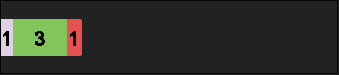
Matthew Miura (OF, 21)
The Cardinals 6th round pick, Miura is at best a table setter type with high contact rates, high OBP, and decent speed. The most likely outcome is a backup outfielder type that gives the center fielder and left fielder regular days off. He makes a lot of contact - it’s just not regularly good contact. In the small sample of 21 games post-draft, his ground ball rate was over 70%. That is small sample noise, and you would hope that he could get it into the 50% range even if that’s still way above the norm. There’s not enough arm to play right field, almost no power, and while he does steal plenty of bases, he gets thrown out a bit too much for how often he’s trying. Miura isn’t going to strike out much, he’s going to take a ton of walks, and if enough of his ground balls find holes in the defense, Miura should get some MLB opportunities, especially on second division teams. There’s just not enough here to move the needle Hobby-wise. - Joe Lowry
Risk: 7, Ceiling: 3 (Both)
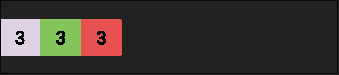
Cade Crossland (LHP, 21)
From Division II to JuCo to Oklahoma, Crossland has been through a lot in his collegiate career. The lefty has great size for a SP and was given a significant role in the rotation in Norman, pitching between the Witherspoon twins. Taken in the 4th Round and signed for an overslot 730k, he’s got good size at 6’3” and an easy delivery without much effort at all in his three-quarters arm slot. HIs stuff looks pretty good to me, and I do wonder with that easy delivery if there’s another gear in his command – but he hasn’t shown it yet, and his year at Oklahoma did not go particularly well. His fastball can get into the mid-90’s, but more often he’s right around 93 with armside run. His mid-80’s change-up is the difference maker in his arsenal. Now, he has to learn how to command it better, but that pitch has late movement to the armside with solid tumble to boot and is an absolute nightmare to square up when he’s locating. Crossland’s slider is a sweeping option in the low-80’s – clearly his biggest breaking pitch, and clearly the most poorly commanded. The fastball/change combo are very well tunneled off of each other – I think there’s enough juice in those two pitches to say that his ceiling outstrips his performance by a wide margin. He only threw 68 innings in his lone year in Division I, so there is work to be done to build up his workload as well. The command issues simply need to improve. He needs to work down in the zone with consistency, which has not yet happened. I wouldn’t mind taking a few shots on him as long as the cost is next to nothing, as I’d expect it to be. It’s hard to nail down the true ceiling of a player like this, but I’ll be a little aggressive with his placement, although still squarely within Tier None. - Max Arterburn
Risk: 7, Ceiling: 5 (Base Only)
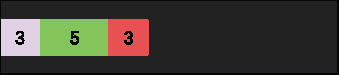
Tampa Bay Rays

Tier 2
Taitn Gray (C, 18)
Drafted out of an Iowa prep in the 3rd Round and signed for slot money, if there’s one thing to not doubt with Gray, it’s his power. Bat speed, exit velocity, and current over-the-fence pop – he showed it all at elite levels, both in his most recent competitive games and at events. Don’t get too hung up on the prep catcher stigma here. If the power from Gray’s impressive 6’4” 220 lb frame plays as we think it might, with his versatility as switch hitter, it would be an easy decision to move him off the position to the OF or elsewhere so his bat can be in the lineup more often. He definitely has enough athleticism to move – once he gets going there’s plus speed. He seems like a player who will slow down with further physical development, but if he doesn’t he’ll be a moderate threat on the bases to boot. Because Gray is already so physical (and could still be growing in that aspect) I would have a realistic expectation that he handles Low-A pitching well off rip to begin 2026 (assuming he’s assigned there). Without a long track record against tough competition, his hit tool projection isn’t easy to evaluate. There are some significant moving parts in his setup, but he is fluid, and so far has been strong enough to make up for any loss in timing that those moving parts may have cost him. I think that as long as Gray’s hit tool trends toward being fringe-average, he will be a prospect of significance both in the hobby and in real life. There’s risk that his hit tool doesn’t reach that though – hell, there’s risk his hit isn’t close to that – and that’s why he was a 3rd Round pick, and not a 1st Rounder. But his best case scenario is that of a hobby superstar, framed in power. The other big downside with Gray is his team. The Rays are notoriously slow with their promotion of players, unless the performance is great in all aspects. That includes defense – something Gray definitely needs work on, and if his run at catcher looks promising, it’ll be even longer. If the Rays are serious about him being a catcher he may even have him start the year in the Complex. Knowing this is more likely to be a long-term hold than a quick riser, I would be willing to take a shot at Gray if the hobby’s reaction to him is lukewarm, and it may be. - Max Arterburn
Risk: 8, Ceiling: 9 (Both)
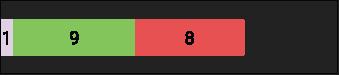
Tier 3
Dean Moss (OF, 19)
I don’t love the Rays, notorious slow-players of talent, taking one of the older preps in the draft, but here we are. Moss turns 20 in April, and as you might expect, has not yet made his pro debut. Slot money in the supplemental 2nd Round (69th overall) was enough to keep Moss from honoring his LSU commitment. With that all that said, Moss offers one of the highest prep floors in the Draft. A Team USA member for many competitions in his youth, Moss transferred to IMG Academy to keep up his track record of great competition. That is to say – there’s not much potential that he’s simply overmatched in the low minors. Over the years Moss has developed more and more pop in his swing, and his stance has gotten more and more wild. He now stands with his hands over his head to start. He then rhythmically brings them down, sinks into a deeper crouch, and uses a toe tap to set his timing into motion. It’s reminiscent of Craig Counsell (something that’s been said many times I realize). But Moss is already more solid in his lower half than Counsell ever was, and that allows him to project as having notable pop – we’re talking perhaps average projection at this juncture. I’ve buried the lead tool here though, and it’s definitely his hit. He has never had any issue using all fields, and his bat-to-ball skills are very good. As I previously noted, that helps his power now play as a true gap-to-gap asset. His approach as an amateur bordered on passive, but it didn’t keep him from making a big impact against strong competition. That will come in handy when he starts seeing all those poor command - good stuff pitchers in the low minors. He’s a solid runner, enough to say that he’ll be a modest threat on the bases and fill in at CF if needed, but he’s likely to end up in a corner as a premium defender. Team context plays a huge role with how I view Moss for the hobby. If he were drafted by a different franchise I could push him into Tier 2 because I think it’s likelier that I’m low on his power projection than high on it. But since I’m 100% certain that the Rays will make him spend no less than two months in Low-A, and perhaps the whole season, things are going to be skewed. I don’t think he’ll be challenged. Still, Moss is the type of player who’s likelier to be quietly great than put up big counting stats, and prospectors will easily pass over players like this. I think because of all this negative team context, the best I can do is slide him into Tier 3 and say that he’ll definitely be a personal target. - Max Arterburn
Risk: 7, Ceiling: 6 (Both)
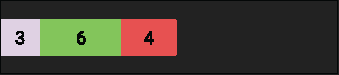
Cooper Flemming (SS, 19)
It only took slot money, $1.80 MM, to sign Flemming away from his Vanderbilt commitment, as the Rays drafted him a little earlier than expected, 53rd overall. Around draft time he was a rising talent, as he showed a better ability to use his 6’3” frame to deliver the ball to all fields with authority. He's got a smooth swing without much defect or significant effort, but he could stand to get more leverage in his back half to access more true power. I don’t think he should or needs to do that yet, because that will likely cost him some contact-ability, and the power may come naturally as his body matures. There’s still quite a ways to go in that regard. The other thing that had him drafted so high is his defensive ability. He’s sure handed with (again) smooth, natural actions out there. But like many players of his size, whether he sticks specifically at SS depends on whether he loses a step as he gets that man-weight. This isn’t really a safer prep play like Dean Moss, or an upside prepster with a clear and obvious tool like Taitn Gray. But it is a third Rays prep that I think the hobby has reason to have some excitement about. His upside is an everyday SS, and most of those are guys we care about. Could he be a hobby superstar? Anyone who’s answering that with any certainty is making things up. We just don’t know, and still won’t next year. You can take your shot on Flemming, but expect the Rays to start him to start 2026 at the Complex and not see Low-A until that league ends. Physical development will need to come first, and everything else should fall into place after. It’s very much a “ball of clay” scenario here. The Rays are good at molding, but they always take longer than you’d like in hobby terms. - Max Arterburn
Risk: 8, Ceiling: 7 (Both)
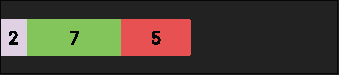
Tier None
Dominic Fritton (LHP, 22)
Fritton was a three-year starter at NC State, but man…do not look at his numbers. The Rays took him in the 4th Round and signed him to an underslot 497k deal. He’s a lefty with a clean delivery and a mid-90’s fastball – that’s likely where the intrigue comes from. He’s only 6’1” on the mound and has a slighter frame but he proved workload is not an issue. But his shallow mix is. Like I said, his fastball has average velocity, but it lacks great shape, and really only gets enough ride and cut when he locates it up in the zone. Too often it wasn’t properly located though, and he got hit hard. His mid-80’s slider is clearly a better pitch with solid bullet movement and could be above average, but again, he left it up in the zone too often. He also shows a curve and slider, but neither are currently even below average. His Junior season marked an improvement in performance, but he still walked 10% of hitters and gave up a .267 average. The swing and miss he garnered was significant, but because he was getting hit so often his K% stood well under 30%, and it always has been. Sometimes a pitcher’s ceiling is just a version of what he’s already shown you, and I think that’s the case for Fritton. To me his absolute ceiling is as a backend left fill-in SP, with a likelier outcome that his performance never ticks up enough to ticks up enough to stick in the rotation. There’s simply nothing to see here from a hobby perspective. I don’t really even need to push him down further by mentioning that he’ll be 23 by the time the MiLB season starts. - Max Arterburn
Risk: 7, Ceiling: 3 (Base Only)
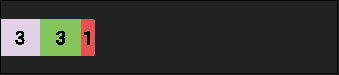
Texas Rangers

Tier 2
Gavin Fien (SS, 18)
Younger brother of 2024 MLB 7th round pick Dylan Fien of the Athletics, Gavin is the much more hyped prospect of the two brothers out of Temecula, California. Gavin was drafted by the Rangers at 12th overall in the first round with almost a million dollars underslot as he was typically ranked in that twenty to thirty range. A bigger, well-put together, mature looking 18 year old, Fien definitely looks the part. He leverages his physicality along with high-end bat speed that will lead to plus power in game. There’s easily 30 home-run power here if the hit tool is good enough. While most evaluations at the moment put his hit tool in the average to above average range, I have some questions if it can be anything better than average. It was a super small sample as Fien was thrown into the Single-A fire post-draft, but what I saw was a lot of struggles with almost anything that wasn’t in meatball territory. Swing and miss, especially for breakers and off-speed pitches dropping south of the zone, was prevalent to say the least for the young hitter. He’s an average runner, so I don’t anticipate many stolen bases, but he’ll probably chip in a few here and there. Defensively he split time between shortstop and DH at Single-A. I imagine the Rangers continue to run him out there at shortstop until he has to move off the position, which looks more likely than not. That probably pushes him to third base, which he should have enough glove for, and he definitely has enough arm to make it work. With such a small sample for a prep bat, it’s often difficult to not overestimate the flaws as I feel the instinct to do here. This is a first round pedigree power bat, and that almost always deserves a Tier 2 consideration, at a minimum. On the other hand, the hit tool issues that I saw prevent me from considering him for Tier 1. Those issues are hard to reconcile with the prep tape and draft reports, which leads me to the conclusion that this is a wait and see situation. If Fien can jump his contact rates up and drop his whiffs down, then there is a Tier 1 bat in the making. If not, this could end up being Tier 3 territory where we are tantalized by the power and disappointed that he can’t regularly deliver it. I wouldn’t be buying, but I also wouldn’t be selling here. I would be tracking Fien very closely in the first few months of 2026 before deciding if he’s a buy or sell. - Joe Lowry
Risk: 8, Ceiling: 8 (Both)
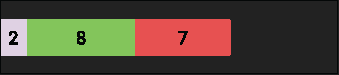
Tier 3
Josh Owens (SS, 18)
Taken in the 3rd Round, Owens signed for a slightly overslot $1.1 MM to forgo his Georgia Southern commitment. He was a rising prospect around draft time, and he has a lot of raw tools the hobby likes. I was all set to write about Owens as a position player, but he also has already pitched as a pro already as well, something that wasn’t necessarily expected. Still, I don’t expect the two-way experiment to last long so I won’t go further than the passing mention. He stands at lean 6’3” now – a nice frame to grow into. His hands and upper body are very, very quiet in his setup. When he swings there is some significant effort and can look a little stiff, but the results were solid amateur-wise – please don’t look at the K numbers in his 6 game stint at Low-A. There's no reason to think a setup like his won’t be able to be adapted as he fills out. He could, in time, have at least above average power, and that’s what made him so intriguing to teams. However that excellent power potential is secondary to his speed. It’s a monster tool for Owens that should stick with him throughout his development, and also why I thought deploying him as a pitcher was a bit of a waste. This is a premium athlete. He likely will be shifted off SS long-term to 2B or CF, but with as much development as he needs, there’s plenty of time to figure out where his long-term home is. Owens should be treated as a high-ceiling dart throw, and nothing else. There’s nothing to really dislike about him, but there is also no real floor or a specific raw tool (as much as we can dream of the power) that will carry him to hobby stardom just yet. - Max Arterburn
Risk: 9, Ceiling: 8 (Both)
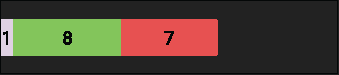
Tier None
AJ Russell (RHP, 21)
Russell was on the younger side for a Junior this year with some solid leverage to return to Tennessee, so it’s not a surprise that the Rangers had to go overslot with a $2.6 MM bonus when they took him 52nd overall in the 2nd Round, even without a lot of innings to his name. He may have been a 1st Rounder if he returned – there’s an electricity to his fastball that is rarely seen. He’s a 6’6” righty with a low arm slot, and he spins his fastball with run and ride movement so well that all he has to do is locate it for it to be unhittable. It’s velocity is into the high-90s, especially in the shorter outings Tennessee was using him in, but it’s not requisite to the pitch being a plus-or-better asset. It’s always going to be his main swing-and-miss pitch. However, he also has a sweeping slider that figures to MLB quality, which runs counter to the movement of his fastball. His third pitch is TBD, but it could be his change, which I saw having some nice armside tumble. He does need command improvements to stick as a starter. It’s a combination of walks (~10%) and hitting his spots with his simplistic pitch mix. With a player that throws with as much intensity as Russell, it’d be easy to put a player with that fastball at the back of the bullpen. That might be for the best if the Rangers want him in the majors quickly. He never eclipsed 31 innings in college. His Freshman year was a showcase of his stuff, then he went down to Tommy John surgery in his Sophomore year. Everything I’ve written before this – all the elite traits and gains on his slider – is who he’s been post-TJ. So, I think he’ll be good. But will he be a starter? He needs to build into a workload first, and then we’ll see if the command issues he has are palatable over the course of a bulk role. I think in any role, Russell is at least a hobby name to consider, because that fastball will turn heads as long as he's throwing it. This is a tough ceiling assessment because he’s never attacked that large workload – if he’s able to get there, then I’m low. He’s Tier None for now, with upward mobility all the way into Tier 2. - Max Arterburn
Risk: 7, Ceiling: 6 (Both)
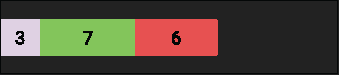
Mason McConnaughey (RHP, 21)
Alright alright. McConnaughey transferred from JuCo to Nebraska as a Sophomore in 2024 where he impressed with surprising polish, winning Big Ten Pitcher of the Year. He then went down this year after three starts and underwent Tommy John surgery, which tanked his hopes of elevating himself to widespread interest in the 3-4 Round range. Surprisingly, the Rangers still took their shot on him with the 115th overall pick, signing him to an underslot $495k deal. It still seems like a bit of a reach for a player who only had 1 year of significant collegiate experience. He does have good strength and a clear starter’s frame at 6’3”. McConnaughey has two fastballs, both of which he works with in the low 90’s. He uses those to tunnel off of his change and his slider, which both have solid movement profiles in opposite directions. There was a lot of intrigue heading into 2025, but the injury dampens it. Asking the hobby not to be fickle is like pretending time is not a flat circle though. There’s sure to be just low interest in McConnaughey, but please do not write him off. He does have mid-rotation potential, although could also just be moved to a relief role immediately when he returns (hopefully in late 2026). - Max Arterburn
Risk: 7, Ceiling: 5 (Base Only)
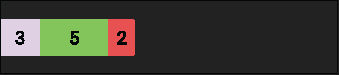
Toronto Blue Jays

Tier 1
JoJo Parker (SS, 19)
Parker is a lefty-hitting SS who stands at a well built 6’2” 200 lbs. The 8th Overall pick to the Blue Jays out of the Mississippi High School ranks signed for a hair under slot value. He was a huge riser as 2025 progressed, ultimately landing 9th on our Prospects Live final 2025 Draft Big Board. Our team had initially compared him to similar fast rising HS infielders such as Tyson Lewis and Caleb Bonemer - nice company, as both are both very hot names heading into 2026, both in cards and real life. The dream is that Parker follows in their footsteps with performance, while starting from a (clearly) loftier prospect status. As noted on our Draft Board article, has a really good hit tool, particularly against fastballs, as we noted that “he posted a 93% contact rate on fastballs last summer, further highlighting his polish at the plate”. He racks up strong exit velocity numbers as well,. Having the baseline of being a fastball hunter who can make impactful contact is mouth watering. Our team also believes he has the tools to remain at shortstop long term, how he eventually sorts out positionally with Arjun Nimmala remains to be determined. But these are the “happy problems” you deal with and address when you have to, and not in the short term. One minor downside I will note on Parker- and this is a bit more of a personal preference thing- he is going to be 20 in August of his first pro year. Compared to Eli Willits, who is 16 months younger, there is a bit less natural runway. As a Mets fan, this age factor scares me a hair - it reminds me of Brett Baty. Baty was older than Parker, as he was 20 for his entire debut season (while Parker will be 19 until August), but the comparatively less development time doesn’t give you the margin of error some younger fellow HS draftee’s get. Now, Baty had a penchant for pounding the ball into the ground as a prospect, a problem Parker definitely does not have, so the profile isn’t super similar, but I did feel the need to point out age as a bit of a negative for Parker at this juncture. On the flip side he will likely go right to Low-A given his age - it's really is a bit of a bummer that he didn't get a taste in 2025. Some later-drafted HS guys like Dax Kilby got to test things out in Low-A before 2026, so I’d be curious why the Jays opted to have Parker debut in 2026. There’s less wiggle room than you’d like, but if Parker comes out of the gates hot in 2026 in full-season ball this concern is essentially washed away entirely. Bonemer and Lewis are two of my favorite 2024 Bowman Draft guys, so the comparison to those while garnering much higher draft capital excites me when it comes to Parker. He seems to be well-polished for a high school bat without any major flaws, and the potential to be a 25 homer, plus-hit tool shortstop long term is worth salivating over. He’s naturally risky as all high school draftees are, of course, but the potential is sky-high and there is a really strong foundation in place heading into his pro career that should allow for immediate success. I believe that Parker is firmly entrenched as the second best prep hitter in the product- most of the 1st round prep SS group has a flaw, whether it be hit tool concerns, a lack of game power, or are glove first guys (not helpful for the Hobby). Parker has the least hit tool concerns while not sacrificing pop, has a chance to stick at short long term, and therefore he is deserving of a Tier One spot. I even think you could argue for his ceiling over Eli Willits, however Willits has a ridiculously high floor. - Will Jarvis
Risk: 8, Ceiling: 9 (Both)
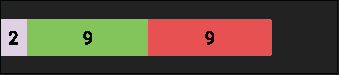
Tier 3
Tim Piasentin (3B, 18)
A Canadian player drafted by the only Canadian team always leads to a bit of extra juice in the Hobby world, and I expect that to be true here with Piasentin. He’s not necessarily a well-known name outside of deeper prospect circles, so it’s not a ton of juice, but it’s worth being aware of. The Blue Jays also gave him just under $250K over slot to sign him out of the fifth round. Piasentin attended the MLB Draft combine and was one of the many risers coming out of it. He exhibited raw power in batting practice swings with at least five balls hit over 100 mph and the potential to handle high end velocity. There were max ev numbers approaching 109 mph, and the MLB Draft League highlights showed impressive pop in game. I like his simple swing with an economy of movement, transferring weight smoothly from his plant foot. There was no need for him to try and use a ton of motion to generate the bat speed and impact. The in-game tape floating around of Piasentin is of the highlight variety either from prep games or MLB Draft League games, as mentioned above, since he did not get into any official pro games post-draft. It looks like he was playing in the bridge league in Florida, but we rarely get to see worthwhile video from those games. All that is to say it’s tough to judge his hit tool. We’ll have to go with the reports which are that there are swing and miss concerns. Defensively he’s currently listed at third base. The combine and circuit workout tapes all showed a good arm with limited range. There just isn’t any spring or twitch from what I saw, and I agree with a lot of the commentary that he either ends up at first base or a corner outfield spot. Prep corner bats aren’t as risky as prep pitchers or catchers, but they also tend to draw less interest than prep outfielders and shortstops. Piasentin falls directly into that risk profile, especially with the rumored hit tool questions. But it’s easy to dream on a Canadian kid popping 25 home runs for his home-country team four to five years down the road. I wouldn’t spend much here, but if you can find his autos for that cheap, under $10 price point, and are willing to hold for a bit, there are likely worse bets to make. - Joe Lowry
Risk: 9, Ceiling: 6 (Both)
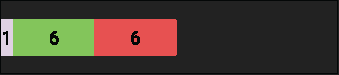
Tier None
Jake Cook (OF, 22)
Emerging for the first time in 2025, Cook showed himself to be a solid ballplayer. There’s a reason that the Jays took him in the 3rd Round, don’t get that wrong. But man, he doesn’t have many surefire tools to latch onto for the hobby at present. He’s a former two-way player who didn’t really get into many games at Southern Miss at all until this year, which is weird because of how athletic he truly is. His best attributes are his ability to make contact and his elite CF defense. It’s hard to imagine him deferring any time there to anyone as he moves up the ladder – it’s a clear long-term home. As you might imagine, there’s fantastic speed – double-plus even, but he really didn’t run much at all in his Junior season, and was caught stealing more than he was successful. That’s an aspect to watch, and his easiest path to hobby relevance. If he can develop some baserunning acumen, there really is no ceiling. But we can’t count on that with any certainty. At the plate, his swing is very whippy. He doesn’t use his lower half well, getting a lot of weight onto his front side and sells out for contact with not much effort to lift the ball. But, he is adept at flipping liners into the outfield to all fields, and sometimes finds gaps. He really showed some surprising polish for a hitter with so little experience, rarely striking out and getting on base at a high clip. Just for a snippet (as he didn’t make his pro debut yet), Cook hit .350 with a .436 OBP, and a 6.7 K%. Of course, his ISO was also just barely over .118. As I previously mentioned, he is super athletic, and it’s possible that his power ticks up to fringe-average. But again, that’s not something we can count on with any certainty. Defense, contact-ability, and athleticism had him drafted this high, and those are traits that will surely get him the high minors, and even likely a bench role in the majors. But that says nothing for his ceiling from a hobby context, which is cloudy at best. I’m speculating, but for me it’s telling that he didn’t debut – he was likely being molded by the coaching staff into a player that can have…just a little more offensive impact. We’ll see in 2026 what he brings to the pro level. - Max Arterburn
Risk: 4, Ceiling: 5 (Both)
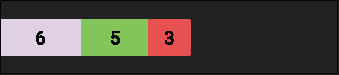
Washington Nationals

Tier 1
Eli Willits (SS, 18)
The top overall pick in the 2025 MLB Draft, you could argue that Willits wasn’t the best player on the board, but he might have been one of the safest players, at least as safe as a 17 year old hitter could be. He was definitely not the most expensive player, as two other draftees garnered higher signing bonuses than he did (Ethan Holliday & Kade Anderson). That likely had a part to play in why Willits went first overall. The son of a former major leaguer (Reggie Willits), Eli definitely has the baseball instincts and IQ that you would anticipate comes from a legacy player. In just 15 pro games at Single-A post draft, it was already evident, knowing when to take the extra base on a throw home as he rounds first base. He was a bit too aggressive on the base paths at times, but I’m not counting that against a 17 year old in a small sample yet. The approach in the box is a high contact one - 85% overall contact rate in those 15 games. He has the look of a natural hitter from both sides of the plate that regularly puts the barrel on the ball. A nine game hit streak to start his career exhibited that talent right off the rip. Even though the contact is solid, it’s more often of the line drive and ground ball variety. He’s not geared for power - this could change as he matures, but the odds are that he’s not going to be more than a 15-20 home run profile. I did see a bit of struggle dealing with high heat, but it was just a few opportunities where that happened, so I’m less holding that against him and more noting it down as something to monitor. On defense, he’s a no-doubt shortstop. He isn’t Andrelton Simmons, but he plays the position with a high degree of competence and showed that off at times. If there is a defensive wizard on the team, Willits could move to center field or second base, but I don’t see much in his way of claiming the starting shortstop position in Washington by 2029 or maybe even 2028. Ultimately as safe as they come for a prep shortstop, Willits is a four tool stud that will hit for a high average, steal double digit bases, and be a defensive plus. Absent the draft pedigree context, that’s a no-doubt Tier 2 player. As the top overall pick in 2025 heading into the 2025 Bowman Draft product, that’s enough of a short term boost to push him into Tier 1. Long term, I feel like Willits drifts into Tier 2 territory - that sort of $100 base 1st Bowman auto range. However, if Willits takes a major jump with the power potential which isn’t a crazy prediction to make because of how young he still is, he will head to the stratosphere, hanging out with the top 10 prospects overall price points. I’d sell into the release hype that should be there for the top overall pick, but I’d check back in on his price point once we get the next wave of 1st Bowman products in 2026 to see if I could find some bargains. - Joe Lowry
Risk: 6, Ceiling: 9 (Both)
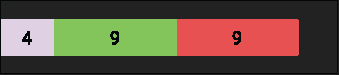
Tier 3
Landon Harmon (RHP, 19)
A 3rd Round prep from Mississippi, Harmon began flashing big velocity with his fastball in 2024 and has been rising ever since. The Nats signed him for an overslot $2.5 MM to keep him from campus at Mississippi State. He’s got great size at 6’5”, and like many pitchers of his ilk, fires from a lower arm slot in order to maximize his approach angle. It’s really a pretty effortless delivery as well. He throws both a 4-seam and a sinker, but it’s the 4-seam that has the most potential. That’s not because it’s a surefire great pitch right now though. It’s because he’s shown a feel for spin with other pitches, but he hasn't unlocked great shape in the fastball yet. As he’s already pumping it in at up to 97, that’s something that every team in the majors is interested in. The last time the Nationals dipped into the prep pitching ranks it turned into Travis Sykora, so there could be something to be said about how much potential they need to see in order to take this risk in the Draft. His sweeping slider is fairly inconsistent in shape and velocity (I saw 78-83), but it has good spin metrics at least and potential to branch into two more distinct pitches. His changeup moves in the opposite direction to the slider, but it’s tough to project at present because it’s so firm. With all the work that needs to be done to these pitches, I think it’s fair for the Nats to table his sinker development for now, unless there’s some big offseason breakthrough with it. Harmon is really just a ball of clay right now, but a good one for the Nationals to work with. As he has decent fastball command, I would perhaps expect him to be immediately deployed to Low-A. But don’t expect immediate results – there’s a lot that needs to happen here. There is good hobby potential, but he has all the risk in the world – so much that I can’t even specify his ceiling with any confidence. - Max Arterburn
Risk: 10, Ceiling: 7 (Both)
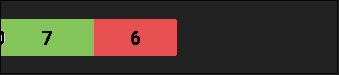
Tier None
Miguel Sime Jr. (RHP, 18)
The Nationals’ Draft was an interesting one. Having the #1 pick and going underslot doesn’t always equate to being able to load up on high ceiling talent, but the way the Nationals did it, it definitely did. They signed 5 players for $2 MM or higher, with Sime being the fourth of them, right at that $2 MM mark as the 111th overall pick. He’s quite the imposing presence on the mound at 6’4” 235 lbs, but it’s not all good weight – maintaining his conditioning will be important as he develops. But let’s get to the good stuff. SIme is very, very clearly a power pitcher with high-K upside. He already has a fastball that I saw at 99, and it explodes through the zone with great carry. He has a slider/curve with nice downward movement, and with some development this has potential to branch into two different pitches. I don’t think he’s intentionally modulating the movement with it at this point, because everything is the same speed. He has also experimented with a change, and while it has decent fade and offers a nice change of pace, it has further to go to have professional quality. I’ve intentionally avoided addressing his command thus far, because, well, it’s pretty awful. I watched catchers at showcase events allow passed ball after passed ball, because he regularly missed his target by 6-8”. With the movement his fastball has, it’s a “yikes” situation. These same issues of course apply to his breaking ball and change. All of these control issues tie back to the consistency in his delivery, which is absolutely nowhere. I clocked a 8-10 degree difference in his arm slot just on his fastball, and when he threw his breaking pitch it was from a noticeably lower arm slot (like, 12-15 degrees lower). It was wild to watch. That’s never going to work in the long term, especially for a starter. He has a long, long way to go with his command in pretty much every aspect, and there’s a ton of relief risk. The ball of clay is enticingly large, but it may very well be one that’s oversaturated and difficult to mold. He’ll certainly be a Complex arm in 2026. There shouldn’t be much hobby interest in him until he emerges to Low-A, because it’s completely possible he just ends up as a relief arm all the way through his development. He does have an easy closer ceiling if that’s the case. There’s a small chance that he comes together perfectly and becomes even better than a mid-rotation arm, but that’s simply impossible to predict. - Max Arterburn
Risk: 10, Ceiling: 6 (Both)
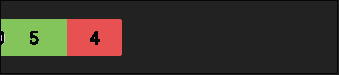
Ethan Petry (1B, 21)
Petry suffered an AC joint sprain in his shoulder and only played in 1 game for South Carolina after the start of May, but it didn’t affect his draft stock too much. I only mention that in case you take a look at his counting numbers and they look underwhelming. He was taken in the 2nd Round and signed for just above slot, for $2.09 MM. The first thing you’ll notice is that Petry is a large man at 6’4” 235, but it’s not all good weight. You get a little bit of sense of the bat looking like a toothpick in his hands. He uses his body quite well and swings without significant effort, hitting the ball with impressive velocity to all fields – there’s obvious plus power potential. He earned his place as a 2nd Rounder by cutting his K% by 7 while maintaining most of his pop. There’s still a ways to go for his hit to be playable as a fringe-average asset. He will definitely need it, because he’s not a speed threat by any means, and more importantly, not a good defender anywhere. The beautiful thing is that the Nationals are already getting a sense of whether he can handle the OF or not, as they gave him 11 games there at Low-A, then sent him to the AFL for a 17 game stint. We also now have a 32 game pro sample, which paints the same picture that I’ve been painting. He’s going to have to improve his contact rate further in order to access the substantial power that he possesses – 65% isn’t going to cut it, even with a solid approach. Hobby-wise, I already fear that Petry is on the Aaron Sabato / Ivan Melendez track. I think he will get to a point where he has good power numbers, so he’ll maintain some interest through his development. But there’s simply no athletic dynamism or defensive deodorant to help with his lack of hitability. It’s really hard for me to imagine him being an average big-leaguer, but even if he proves his mettle to the point of being a below average big leaguer or short-side platoon bat, he could still get to 20-plus HR. - Max Arterburn
Risk: 7, Ceiling: 5 (Both)
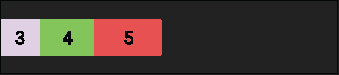


Discussion